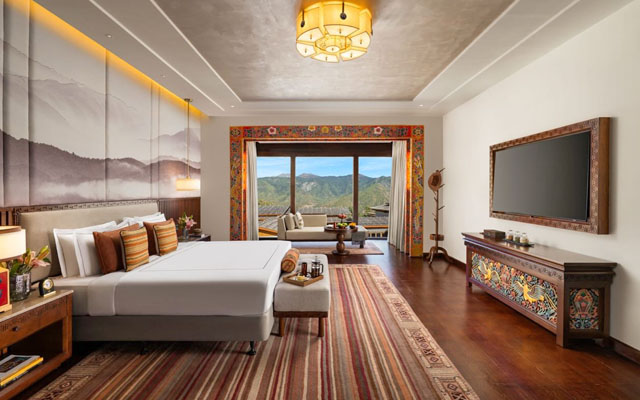
137 Pillars Hotels & Resorts has launched the Tale of Two Thai Cities: The Land of Lotus package, offering stays in both Chiang Mai and Bangkok.
Interest in Thailand has grown following its selection as the filming location for the third season of The White Lotus drama series.
Embrace Thailand’s cultural heritage and modern luxury with 137 Pillars’ unique two-city package
The Tale of Two Thai Cities: Land of Lotus package includes a stay in Chiang Mai, where guests can explore the city’s historical sites. The 30-suite hotel is set in a residential area near Wat Gate Temple, the Ping River, and local shops. Facilities include a pool beside a living wall of over 20,000 plants, and the Nitra Serenity Centre offering spa treatments. Dining venues include The Dining Room, Palette Restaurant, and Jack Bain’s Bar, which serves cocktails and champagne.
137 Pillars Suites & Residences in Bangkok offers a central location near the Emquartier and Emporium shopping areas. The hotel features two high infinity-edge pools, with the rooftop pool exclusive to Suite guests. Dining includes the Bangkok Trading Post Deli & Bar and Nimitr Restaurant, with private rooftop dining available. The Nitra Serenity Centre provides spa treatments for relaxation.
The package offers a 30 per cent discount on suite bookings in Bangkok and a 25 per cent discount in Chiang Mai, with a minimum two-night stay at each property. Additional inclusions at both locations are round-trip airport transfers, personal butler service, complimentary daily breakfast for two, a complimentary 60-minute Thai or Aromatherapy massage for two, additional F&B and spa discounts, as well as rooftop sundowners from 18.00 to 19.00 daily in Bangkok.
From now to October 31, rates start at 137 Pillars House from 19,000 baht (US$565) per night, and at 137 Pillars Suites from 17,100 baht per night.
Released in December, the Development Blueprint for Hong Kong’s Tourism Industry 2.0 by the Culture, Sports and Tourism Bureau (CSTB) emphasises island tourism with plans to drive development and promotional efforts.
Considering the cultural and natural resources of individual islands, the blueprint will explore and promote distinctive countryside and island tourism itineraries while enhancing amenities for visitors.
The stunning Hong Kong UNESCO Global Geopark covers Sai Kung and a section of the New Territories, accessed by a mix of land transportation and boat
For instance, efforts to develop Lantau Island as a ‘Tourism Island’ will be intensified, integrating the leisure and recreational elements of North Lantau with the eco-tourism offerings of South Lantau. In addition, the development of the South Lantau Eco-Recreation Corridor will be expedited, as well as the ex-Lamma Quarry area into a resort and outdoor recreational area.
Yacht tourism is on the list as well. The Hong Kong Development Bureau is looking to promote this in the expansion area of the Aberdeen Typhoon Shelter, the ex-Lamma Quarry area, and the waterfront near Hung Hom Station. It will invite private organisations to explore the construction and operation of yacht berthing facilities there, alongside other initiatives.
In fact, island tourism is not something new, as the Hong Kong Tourism Board (HKTB) has been a long-time supporter of this initiative.
A HKTB spokesman said: “The city’s breathtaking great outdoors are minutes away from the urban hustles, making it an integral part of Hong Kong’s tourism appeal. As such, we leverage the city’s scenic nature and outdoor activities for tourism promotions on various channels to provide an enriched experience to visitors.”
The spokesman cited the year-round Hong Kong Great Outdoors campaign, launched in 2009, which provides guides to activities such as hiking, beach outings, outdoor sports, cycling, sightseeing, and outlying island tours.
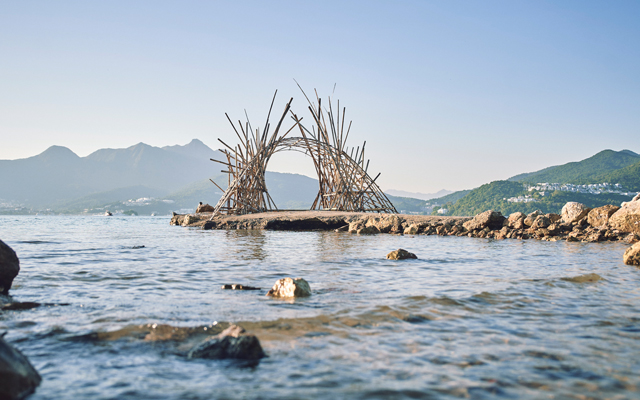
The Sai Kung Hoi Arts Festival showcased artworks across the four Sai Kung islands
HKTB has also been supporting outlying island event promotions to raise awareness of the vibrant culture and diverse happenings on the islands. These include the Sai Kung Hoi Arts Festival and the Cheung Chau Bun Festival.
Founder and chief foodie officer of Hong Kong Food Tours, Cecilia Leung, welcomes the focus on island tourism, citing it as an opportunity to showcase Hong Kong’s lesser-known natural beauty and attract eco-tourism travellers who might not otherwise consider the city as a destination.
Said Leung: “This also encourages repeat travellers to return to Hong Kong to explore the islands. Although our groups are small, logistical arrangements still need to be carefully considered, and it is crucial to ensure that the environment is being protected.”
She also noted that private and customised tours are on the rise. “A premium, more exclusive island experience could be developed for higher-spending travellers seeking unique experiences,” she added.
“It’s an interesting idea to explore building large-scale integrated resorts as part of the island tourism strategy. These integrated resorts should still have easy access to the city centre to allow visitors to explore other parts of Hong Kong,” Leung said.
When it comes to green and culture tourism, Walk in Hong Kong co-founder and CEO Paul Chan, and Eco Travel GM Derek Tse specialise in such journeys, yet still face challenges. This could be something the blueprint could improve in the future.
Tse opined that most of these islands for tourism are located in the eastern part of Hong Kong, such as Sai Kung, Lai Chi Wo and Sha Tau Kok.
He added: “We don’t openly advertise this as a regular offering and only provide tailor-made arrangements due to challenges such as logistical limitations. For instance, we organised a half-day post-conference tour to the Hong Kong UNESCO Global Geopark for 400 international doctors. However, due to a very limited selection of boats and a monopolised operation, we had no choice of vessel and had to split the group into two boats, despite booking two months in advance.”
Accessibility is key for Hong Kong’s more than 260 islands, emphasised Chan, adding that the government must play a role to facilitate this in order to fully integrate island tourism into the economy.
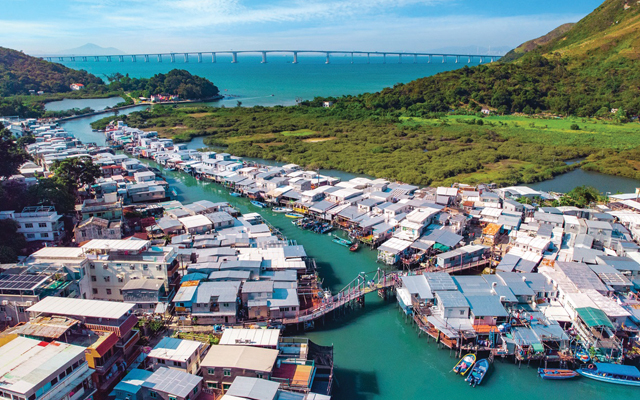
Tai O island is home to a historic fishing village; photo by Hong Kong Tourism Board
He said: “Although we are a forerunner in offering various experiences in Yan Chau Tong harbour as well as in the Sha Tau Kok (STK) Frontier Closed Area, the stumbling block is still the requirement to apply for an entry permit three days in advance.”
STK, a restricted area, was opened to visitors in 2022. Along with the neighbouring villages of Lai Chi Wo, Kuk Po, and Ap Chau, they form a cluster rich in Hakka culture.
In January, Chan incorporated the Countryside Harvest Festival of Kuk Po into the tour experience. By partnering with local villagers, the event featured outdoor concerts, drama performances, a photo exhibition with lion dance, and a marketplace. It drew one to two tour groups comprising overseas visitors.
Shared Chan: “Indeed, the city offers more options beyond popular destinations like Lantau and Cheung Chau. However, unpredictable summer weather limited our tour availability to autumn and winter. Price-wise, as it caters to a niche market, the costs of transportation and food arrangements to these remote areas are higher.”
In Sai Kung, the Hong Kong Pearl Cultivation Association offers a pearl farming workshop that incorporates eco-tourism elements that include environment, community and culture, as well as the actual hands-on experience.
General manager David Wong said: “The availability of hardware such as hotel facilities and piers are all the more important as the islands don’t have them. I believe that tourists (would rather) stay overnight on those remote islands than to rush to catch the last boat back to the city. Otherwise, they might need to charter a boat, which can be very costly.”
The Singapore Tourism Board (STB) has revealed more details of the country’s Tourism 2040 roadmap, which will rest on three key pillars: capturing demand from high potential growth opportunities; strengthen the destination attractiveness through compelling tourism products and experiences; and developing tourism industries through investment promotion and capabilities development efforts.
Tourism 2040 was first announced at the Tourism Industry Conference (TIC) in 2024, and what followed were interactions with industry players and members of the public to obtain suggestions on crafting the future of Singapore tourism together.
Singapore Tourism Board reveals its development strategy at the Tourism Industry Conference 2025
“We… greatly appreciate the ideas that you have shared with us,” said STB chief executive, Melissa Ow, this morning at TIC 2025.
To capture quality demand, STB has set its sights on the business events sector. The goal is to triple MICE tourism receipts by 2040, and have this sector contribute around 10 per cent of overall tourism receipts – up from four per cent now.
Ow said pursuing this sector also brings significant economic benefit.
“Anchoring key MICE events and activities will further deepen our connection to strategic sectors of growth, which is all the more important now, to enable us to grow our economic heft by convening influential actors and thought leaders in Singapore, thereby amplifying our status as the world’s best MICE city. The work starts now, and we have begun laying the groundwork.”
Upcoming high-profile business events in Singapore’s bag include Herbalife Extravaganza 2026, which is expected to be Singapore’s largest meeting and incentive travel event yet, with an anticipated 25,000 attendees.
To accelerate growth in business events, Singapore has partnered with the Singapore Business Federation to scale up capabilities to bid and host world-class events in Singapore, and with the Singapore Association of Convention & Exhibition Organisers & Suppliers to pilot a programme that helps event organisers to incubate quality events.
Demand will also be nurtured through a hotter pursuit of transit passengers at Singapore Changi Airport.
To boost Singapore’s attractiveness as a destination, the second pillar for Tourism 2040, Singapore will deepen efforts to anchor quality, world-class attractions. Doing so will attract leisure visitors who now prioritise sightseeing and attractions.
Singapore will welcome the Singapore Oceanarium later this year at Resorts World Sentosa, as well as the Porsche Experience Centre and the new Science Centre in 2027.
“Leading up to 2040, we will continue to pursue compelling concepts with strong visitor appeal, and secure large-scale, first-in-the-world concepts. We welcome stakeholders who have interesting proposals to connect with us,” shared Ow.
Various precincts will also be transformed to provide visitors with more reasons to stick around. Rejuvenating efforts are underway along the Orchard Road shopping belt. Somerset, which connects with Orchard Road , will welcome “exciting events” when the Grange Road events space by Live Nation opens. Greater Sentosa has a pipeline of new attractions, reimagined beach experiences, and expanded heritage trails, while the Changi East Urban District is envisioned to be a vibrant lifestyle and business centre at the doorstep of Changi Airport Terminal 5.
Cruises, wellness and destination hotels, as well as leisure events will also add to the destination’s attractiveness, opined Ow.
“STB has identified potential areas in the wellness tourism space including science-backed wellness and longevity experiences that enhance health span. These have significant tourism appeal, with sizeable visitor spend and opportunities to drive repeat visits,” she said.
Singapore has an ambition to be Asia-Pacific’s leading leisure events hub, according to Ow, and will achieve this by securing more world-class sports, lifestyle, and music events. There will be more home for such events, as new venues enter the market over the next few years. They include the Immersive Media Based Theatre at Gardens by the Bay later this year, Marina Bay Sands’ upcoming Arena, and a new indoor arena in Kallang.
Industry development forms the third and last pillar for Tourism 2040. STB has committed to investing in quality tourism products as well as reinvesting and retooling the tourism workforce. Come July, the Travel Agent Roadmap will be rolled out to help travel agents be the “Curators of Travel that Inspire”, said Ow.
Tourism businesses can also obtain support through STB’s Data Analytics Shift programme and Tourism Accelerator programme, both relevant for business transformation through technology applications.
Addressing Singapore travel and tourism trade players at the conference, Ow said tourism receipts would reach between S$47 billion (US$35.5 billion) and S$50 billion by 2040.
“In line with quality tourism, we expect tourism receipts to grow at a faster pace than international visitor arrivals,” she said.
When asked if Tourism 2040 would be disrupted by the potential global trade war and recession, Ow said: “It’s still too early to determine what the impact could be for Singapore’s tourism sector. We take confidence in the fact that Singapore’s tourism sector has a very diverse portfolio of markets, so there is no single market which accounts for significant share of visitors. I think that diversity of market portfolio will serve us very well in building resilience.
“The critical thing to note is many of our partners remain committed to seeing through plenty of programmes and initiatives that they have lined up for 2025 and beyond. Today, we announced our longer term plan for tourism. That’s to say that even as we look at the immediate year with caution and optimism, it is important to also keep an eye out for long-term prospects.
“Time has proven that travel and tourism remains one of the most resilient sectors that has bounced back from recession and pandemic and continues to thrive.”
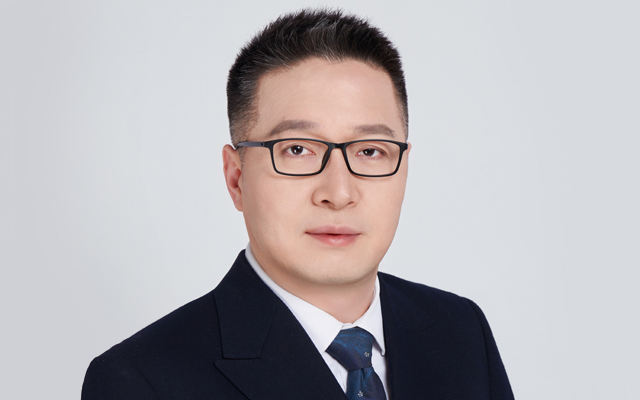
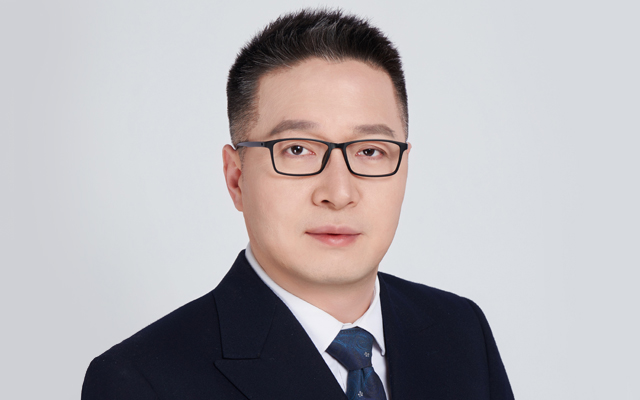
Embraer has named Patrick Peng as managing director and senior vice president sales and marketing, commercial aviation, Embraer China.
Peng will lead Embraer’s operations in China and report to Martyn Holmes, chief commercial officer of Embraer Commercial Aviation.
With over 20 years of experience, he has held key roles at Airbus, GE Aviation/CFM, Thales, and Safran. His track record includes strategic sales leadership, billion-dollar service contract negotiations, and building long-term partnerships with airlines, OEMs, and regulators in China.
A new stopover campaign to drive more conversions from transit and transfer passengers at Singapore Changi Airport has attracted keen attention and interest, said the country’s tourism chief.
Titled The Singapore Lounge, the campaign is led by the Singapore Tourism Board (STB), Changi Airport Group and Singapore Airlines. The video campaign highlights both attractions and hospitality zones within the award-winning airport as well as experiences beyond the facility. Altogether, the visual content underscores destination Singapore as the perfect lounge for visitors.
Among the three free city tours offered to transit passengers at Singapore Changi Airport, one takes guests through Singapore’s heritage areas such as Kampong Gelam, where the Sultan Mosque rises
Travellers transferring in Singapore can easily access all parts of Singapore from Singapore Changi Airport by public transportation. Those with at least 5.5 hours to 24 hours to spare before their next connecting flight can also choose to go on one of three free city tours. Options include the City Sights Tour, which covers key architectural landmarks; Heritage and Culture Tour, a journey through Singapore’s past; and Singapore River and Marina Bay Sands Tour, which traces the country’s past as a trading port to the futuristic city it is today.
STB chief executive Melissa Ow shared during the Tourism Industry Conference 2025 this morning that the introduction of Changi Airport Terminal 5, set to open in the mid-2030s, will present growth opportunities for passenger movements to and through Singapore.
“Transit and transfer segment currently makes up about a third of Changi Airport’s overall passenger traffic, and this presents good growth potential for us,” she said.
She added that The Singapore Lounge campaign was “just one example of how we are working with our partners to drive stopovers”.
Later, Ow also told TTG Asia that STB would involve more partners in the campaign to encourage additional stopover visits in Singapore.
Commenting on the new air terminal’s contribution to Singapore’s tourism industry, Grace Fu, minister-in-charge of trade relations, said: “Looking ahead to the mid-2030s, the opening of Changi Airport Terminal 5 will be a game-changer to expand our airport capacity by around 50 million passengers yearly.
“This will be an increase of over 50 per cent from the current capacity of 90 million passengers. STB and our partners will create compelling business and lifestyle experiences to encourage more transit and transfer passengers to make a stop in Singapore.”
In the Megahubs 2024 report published by aviation intelligence agency OAG to track the world’s most connected international airports, Singapore Changi Airport ranked among the top eight most connected airports in Asia-Pacific.
Among the Top 50 Global Megahubs, Singapore Changi Airport took the 13th spot.
In an earlier interview with TTG Asia, Mayur Patel, head of Asia at OAG Aviation, noted that a megahub status “lays a strong foundation for international tourism”, but its depth of advantage “depends on the destination’s ability to convert connectivity into visits”.
He added: “Airports and tourism authorities must work together, leveraging stopover programmes, destination marketing, and partnerships with airlines to maximise the tourism potential that megahub connectivity provides.”
Marina Bay Cruise Centre Singapore (MBCCS) will undergo its most extensive upgrading works since opening in 2012, which will include a new check-in area for cruise passengers, updated facilities, and a larger Ground Transport Area (GTA) with more bus parking bays and ride-hailing lots.
SATS-Creuers Cruise Services, the current terminal operator, will lead the nine-month upgrade, beginning in the first quarter of this year. In view of the investment, the Singapore Tourism Board (STB) has extended SATS-Creuers’ operator agreement for MBCCS by eight years, with an option to extend for a further two years. The extension, which could run from May 2027 to March 2037, was formalised when both parties signed a revised management and operator agreement on December 18, 2024.
Artist’s impression of the completed GTA shows the major upgrade to MBCCS, including a new check-in area and expanded transport facilities
The upgraded cruise centre, with works costing around S$40 million (US$29.6 million), will be better equipped to handle more passengers and support dual ship calls, in line with the trend of larger cruise ships. MBCCS’ capacity is expected to increase from 6,800 to 11,700 passengers after the upgrade. Improvements will focus on the passenger experience, with added lounge space, larger seating areas, and more check-in stations to serve two large ships at the same time.
Vacant land in front of MBCCS will be developed into a new GTA, featuring more coach bays and ride-hailing lots, along with a widened Marina Coastal Drive to improve traffic flow. Part of the existing GTA will be converted into a new check-in area, providing dedicated spaces for each cruise ship during dual ship calls. Upgrades will be carried out in phases to minimise disruption, and the cruise centre will remain open on ship call days.
SATS-Creuers, a joint venture between SATS and a Global Ports Holding subsidiary, has operated MBCCS since 2012, using SATS’ airport ground services expertise. Since then, the terminal has handled over eight million passengers from more than 2,000 ship calls, reinforcing Singapore’s role as a regional cruise hub.
Bob Chi, chairman of SATS-Creuers, said: “This terminal refresh underscores our intent to make MBCCS one of the best stopovers for cruise ship passengers. The upgrade is timely as the facility gears up for more intensive operations in the future, including welcoming two mega cruise ships on dual operation. The upgrade will deliver a better visitor experience while improving efficiency for cruise ship operators.”
“This upgrade will not only enhance capacity but also align with our shared vision of creating future-ready cruise ports, reinforcing Singapore’s position as a leading cruise destination in the region,” added Mehmet Kutman, chairman and CEO of Global Ports Holding, parent company of Creuers.
Ong Huey Hong, assistant chief executive, industry development group, STB, noted: “Singapore’s cruise industry is projected to grow steadily with year-round sailings, seasonal homeporting, and a robust calendar of transit calls from a diverse range of international cruise lines. Recognising the global trend towards larger ships, STB is collaborating with SATS-Creuers Cruise Services to enhance MBCCS. These improvements will solidify Singapore’s position as a leading cruise hub, offering world-class facilities that cater to the evolving needs of cruise lines and passengers.”
Miki Travel is targeting China’s outbound market for Saudi Arabia as part of its partnership with the Saudi Tourism Authority (STA).
Expecting China to become its largest source market in the future, STA aims to develop leisure travel and attract non-Muslim travellers from the mainland, as it already sees a steady flow of Muslim pilgrims for events such as Hajj, Umrah, and smaller Hajj.
Moeschler shared that with three offices based in China, Miki Travel is well-positioned to expand its outbound market for customised group tours
Miki Travel CEO for the Asia Division, Olivier Moeschler, told TTG Asia that out of the wholesale tour operator’s 14 offices in Asia (excluding Japan, which is a separate unit), three are in China, which bodes well for expanding this outbound market for customised group tours.
As part of an agreement signed between Miki Travel’s parent company, HIS of Japan, and STA, they opened an office in Riyadh late last year.
Moeschler noted a significant shift in China’s outbound market, with tour fares rising from “very low” levels and a growing preference for tours that offer more than just shopping. A new segment of tourists has emerged, with higher expectations regarding products, services, and tour content.
As Saudi Arabia opens its tourism gates and continues to invest heavily in luxury tourism infrastructure, it is becoming a favoured new destination for foreign tourists, including the Chinese.
Bound and Beyond and Cloud Collective have teamed up to launch Kaia, a new hospitality brand in South-east Asia. The new brand will feature outdoor resorts with tented suites designed to blend with nature and the local community, focusing on luxury and sustainability.
Founded by Bound and Beyond, a Thai-based hospitality firm, and Cloud Collective, a specialist in light footprint developments, Kaia’s first resort will open on Koh Phangan, Thailand, in late 2025. Surrounded by a national park, the resort will be a 30-minute speedboat ride from Koh Samui.
Kaia’s first resort will open on Thailand’s Koh Phangan in late 2025, offering nature-based stays rooted in local culture and community
The resort uses sustainably sourced materials such as upcycled teak and recycled plastic rugs, and will feature 31 private 77m² tented suites with ocean views, outdoor decks, bathtubs, and pantries with local and resort-made products, as well as four 248m² two-bedroom villas with private pools.
The clubhouse will have dining areas, an infinity pool, and a beach club. Experiences will include open-fire feasts, forest foraging, ceramic workshops, and squid safaris, alongside wellness activities such as yoga, ice bathing, and nature walks.
The brand Kaia offers an authentic cultural experience with a focus on positive social impact, employing locals, using local produce, and promoting community skills. Inspired by the Thai Jao Baan philosophy, Kaia’s hospitality centres on genuine human connection, where team members welcome guests like family.
The resorts highlight local culture through seasonal culinary, cultural, and wellness experiences, while fostering inclusivity and connection with nature. Designed by Cloud Collective, Kaia resorts focus on sustainability, using natural materials, passive cooling, and responsible practices. All resorts are plastic-free and use biodegradable packaging.
Culinary offerings at Kaia evolve with the seasons, emphasising local produce, ethical sourcing, and a closed-loop food system. Kaia Koh Phangan will feature its own organic farm and collaborate with local ethical producers.
Following the opening of Kaia Koh Phangan, Kaia plans to expand globally, with additional resort locations to be revealed later this year.
Beverly Chen, co-founder and COO of Cloud Collective, and co-founder of Kaia, commented: “With Kaia, we are redefining luxury by seamlessly blending immersive outdoor hospitality with a deep reverence for nature and local culture. Kaia (offers) a sanctuary where luxury, sustainability, and cultural authenticity converge.”
“As travellers seek more meaningful experiences, we are creating a hospitality model that is deeply rooted in local traditions, craftsmanship, and community. At Bound and Beyond, we believe that true luxury is not just about indulgence – it’s about honouring the spirit of a place and the people who shape it. Through Kaia, we are crafting resorts where guests can immerse themselves in the richness of local heritage while embracing a lighter, more conscious way of travelling,” added Kamonwan Wipulakorn, managing director of Bound and Beyond, co-founder of Kaia.
Ambassador Cruise has introduced a new dining experience under the starlit skies of the UNESCO World Heritage listed Halong and Lan Ha bays. The Dining Under the Stars concept, available on Ambassador Cruise’s overnight cruises, offers two menus created by executive chef Nguyen Gia Thien, with live entertainment on the 360-degree sundecks of the vessels.
The dining setting features white tablecloth service, with limestone karsts visible against the night sky. Guests can choose between international and Vietnamese dinner menus, both made with fresh, quality ingredients.
Experience starlit dining and live music on board Ambassador Cruises in Halong and Lan Ha Bay
As part of the five-course Heritage By Night menu, guests can choose two main courses from five options, including roasted sea bass fillet with chorizo butter and zucchini emulsion, pan-seared beef medallion with crispy potato and meat jus, and caramelised duck breast flambé with gnocchi and orange jus.
The Four Seasons menu offers a selection of traditional Vietnamese dishes, including deep-fried Halong squid cake with young sticky rice, marinated beef and pomelo salad, and stir-fried scallops with organic mushrooms.
The highlight of the Dining Under the Stars experience is Ambassador’s international live band, performing a range of classic hits in English, Vietnamese, Korean, Indian, and Filipino, available every day except Monday.
Dining Under the Stars can be booked on all overnight Ambassador Cruise journeys in Halong Bay and Lan Ha Bay. It will also be available on dinner cruises during the summer months for an additional charge.
The Chinese government has issued warnings to its citizens about travel to the US amid ongoing tariff wars.
The Chinese Ministry of Culture and Tourism on April 9 reminded its citizens to assess travel risks amid “deterioration of Sino-US economic and trade relations and the domestic security situation in the US”.
US-China tariff wars have led to the Chinese government issuing US travel risk alerts
The US government had earlier imposed 104 per cent duties on Chinese goods, to take effect on April 9. The levy on Chinese goods was far higher than what was imposed on other Asian countries, which ranged from 10 per cent on Singapore to 49 per cent on Cambodia.
This was met with retaliation from China, with it imposing 84 per cent tariffs on US goods from April 10.
While the US has today announced a surprise 90-day pause on new tariffs for most countries, it has chosen to up the ante on its China trade restrictions, raising duties on Chinese goods to 125 per cent.
The face-off continues with China filing both a lawsuit and a complaint with the World Trade Organization, with a Chinese Ministry of Commerce spokesperson expressing China’s intention to “firmly safeguard its legitimate rights and interests in accordance with the WTO rules, and resolutely uphold the multilateral trading system and the international economic and trade order, according to the spokesperson”.
According to an April 9 news report on China’s financial news platform, Yicai, tourism practitioners in China said the issuance of tourist visas for US travel would be tightened, and a significant decline in Chinese outbound travellers to the US could be expected.
Travel sentiments among the Chinese with regards to destination US have been comparatively weaker than pre-pandemic years. More than 4.4 million Chinese visited the US in 2019, according to China Trading Desk’s Fourth Quarter China Outbound Travel Sentiment Survey, but only 439,00 visited the country in 2024.
The survey involved 11,000 participants.
In a January 17 statement issued alongside findings from the survey, China Trading Desk founder Subramania Bhatt had said: “In the Chinese press and on social media, the image of the US is increasingly negative. Reports of mass shootings and videos of city streets overrun by homeless people have played a factor in keeping Chinese travel to the US low. Geopolitical tensions, the high cost of travel to the US, and the unfavourable exchange rate haven’t helped either.”
When asked how the US-China tariff fight and China’s US travel alert would impact Chinese travel business, Check-in Asia CEO and travel economist Gary Bowerman told TTG Asia: “Travel agencies may be concerned by the deliberate reference in the travel advisory to ‘the domestic security situation in the US’. Safety and security concerns are a vital consideration for this part of the travel market.”
He added: “Overall, I think we need to wait and see – the Chinese travel market to the US is quite diversified. Some segments may be deterred by the strength of the wording in the travel advisory, others less so or not at all. Chinese FITs are independent thinkers and will weigh up the potential risks as they see them and make their own travel decisions. Safety is a factor, but there are other factors, too.”
He said the upcoming summer school holiday would provide “a clearer barometer of how Chinese family travellers are feeling about the US this year”.
“A significant proportion of Chinese travel to the US isn’t only for leisure – it’s to visit family and friends who live, study and work there, and VFR is less likely to be affected than pure leisure travel,” he remarked.
Bowerman will discuss the Impact of Trump’s tariffs on ASEAN and Asia-Pacific in a two-part series on his podcast, The South East Asia Travel Show. The first part [https://asiatravelreset.substack.com/p/issue-181-the-impact-of-trumps-tariffs] was published on April 9, and can be accessed on Spotify and Apple Podcast.
Meanwhile, during a virtual media conference yesterday, WTTC’s CEO Julia Simpson, addressed questions on how the trade war and resulting economic impact could influence China’s status as a travel and tourism powerhouse.
She said: “The trouble with trade wars is that all the cards get thrown into the air and you don’t quite know how or where they are going to land. All I will say is, I admire China for being able to take a long-term view of the world. So, I am still predicting that the Chinese travel and tourism market will eventually overtake the US as the prize owners of being the biggest travel and tourism market.”
Simpson added that the Chinese government has always been supportive of economic and tourism growth.






 With over 20 years of experience, he has held key roles at Airbus, GE Aviation/CFM, Thales, and Safran. His track record includes strategic sales leadership, billion-dollar service contract negotiations, and building long-term partnerships with airlines, OEMs, and regulators in China.