TTG Asia
Asia/Singapore Friday, 10th April 2026
Page 1554

New flights from Doha set to benefit secondary Thai destinations

0
Chiang Mai expected to attract more visitors from Latin America an Europe

Qatar Airways will launch flights between Doha and two key cities in Thailand, developments that are expected to drive travel, including from longer haul markets such as Latin America, to secondary Thai destinations.

Come December 13, the airline will commence four-times weekly flights between Doha and Chiang Mai. As well, from January 28, the airline will fly between Doha and U Tapao-Rayong Pattaya International Airport four times weekly, serviced by the Boeing 787 Dreamliner.

Malinee Nitikasetsunthorn, director, The Americas market division covering North America and Latin America, Tourism Authority of Thailand (TAT), believed the direct Chiang Mai flights would make it much easier to promote Northern Thailand to travellers from Sao Paulo and Buenos Aires, where Qatar has direct, daily connections.
Chiang Mai expected to attract more visitors from Qatar, Latin America and Europe

With TAT opening an office in Sao Paulo in 2018, this could be a dual boost for traffic from Brazil to Thailand, said Malinee. This will be TAT’s first dedicated office in Latin America.

As Chiang Mai is a longhaul destination, Malinee believed it would attract tourists with high spending power as well as niche segments such as luxury clients, honeymooners and couples celebrating their anniversaries.

Apart from Latin Americans, TAT governor Yuthasak Supasorn said the market of cultural, adventurous travellers from Europe could also grow.

He shared that a media fam trip to Chiang Mai from the Middle East, Europe and South America would accompany the launch, with top outbound agents from Oman invited as well.

Inbound agents interviewed believed the new flights would offer more opportunities to tap into different markets flying with Qatar Airways.

An inbound agent, Yves Van Kerrebroeck, managing director, Asian Trails based in Bangkok, said:“Traditionally quite a few European travellers start their programme in Bangkok before travelling to Chiang Mai and beyond, experiencing the cultural diversity and beautiful landscapes along the way. With this new direct flight there are increased possibilities to adapt the order of such itineraries, visiting areas such as the Golden Triangle, Sukhotai, Phitsanulok and Ayutthaya in a different sequence.”

Meanwhile, the launch of direct Doha-U Tapao-Rayong flights is expected to have an enormous impact on the region. Siam Royal View Resort, the largest mixed-use development on Koh Chang, expects the island in particular to benefit, citing the presence of a new ferry service close to the airport to Koh Chang.

As Thailand’s second largest island, Koh Chang has been already experiencing a steady increase in the number of visitors. This is likely to increase, now that the Thai government has rubber stamped its ambitious plans to spend millions on infrastructure along the Eastern Seaboard Corridor, the hotel stated.

In the 2010 -2015 period, there was an increase of over 220 per cent to over 1.1 million hotel registrations, and that’s not counting the number who stay in non-registered accommodation, it added.


Norwegian sees smooth sail ahead as competition heats up

0
Chan: cruising not a zero-sum game in Asia

Norwegian Cruise Line (NCL) Holdings says it is seeing double-digit growths from the Asian market for all its three brands and expects performance to remain buoyant despite stronger competition in the cruise sector.

The global cruise company returned to Asia nearly a year ago, after an absence of some 15 years, and now has regional offices in Hong Kong, Singapore, Tokyo and Mumbai.

Chan: not a zero sum game in Asia

Felix Chan, NCL Holdings’ vice president of sales – Asia (excluding China and Australia), said overall the three brands were doing well, although one brand might do better than others in some countries, while in other markets all three might be on equal footing in their growth.

The company operates NCL, which it pitches as “contemporary”; Oceania Cruises, “upper premium” and Regent Seven Seas Cruises, “ultra-luxury”. The nett per diem is around US$150, US$300 and US$600 respectively.

Chan, interviewed in Singapore, was not worried about intensifying competition for Asian cruise passengers, pointing out that the overall industry was growing.

“It’s not a situation where I take more share and the others get less, i.e. it’s not a zero sum game. If you look at the Asian travel industry as a whole, outbound is expanding, cruise vacation is a part of outbound travel, and its penetration is still small,” he said.

What’s more, the cruise sector has many segments it can attract, including MICE, multi-generational groups and couples, he added.

“What we have to do is to get more people to recognise the value of cruising as a vacation alternative, then the penetration will grow even more,” said Chan.

According to Chan, the value of a cruise vacation is particularly evident in places where hotel prices and transportation are expensive. Said Chan: “For example, we had received a lot of enquiries for Cuba, because it’s difficult to find very good hotels while transportation is expensive. And even when you pay high prices, you don’t get good service. But if you go on a cruise, you can go to many destinations apart from Havana, and at a lower cost. Same with places such as Hawaii and northern Europe, where land costs are expensive.

“Asians are very destination-driven, but also value-driven. If a cruise can offer better value for the budget they have, they will choose to cruise. That’s why places such as the Baltics are popular. Imagine on a land vacation, they have to book flights going to the different places.”

Travel agents are crucial in educating the value proposition to the different segments. “That’s why we have set up offices (throughout Asia); we want to reach out to agency partners,” he said.

The biggest Asian markets for NCL Holdings excluding China and Australia are Japan and India, but “Hong Kong, Taiwan and South-east Asia are growing very fast”, said Chan.

Luxury cruising is also promising. Chan said he had already seen “a number of Asian couples” booking the Regent Suite, which costs US$10,000 per day per person.

Philippine agents association mulls tie-up with university to professionalise industry

0
Weeding out 'fly-by-night' operators and professionalising the industry

The Philippine Travel Agencies Association (PTAA) is planning to partner a Manila-based university or college on courses to grow the labour pool and professionalise the industry, beleaguered by untrained practitioners and fly-by-night operators.

In tandem with the institution, PTAA will come up with a programme featuring subjects on travel agency operations and experiences that will be integrated into the curriculum.

Weeding out ‘fly-by-night’ operators and professionalising the industry

The programme will have 60 per cent fieldwork and 40 per cent lecture component. PTAA secretary-general Paul So said that the plan, first broached during the tenure of PTAA president Jojo Clemente years ago, would require some PTAA members to dedicate their time to educate students.

So, who together with former tourism secretary Narzalina Lim, has been teaching would-be travel agents the basics for years now, said many travel agents lack knowledge and training hence “need to be educated too”.

PTAA president Marlene Dado Jante said the operation of legitimate agencies are being affected by fly-by-night operators that have questionable track records and don’t have the necessary permits, accreditation and training.

A growing concern, said Jante, is the emergence of new groups offering those who want to start a travel agency enticing packages such as having operations up and running from day one at a very minimal cost.

These groups pitch for sizeable returns per booking for airfare, ferry ticketing, hotel bookings and domestic and international tours. They also promise that those who will avail of the packages can do the business home-based or from anywhere in the country, contrary to existing rules and regulations governing travel agencies.

Jante said PTAA would coordinate with concerned government agencies to track these suspicious travel agencies and stop them.

Seven Seas Voyager commences Asia sailings

0
The newly refurbished ship is sailing in Asia until early February

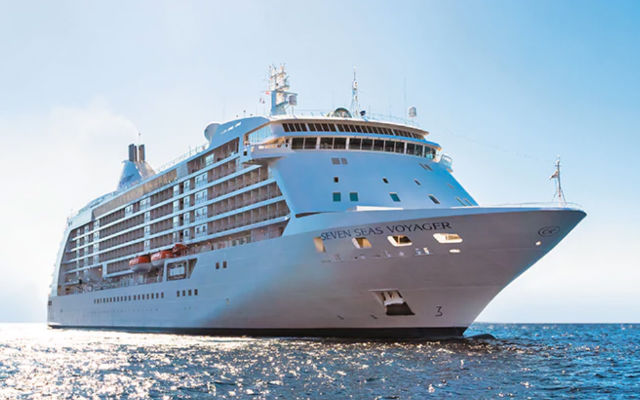
Seven Seas Voyager today sets sail from Dubai to Singapore and Hong Kong, kicking off a series of itineraries in Asia running till February 2018.

The ship will arrive in Singapore on December 5, sailing to Hong Kong via Thailand and Vietnam, then north to Shanghai and Beijing (Tianjin), before heading back to Hong Kong and around South-east Asia for the whole of January and early February 2018.

The newly refurbished ship is sailing in Asia until early February

November 14, 2017: Dubai to Singapore (21 days)
November 14, 2017: Dubai to Hong Kong ( 33 days)
December 5, 2017: Singapore to Hong Kong (12 days)

December 17, 2017: Hong Kong to Beijing (Tianjin) (12 days)
December 29, 2017: Tianjin to Singapore (19 days)
January 17, 2018: Singapore to Singapore (16 days)

Seven Seas Voyager boasts one-to-1.5 guest-to-staff ratio, and in November 2016 completed a bow-to-stern refurbishment as part of Regent Seven Seas Cruises’ ongoing US$125 million fleet refurbishment.

The ship features updated décor of the penthouse, concierge and deluxe suites, in addition to refreshed public spaces including La Veranda buffet restaurant, pool bar and grill, Voyager Lounge, Coffee Connection, Connoisseur Lounge, card room, boutiques, casino and the Canyon Ranch SpaClub.

On top of unlimited dining at flagship restaurant Compass Rose, Prime 7 Steakhouse and the new Chartreuse French restaurant, most onboard activities ranging from pool use, lectures, golf, cabaret shows and musical productions are also included. The ship is headlining four new production shows: Lights, Camera, Music!, Broadway in Concert, Vegas The Show and Dancin’ Fool.

Rethinking the millennial segment

0
White: millennials reaching 'peak influence' as parents and business travellers

Millennials are moving into a new life stage, becoming responsible parents and business travellers with their own unique set of service expectations from hotels, restaurants, destinations, airlines and loyalty programmes.

The travel industry needs to be aware of such changes because millennials are entering into “peak influence” as business travel consumers.

White: millennials reaching ‘peak influence’ as parents and business travellers

Millennials have already been prodigious as a social and economic force. They have arguably been the most influential generation in marketing that we have seen. Their consumption preferences will continue to define much of the travel industry’s services and products for at least the next 15 years or so.

Their impact shows in many small ways. For example, food remains a strong driver when they travel. They want healthy nutritional choices such as carrot sticks and humus. No more fried chips and “Franken meats” for their kids.

Because millennials spent longer than other generations in the family home, they are more attracted to multi-generational trips with their parents. Cruise lines and savvy hotels are taking advantage of this.

There will be big impacts on business travel too. Millennials account for a third of spending on business flights now. This will grow to around 50 per cent by 2020. Expect the same to be true for the hotel sector.

Research shows that 60 per cent of millennial business travellers are happy to pay for premium services that improve the seamlessness of their trip – especially if it supports their appetite for technology. Because millennials have grown up valuing cooperative environments, they like work spaces where they can collaborate and share. They choose hotels that can offer opportunities such as co-working meeting spaces with free Wi-Fi and barista coffee.

In loyalty programmes, millennials want unique benefits, accessed fast using modern technology such as the latest apps linked to social media. Saying that millennials are not brand loyal is a misconception. They like brands that align with their values, needs and preferences.

However, be aware that they don’t like a hard sell. They prefer subtle and genuine marketing messages that educate them. Millennials tend to trust sources such as family, friends or their favourite social influencer. They can see marketing fraud and corporate speak a mile away. Accordingly, they like to receive “authentic” messages and don’t mind if your corporate video is not highly produced – as long as it’s “genuine”.

The “live and let live” attitude of hippies and baby boomers is not much in evidence among millennials. Indeed, psychologist Jean Twenge described millennials as epitomising ‘Generation Me’ – “more confident, assertive, entitled – and miserable than ever before.”

Regardless, millennials are now bread and butter for the travel and hospitality industry. So we have to adapt to their needs.

Those needs are in marketing too. A generation that is defined by instant gratification needs actionable information and it needs it now. If your destination or business cannot provide the information or content that millennials want, they will abandon you and Google another business that can service them in the micro-moment.

Make your brand easy to book. Millennials are impatient and will quickly abandon you if the online process is not straight forward.

Evidence shows, email remains the number one way in which millennials like to keep up with brand news. However, your travel brand still needs to be ‘seen’ on social media.

When it comes to authenticity in travel marketing, millennials don’t want brochure experiences. They want to “check out the local scene” – to go where the locals hang out.

We reap what we sow. The rise of mobile technology and the new socio, economic and political realities following the global financial crash have helped mold a millennial mindset very different from the freewheeling and self-reliant baby boomers of yesteryear.

In any generational grouping, including millennials, there are, of course, exceptions to the generalisations. However, by understanding the new expectations, pressures and preferences on our aging millennials, the travel industry will be better placed to meet their needs – and meet those needs profitably.

Peak millennial is still on the way.

Hilton’s dual signings in Vietnam

0
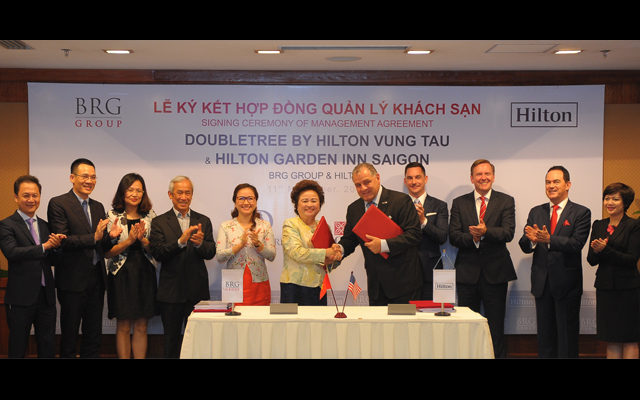
In the fore, BRG Goup's Nguyen Thi Nga (left), and Hilton's Paul Hutton

Hilton will launch DoubleTree by Hilton Vung Tau and Hilton Garden Inn Saigon in 1Q2022, its third signing in the past three months.

Located in the heart of Vung Tau and an 800m walk to the famous Bai Truoc Beach, the 250-room DoubleTree by Hilton Vung Tau offers more than 1,700m2 of meeting space including a ballroom, four dining and bar outlets, a swimming pool, a fitness centre and spa.

In the fore, BRG Goup’s Nguyen Thi Nga (left), and Hilton’s Paul Hutton

The 160-room Hilton Garden Inn Saigon will offer two dining and bar outlets, a fitness centre and a swimming pool. From its location in District 1 – home to most of the administrative offices, consulates, and multinational companies – the hotel is within a 1.5km radius of key attractions such as Saigon Opera House, Reunification Palace and Notre-Dame Cathedral Basilica of Saigon.

With the signing of DoubleTree by Hilton Vung Tau and Hilton Garden Inn Saigon, Hilton today has a total of 11 hotels operating or under development in Vietnam, eight of which are owned by BRG Group.

Paul Flackett passes away

0
Flackett at IMEX13

Paul Flackett, managing director of the IMEX Group, has passed away, after several years of serious illness.

During a career in the global meetings and events industry that spanned more than years, Flackett was actively engaged with many industry groups, including MPI, SITE, the SITE Foundation, Destinations International and, poignantly given the timing of his passing, ICCA. In 2004 he was presented with the Moises Shuster Award during the ICCA Congress for his outstanding contribution to the industry.

Flackett at IMEX13

His appetite for travel and his desire to play his part and get involved meant that literally hundreds, if not thousands of meetings industry colleagues the world over felt they ‘knew Paul’. He was also a passionate Manchester United supporter and a lover of cricket and heavy rock music.

In recent months his illness meant he couldn’t take an active role in IMEX but his mood was buoyed by well-wishers who brought plenty of “bad jokes and good laughs” to his bedside.

IMEX chairman, Ray Bloom, commented: “Paul has been by my side as a friend and in business for over 30 years and was an inspiration to us all in how he conducted himself throughout his career, in particular the humour he brought to us all. He was a friend and mentor to so many in the industry and I know that he will be greatly missed by all who knew him. Our thoughts are with his family and friends.”

Indonesia’s CT Corp scores Accor deal for 30 hotels

0
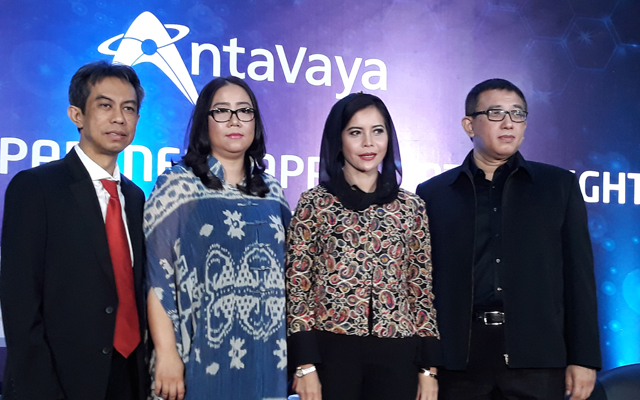
Bagus Priatna, Ida Wijanty, Ratih Prabandari and Andrreas Sulaiman at the launch of the AntaVaya CBT

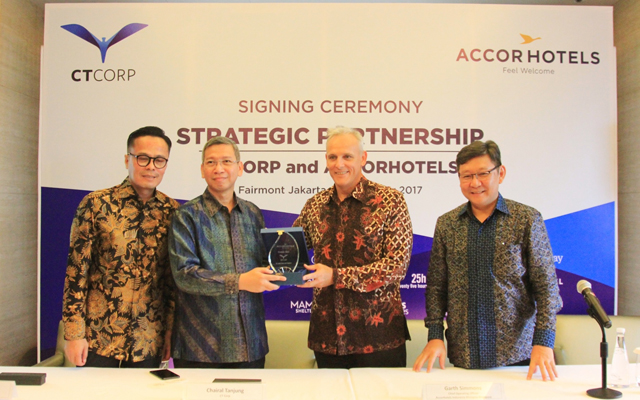
Indonesia’s CT Corp has signed an MoU with AccorHotels for the addition of 30 hotels and 6,000 rooms across Indonesia, amid intensified efforts to bolster the holding company’s travel subsidiary, AntaVaya Group.

AccorHotels had begun its partnership with CT Corp with the management of the 568-room ibis Bandung Trans Studio, located at the first integrated Trans Studio Bandung complex, adjacent to a shopping mall and indoor theme park.

Under the new strategic agreement, both parties will work together on similar integrated complex of hotels and lifestyle properties, one of which will be in Cibubur, east of Jakarta.

(From left) Bagus Priatna, Ida Wijanty, Ratih Prabandari and Andrreas Sulaiman at the launch of the AntaVaya CBT

Garth Simmons, COO, AccorHotels for Indonesia, Malaysia and Singapore, said: “Today’s partnership agreement marks another milestone in accelerating of AccorHotels’ robust expansion in strengthening its position as the leader of hospitality industry in Indonesia.”

Chairal Tanjung, president and CEO of CT Corp, said: “Our longterm partnership with AccorHotels shows our commitment to develop integrated theme park hotels in strategic locations to provide more entertainment options for travellers and families.”

The collaboration will also pave the way for CT Corp to access AccorHotels’ distribution network, digital platform, loyalty management and brand portfolio.

Simmons (third from left) shaking on the deal with CT Corp

The deal comes in the midst of big changes at CT Corp’s AntaVaya Group, which last weekend soft launched Antavaya CBT, a corporate booking tool, and its leisure online channel Antago.com.

Bagus Priatna, corporate service director of AntaVaya, said: “A few years ago we lost some key accounts to move to OTAs, due to the convenience of self-booking with instant confirmation.

“However, what the OTA could not do was the compliance to corporate policy and at the end of year, companies found that spending was higher than expected.”

He expects that adoption by corporate clients will reach 30 per cent in the first two to three years, before accelerating to 70 per cent thereafter.

Speaking on the online travel booking tool, Andreas Sulaiman, vice president business development and marketing of AntaVaya, said the soon-to-launch Antago.com is to respond to the booming online travel trend, especially among the Gen Y and Gen Z.

“While we will sell air tickets, hotels, and the combination of the two, we will be more focused on selling tour programmes.

“What will also distinguish us from the existing OTA is that while others offer seasonal discounts, we will offer discounted prices all year round, thanks to our sister (Bank Mega),” he touted.

On whether AntaVaya would one day become a fully online business, Ratih Prabandari, director of the company, said: “We have a business events division, which will always need the human touch to create and prepare tailor made products. However, we will basically follow what the market want. If and when the market demands totally online, we will (make the transition).”

AntaVaya’s Bali-based inbound business is also undergoing a revamp.

AirAsia keen to set up airline in Sri Lanka

0
Recommended for the JV, a 51 per cent stake to the Sri Lanka government and a 49 per cent stake to AirAsia

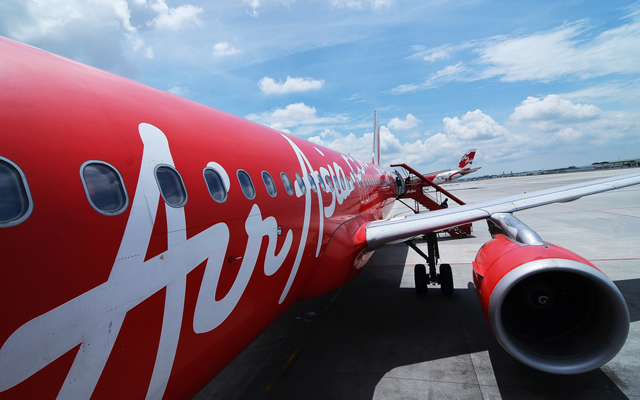
Malaysia’s LCC AirAsia is keen to set up a budget airline in Sri Lanka and last week made a pitch to a high-powered, official Sri Lankan committee.

A report in the local Sunday Times on Sunday said a team from AirAsia had presented the proposal to the Cabinet Committee on Economic Management (CCEM) chaired by prime minister Ranil Wickremesinghe on Wednesday recommending a 51 per cent stake to the Sri Lanka government and a 49 per cent stake to the Malaysian carrier. An official present at the meeting, but declined to be quoted, confirmed that such a proposal was made.

Recommended for the JV, a 51 per cent stake to the Sri Lanka government and a 49 per cent stake to AirAsia

The budget carrier currently operates daily flights to Colombo from Kuala Lumpur.

Industry analysts, who declined to be named, said the entry of a new airline competing with the heavy-losses SriLankan Airlines will create a major dent in the national carrier. According to the 2016-2107 annual report of SriLankan Airlines, the carrier’s accumulated losses was nearly US$200 million, from US$85 million the previous year. The airline has cut routes in Europe and focused mostly on Asia.

The newspaper report said AirAsia’s one-hour presentation involved bringing in five aircraft in the first year, and 25 in five years. It is learnt that SriLankan Airlines officials present at the briefing had raised objections to the proposal.

The national carrier has been seeking a management-cum-investment partner for the past two years without any success. Discussions have been held with Emirates, which earlier operated as a management partner of SriLankan, and Qatar Airways.

Analysts said AirAsia’s entry would entice more Sri Lankans to travel abroad with low fares and also encourage tourists on shoe-string budgets from across Asia.

The senior director of a foreign airline agent said 15 years ago the government called for bids to operate a second airline and at least five offers were made but no decisions taken. “At the end of the day, the market is too small for two airlines in Sri Lanka,” he said.

Local budget carrier, Mihin Air, a subsidiary of SriLankan Airlines, also failed and was recently shut down.

Emirates makes big comeback in 1H, more than doubles profits

0
Airline profits more than doubled year-on-year in the first half

In 1H2017, Emirates saw profits soar 111 per cent to AED 1.7 billion (US$ 452 million), a dramatic rebound from the 82 per cent nosedive in profits for 2016.

Passengers volumes rose four per cent to 29.2 million and overall capacity expanded two per cent, with Emirates attributing the improved results to capacity optimisation and efficiency initiatives,the easing of a strong US dollar and steady business growth.

Overall, the Emirates Group, parent company of the gulf airline, reported a 77 per cent increase in profit of US$631 million for the period.

Airline profits more than doubled year-on-year in the first half

The group’s revenue increased six per cent, reaching US$13.5 billion, up from US$12.7 billion during the same period last year.

Emirates’ operating costs grew four per cent against the overall capacity increase of two per cent. On average, fuel costs were 14 per cent higher compared to the same period last year, largely due to an increase in oil prices by 11 per cent, as well as an increase in fuel uplift of three per cent due to Emirates’ expanding fleet operations.

Fuel remained the largest component of the airline’s cost, accounting for 26 per cent of operating costs over the 24 per cent seen in the first six months of last year.