New app will allow KrisFlyer members to use digital KrisFlyer miles for point-of-sale transactions
The Singapore Airlines (SIA) Group says its KrisFlyer programme will launch the world’s first blockchain-based digital wallet for frequent flyers.
Scheduled for rollout in about six months, the app will allow KrisFlyer members to use digital KrisFlyer miles for point-of-sale transactions at participating retail merchants.
New app will allow KrisFlyer members to use digital KrisFlyer miles for point-of-sale transactions
The digital wallet app will be enabled through blockchain technology, using an SIA-owned private blockchain involving only merchants and partners.
The group says it has seen success in its proof-of-concept exercise carried out in collaboration with KPMG Digital Village and Microsoft. It will go on to sign new retail merchant partners for KrisFlyer, initially in the Singapore market.
Melbourne’s Avalon Airport is set to become international when AirAsia moves its operations from Tullamarine Airport later this year.
AirAsia X Malaysia will operate twice-daily flights between Melbourne and Kuala Lumpur as the first international carrier at the airport. Half a million international passengers are projected to move through Avalon Airport in the first year of operations.
Avalon will soon become an international airport
AirAsia X Malaysia’s CEO Benyamin Ismail said in a statement: “Melbourne and Victoria are important markets to us and this new service with 560,000 seats annually will provide a significant boost to business and tourism, including to attractions such as the Great Ocean Road.”
Justin Giddings, CEO of Avalon Airport, commented:.“This is a 10-year agreement structured to accommodate AirAsia X’s significant growth. It is the first such deal in Australia, and provides a unique low-cost opportunity for people and businesses to access over 130 destinations throughout Asia.”
In operation as a commercial airport since 2004, Avalon is currently only serviced by Qantas’ low-cost arm Jetstar flying to Sydney, Adelaide, Hobart and the Gold Coast, according to a report by The Sydney Morning Herald.
The Victorian and federal governments are expected to help fund the necessary infrastructure and services at Avalon Airport, which is owned by the logistics giant Linfox, the same report added.
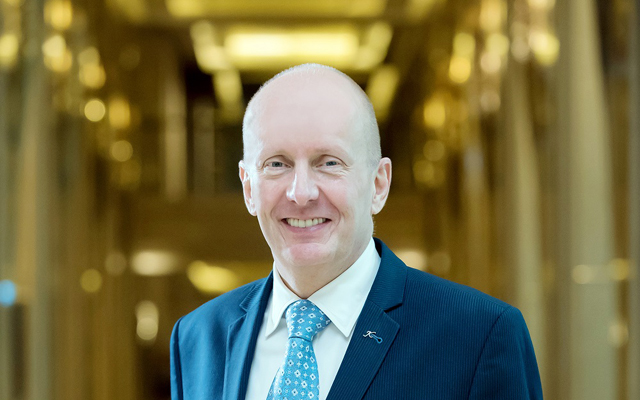
Alexander Pichel has been appointed general manager of Siam Kempinski Hotel Bangkok, transferring from Hotel Indonesia Kempinski Jakarta, where he had been general manager since 2015.
The German native brings 30 years of experience in the hospitality sector, including as resident manager at the Grand Hyatt Hotel in Dubai, managing director for a number of Rosewood hotels in the Middle East and general manager at the Hyatt Regency Bishkek in Kyrgyzstan.
Village in a valley at UNESCO-listed Batad rice terraces in the Cordillera Administrative Region
The Philippine government is placing a greater emphasis on countryside tourism and aims to increase tourists’ average length of stay beyond 10.5 days and raise per capita expenditure.
Currently, the Philippine Department of Tourism (DoT) is working closely with the Department of Environment and Natural Resources, the Department of Interior and the local government to develop programmes, and with the travel trade on promotions.
Rural tourism to benefit industry and communities; pictured, village in the UNESCO-listed Batad Rice Terraces, Cordillera Administrative Region
Benito Bengzon Jr, undersecretary tourism development at the DoT, told TTG Asia on the sidelines of the ASEAN NTO meetings during ATF 2018: “Emerging destinations for countryside tourism include Siargao, the northern part of Palawan and the Cordillera Administrative Region, besides known destinations such as Bohol and Boracay.”
He added that countryside tourism has been well received by FITs aged between 20 and 30 from South-east Asia due to the strong presence of low-cost carriers which make travel more affordable.
It has also gained popularity with European tourists who visit the country in search of unique, authentic experiences such as replanting mangroves, creating artificial reefs and weaving lessons.
This promotion is part of the government’s 10-point socioeconomic agenda introduced in 2016, where rural tourism will help benefit the local communities.
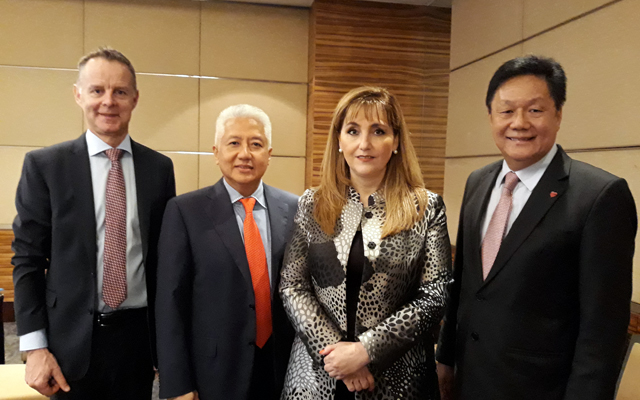
At the Panorama Mega Conference in Jakarta: WTTC's Nigel David, Panorama Group's Budi Tirtawisata, WTTC's Guevara and TTG Asia Media's Darren Ng
Travel and tourism’s total contribution to Indonesia’s GDP is expected grow 6.2 per cent annually, higher than the global average of four per cent, according to new data from the World Travel & Tourism Council (WTTC).
Travel and tourism generates 6.2 per cent of Indonesia’s GDP, or 770 trillion rupiah (US$59.2 billion), with Jakarta alone taking a 41 per cent share of the country’s travel and tourism contribution. The same research also shows that the sector is set to generate 2.4 million new jobs in Indonesia.
At the Panorama Mega Conference in Jakarta: WTTC’s Nigel David, Panorama Group’s Budi Tirtawisata, WTTC’s Guevara and TTG Asia Media’s Darren Ng
Speaking at the Panorama Mega Conference in Jakarta last week, Gloria Guevara, president and CEO of WTTC, further shared: “Travel and tourism accounted for over 55 per cent of Indonesia’s service sector exports.”
Guevara attributed the destination’s achievements to the policies put forth by president Joko Widodo’s administration to facilitate travel to the country.
The president has set an ambitious target of 20 million visitor arrivals in 2019, nearly double that of 2016. He also called for US$20 billion in investment in the sector to support this rapid growth. In 2016, Indonesia granted visa free access to nationals of 169 countries.
“Indonesia is a prime example of a government which is taking the right approach to tourism development with strategic investment to support sustainable growth and policies that facilitate travel,” Guevara commented.
On the future of the country’s tourism, Guevara remarked: “Do (longhaul) travellers to China or Japan also visit Indonesia? There should be a strategy to (make) Indonesia part of tours (in the region).”
Similarly, Indonesia needs to diversify its products and destinations to manage growth. One way Indonesia is already working towards this, she said, is by developing 10 new Bali’s.
But for this to bear fruit, she said infrastructure and connectivity are key.
Moreover, to sustain growth, the destination needs to consider the millennial segment, the majority of which will enter the workforce by 2020. Digital and biometric adoption in travel and tourism are also key.
The Philippine trade is anticipating that the Department of Tourism’s (DoT) move to spotlight metro Manila’s lesser-known attractions will add zing to the capital’s waning appeal, especially as traffic congestion in the city and the introduction of international flights are pushing tourists to other parts of the country.
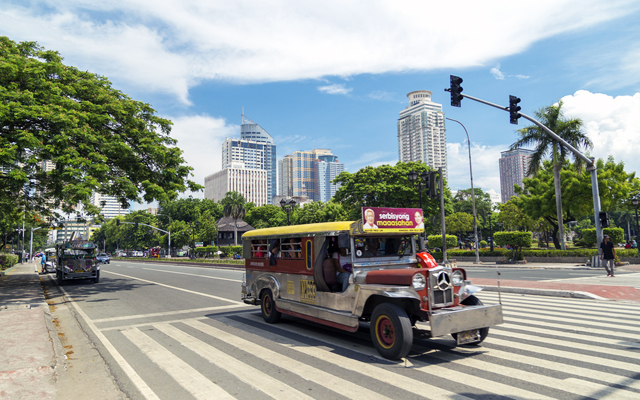
Agents said that hidden gems – including the 196-year old Bamboo Organ and manufacturing plant of the iconic jeepney in Las Pinas, as well as cultural, heritage and culinary tours of Malabon onboard tricycles, the local equivalent to tuktuks – are welcome addition to the metro’s limited attractions.
The ubiquitous jeepney plying the streets of Manila
Manila’s usual attractions include Intramuros and for the Asian market, the Chinese cemetery, Binondo Chinatown, optional museum tours and nearby Tagaytay.
Patricia Camille Caramat, marketing and product development executive at Marsman Drysdale Travel, said it is a good idea to promote more attractions as tourists are reducing their stay in Manila from three days to one or two days as many of them consider Manila as a stop en route to their main destination – in many cases, the Philippines’ beaches.
Scorpio Travel and Tours consultant Lyn Galon said these are existing attractions that they can include in their tours now that the DoT is actively promoting and jazzing them up.
The concerns, though, are traffic congestion going to these lesser-known attractions. In the case of Malabon, some of its places are prone to flooding during rainy season, said Caramat.
Even then, she said they are already including the Bamboo Organ and Sarao jeepney plant in their “half and half” tour combining Manila with Tagaytay.
The InterContinental Phnom Penh is now The Great Duke Phnom Penh
The InterContinental Phnom Penh has been rebranded into The Great Duke Phnom Penh since February 1, becoming the first managed asset under the newly established The Great Duke Hotels and Resorts based in Singapore.
The InterContinental Phnom Penh is now The Great Duke Phnom Penh
To accompany the rebrand, US$30 million of upgrading works will take place over the next 12 to 18 months, and cover guestrooms, public areas, the fitness centre, meeting facilities and restaurants.
Existing management, staff and associates working within the hotel will be retained.
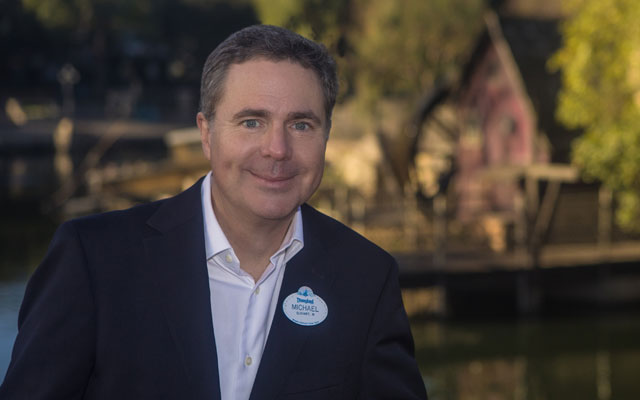
Michael Colglazier will take charge of Walt Disney Parks and Resorts’ Asia Pacific Operation as president and managing director from March 5.
In his new role, the 28-year Disney veteran will be responsible for overseeing the company’s parks and resorts operations and development throughout Asia, including Hong Kong Disneyland Resort, Tokyo Disneyland Resort with the Oriental Land Company and Shanghai Disney Resort.
For the past five years, Colglazier has served as president of the Disneyland Resort, where he led a workforce of 30,000 cast members, oversaw the successful 60th anniversary Diamond Celebration and drove the resort’s record business performance and growth.
Mövenpick Suriwongse Hotel Chiang Mai's Classic Room
Mövenpick Hotels & Resorts has unveiled grand expansion plans for Asia.
Having made its debut in the Thai city of Chiang Mai in November, the company is gearing up to add 1,200 rooms across its eight hotels throughout Asia in 2018, including in Hua Hin, the Maldives, Kuala Lumpur, Vietnam, Bangladesh and Khao Yai.
Mövenpick Suriwongse Hotel Chiang Mai’s Classic Room
Noting a shift in demand from the international market, the company is now breaking turf in secondary locations.
Said president of Asia, Mark Willis: “Historically, if you go back five to 10 years, international travellers went to typical Asian destinations, such as Bangkok, Singapore and Honk Kong. This has changed and people are exploring perhaps two sites, coming into a major city and then carrying on to a secondary resort.”
Vietnam is one example, where six resorts are slated to open by 2020, adding to its current Hanoi offering and covering a vast expanse of the coast – Phu Quoc, Cam Ranh, Quy Nhon, Quang Binh, Danang and Lang Co.
Bruno Huber, general manager and director of operations Vietnam, said: “We can see an increase in arrivals to Vietnam, infrastructure is growing, there are more airports. It is very positive.”
Hong Kong’s creative hub, PMQ, is inviting visitors to step back into the old days of Hong Kong with through exhibits including illustrations, real-life props and trick art.
The exhibition will run until March 31, focused on the scenes and neighbourhood of Hong Kong’s Central and Sheung Wan in the 50s and 60s, including through recreations of a traditional barbershop (Verandah outside S506) and lion dance parade (Verandah outside H502).
Booth simulating barber shop from the 50s and 60s
As well, starting mid-February, the Time Warp Trick Art Installation will use optical illusion techniques to mimic the street scenes as viewed from a balcony of the former Police Married Quarters.
From mid-February onwards, overseas visitors visiting PMQ can redeem a set of paper doll souvenir by presenting valid travel document at PMQ Info Centre (SG01).
The exhibition is open for free from 07.00 to 23.00 daily during the exhibition period.





 The German native brings 30 years of experience in the hospitality sector, including as resident manager at the Grand Hyatt Hotel in Dubai, managing director for a number of Rosewood hotels in the Middle East and general manager at the Hyatt Regency Bishkek in Kyrgyzstan.