TTG Asia
Asia/Singapore Friday, 3rd April 2026
Page 1382

Shared mobility shifts Avis’ ride-sharing focus up a gear

0

In an age of collaborative consumption, the booming sharing economy is spurring car rental giant Avis Budget Group to navigate creative ways to grow the size and share of the travel pie through the inking of partnerships with multiple peer-to-peer car sharing players.

The latest to sign a multi-year deal with Avis is ride-hailing company Lyft. Under this partnership, Avis will contribute thousands of vehicles from its fleet of 600,000 to the Lyft Express Drive programme in cities across North America.
Avis will contribute thousands of vehicles from its fleet of 600,000 to the Lyft Express Drive programme

In Asia-Pacific, Avis has launched various strategic initiatives with popular local ride-sharing players, including China’s Didi Chuxing and Singapore’s Grab. Avis Philippines – together with Avis Global and Metro Davao Taxi Association – also developed Hirna, a taxi-hailing app that aims to improve taxi services in key cities outside Manila.

Angeline Tang, Avis’ regional director – leisure travel & partnerships, Asia, told TTG Asia: “Ride-hailing companies are our allies, not competitors. The more opportunities consumers have for mobility that do not involve owning their own car, the more we benefit.

“As this decline in ownership continues, the future holds a greater need for more, and more flexible mobility options, which explains why the pie is getting bigger, not shrinking or just being divided up differently.”

On average, Avis reports mileage of some 724km over four rental days, or 177km per rental day. In comparison, on shorter-length rentals – lasting over one to two days – the mileage per day increases, described Tang. Such cases, for which ride-hailing are not economical, are where car rentals come in, she said.

Avis also works with Luxury Retreats, acquired by Airbnb in February 2017, as the official mobility partner of the full-service premium villa rental company.

Further, in 2013, Avis acquired car-sharing network Zipcar, which has more than one million members across the world. This movement is poised to give Avis “a foothold in the rapidly growing world of collaborative consumption”, explained Tang.

She added: “By working with ride-hailing players, we can address the growing demand for transportation in key markets, and further leverage our assets.”

SuperStar Virgo to become Dream Cruises’ pathfinder Down Under

0

Nearly two decades since Star Cruises took delivery of the SuperStar Virgo, Genting Cruise Lines will transform the ship into the Explorer Dream, which will join the Dream Cruises fleet in spring 2019 as a pathfinder for the brand’s global aspirations.

The SuperStar Virgo will undergo a US$30 million dollar transformation in March 2019 that will incorporate new facilities including The Palace, Dream Cruises’ signature, luxury private enclave featuring 50 suites and butler service. Guests will be able to enjoy new East-meets-West F&B options and a new Crystal Life Spa.

Superstar Virgo was in 1999 introduced as the second ship in the Star Cruises fleet

Taking the first step to bring Dream Cruises outside Asian waters, in autumn/winter of 2019, Explorer Dream will homeport in Sydney and Auckland where she will embark on 21 seven-night itineraries.

Explorer Dream will feature a multi-lingual crew conversant in English, Putonghua and other Asian languages and entertainment options reimagined to appeal to Asian passengers.

With pre and post stays available in Sydney and Auckland, Dream Cruises’ seven-night itineraries in Australia and New Zealand is set to be an important cornerstone for Asian travellers who typically enjoy nine- to 14-day vacations when visiting “down under”.

Starting October 27, 2019, there will be six sailings under the Queensland and the Barrier Reef Cruises itinerary, calling at Mooloolaba/Sunshine Coast, Brisbane, Newcastle and Gladstone.

Tasmania Island and Melbourne Cruises will voyage on eight sailings from February 9, 2020, calling at Port Arthur, Hobart, Burnie, Melbourne, Phillip Island and Eden.

And for North and South New Zealand Cruises, seven cruises will sail beginning December 15, 2019, calling at Wellington, Milford Sound/ Doubtful Sound, Dunedin, Napier, Bay of Islands, Akaroa, Picton and Gisborne.

Around 13 million visitors currently visit Australia and New Zealand annually with about five million of this number from Asia, according to Genting Cruise Lines.

Meanwhile, Explorer Dream is also expected to strengthen Dream Cruises’ brand in North China with homeports in Shanghai and Tianjin during Spring/Summer 2019 with a selection of voyages of various durations from Shanghai or Tianjin to Japan, Russia, Hong Kong and the Philippines.

“Dream Cruises will extend its brand recognition to 300 million Chinese in Shanghai and Tianjin/Beijing next summer as well as offer cruises in Australia and New Zealand to its Asian-sourced passengers during winter 2019 – the first time Dream Cruises will be sailing outside Asia,” said Lim Kok Thay, executive chairman of Genting Hong Kong.

Explorer Dream will offer another option for our Asia-based guests to expand their travel horizons with new rail/cruise and fly/cruise opportunities to see the world.”

TAT, Expedia in pact to promote secondary destinations in Thailand

0
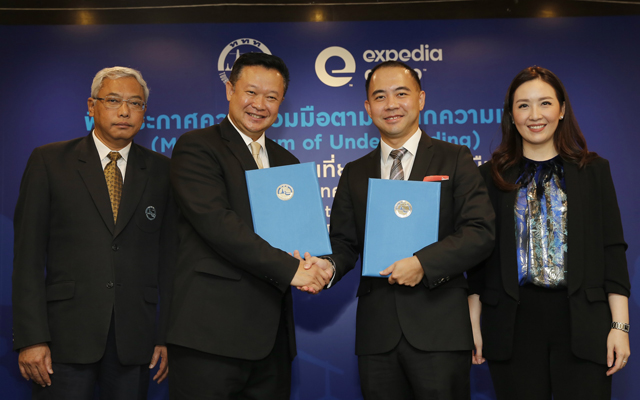
TAT's Yuthasak Supasorn with Expedia Group's Ang Choo Pin and Pimpawee Nopakitgumjorn

Tourism Authority of Thailand’s (TAT) governor Yuthasak Supasorn and Expedia Group’s director of market management Pimpawee Nopakitgumjorn, yesterday signed an MoU to boost tourism to secondary cities in the country, aligned with the TAT’s direction.

As part of the MOU, the collaboration will include the sharing of traveller-centric insights and trends that will boost TAT’s capabilities to plan effective promotional campaigns to attract more travellers and encourage longer stays in Thailand.

From left: TAT’s Charun Ohnmee and Yuthasak Supasorn with Expedia Group’s Ang Choo Pin and Pimpawee Nopakitgumjorn

Both parties are also expected to embark on joint destination marketing campaigns to spotlight Thailand’s hidden and unique tourist attractions in its secondary cities, promoting the variety of lodgings to Expedia Group’s 675-plus million monthly visitors globally.

Expedia Group will also launch key programmes in destination marketing and skills transfer to the local hospitality industry in secondary cities. Workshops for local hotel partners will include ways to leverage Expedia Group’s Partner Central platform to accelerate skills development and build revenue and hotel management capabilities among local SME hotels.

Other aspects of the cooperation include a joint corporate social responsibility campaign aimed at enhancing environmental consciousness among hotels in Thailand and reducing the use of single-use and general plastic items in their properties. This is targeted at reducing the environmental pollution and damage resulting from tourism growth.

Pimpawee said: “A large majority of accommodations in secondary cities are still primarily offline which means international travellers cannot find or book them easily. This results in missed opportunities for hoteliers, as they are not capitalising on the growth of inbound travellers.

“We will be launching a series of initiatives to educate them on the value of online distribution. They will also have access to our partner-facing tool, which allows them to effectively manage their rates and availability, online content and guest satisfaction. By improving the digital skills of the hospitality sector, we will play a pivotal role in boosting the local economy.”

Minnesota hotel to materialise from Mayo Clinic’s partnership with Pontiac Land

0

Mayo Clinic and Singapore-based Pontiac Land Group have partnered to kick off a long-planned expansion of the Gonda Building on Mayo’s Rochester (Minnesota) campus in the US, which will add four floors of new clinical space and seven floors of hotel space.

Preliminary plans are for construction to begin by the end of 2019 or early 2020, with the project being completed by the end of 2022. The project timeline will become available as details are confirmed.

Rendering of the expanded campus

“Our medical teams experience ongoing clinical space constraints,” said Terese Horlocker, a Mayo Clinic anesthesiologist and chair of Mayo’s Midwest Facilities Committee. “We have explored options to accelerate the expansion of the Gonda Building. However, without a collaborator, the expansion would not be possible for at least a decade and at a significant additional cost.”

The 11-floor expansion includes four floors for new clinical space and seven floors for a premier hotel space. The four-floor clinical space expansion provides an additional 18,581m2 to accommodate current patients and meet the needs of future patients.

Through this collaboration, Mayo Clinic and Pontiac Land will engage in a joint venture for ownership of the hotel, which will be operated by a major hotel group to be identified and announced at a later date. Pontiac Land will develop the hotel space under the joint venture.

While specific plans for this development are being finalised, Mayo Clinic plans to invest US$190 million into the clinical expansion and use the additional space for expansion to the Mayo Clinic Cancer Center and Outpatient Procedure Center.

“The collaboration will bring together two fields of complementary expertise: medical and hospitality. Each partner will be able to leverage their individual expertise to enhance the patient and guest experience. We are excited about this collaboration and look forward to delivering a distinctive hospitality experience to match Mayo Clinic’s clinical excellence, commented Philip Kwee, COO, Pontiac Land.

The Gonda family has shared their enthusiastic support for this project.
“This third and final phase of the Gonda Building fulfills Susan and Leslie Gonda’s lifelong dream for Mayo Clinic to create a one-of-a-kind, integrated destination of hope, healing and hospitality for the patients that Mayo Clinic serves,” said Lou Gonda on behalf of the Gonda families.

SE Asian outbound markets a force to be reckoned with

0
Regional and longhaul travel picking up in South-east Asian outbound markets

Much attention has been given to Asian travel markets with huge population bases like China and India, but overlooked markets in South-east Asia such as Vietnam, Thailand and the Philippines are proving to be formidable forces in travel.

In South Korea, Vietnam is now the top market for Nami Island, a destination popular with Thais, Vietnamese and Indonesians, according to marketing manager Kim Kyu Han. While the attraction’s initial claim to fame came from popular Korean TV series Winter Sonata over a decade ago, it has in recent years also received film crews from Thailand, Malaysia and Indonesia.

Regional and longhaul travel picking up in South-east Asian outbound markets

At the 280-key Flamingo Hotel in Penang, Thai travellers make up 15-20 per cent of total guests, compared to European guests, who add up to less than two per cent, according to Ronnie Ng, senior sales manager.

He said developing South-east Asian travel markets should not be underestimated or ignored, given their growing appetite for travel and rising affluence.

Agreeing, Bernard Gene Luna, operations manager at U-Travel Services in the Philippines, said leisure travel has become a larger part of life for many Filippinos in the past decade.

“Compared to previous generations, millennials are more willing to (dip into their savings) to travel. Travel is becoming such an aspirational part of their lives,” said Luna.

The most popular destinations at the Philippine agency are Japan and South Korea, where the visa application process is less of a hassle, he pointed out, while Taiwan is also rising quickly due to a recent visa-free facility for Philippine passport holders.

“There is also a growing number of seasoned Filipinos travellers. They tend to travel longer haul to France, Italy and the UK. For them, the visa application process is no issue.”

While China remains the strongest source market for longhaul buyers TTG Asia spoke to at the recent PATA Travel Mart (PTM) in Langkawi, many are upping efforts to target South-east Asia’s expanding travelling class.

Sellers at PTM also noted a rise in Asians looking for alternative European destinations to the traditionally popular hotspots of London and Paris.

Ralf Ostendorf, Visit Berlin market manager for Asia, said China is firmly the country’s top Asian source market, however, an increasing number of direct flight connections has spurred growing interest in Europe from other parts of South-east Asia.

Thailand, Indonesia and the Philippines are the strongest South-east Asian source markets, with Malaysia slowly picking up.

Hikmet Atilla, general manager of Raffinesse Travel, has also noticed more interest from South-east Asia for Turkey, with Istanbul being the main attraction.

Thailand, Japan and South Korea are the main markets after China, with the emerging outbound destinations of Myanmar and Cambodia starting to gain momentum.

Reporting by Yixin Ng and Marissa Carruthers

New TripAdvisor wants to be more social and personalised

0

Travel review and booking site TripAdvisor wants to become more social when it launches a new site and mobile experience later this year, enabling members to post photos and videos and get travel recommendations and inspiration from friends, brands and travel experts they follow.

TripAdvisor said over 500 launch partners have signed up for the new website – currently in beta test – including National Geographic, the Travel Channel, Business Insider, GoPro, PopSugar, Daniel Food Diary, Have Halal Will Travel, Denise Keller and Melissa C Koh.

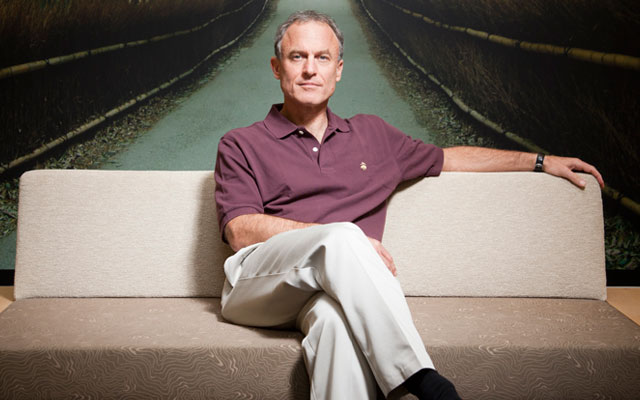
Kaufer: new TripAdvisor to be more personalised and act as an inspirational platform

In addition to the many content creators joining the platform, TripAdvisor’s team of destination experts and TripAdvisor Media Group brands, including Smarter Travel, Cruise Critic and TheFork.com, will also contribute to the site experience through unique profiles and travel content.

The new TripAdvisor expands its community beyond travellers to also include brands, social media influencers, publishers and friends. Travellers can follow and connect with individuals or content creators who share information that is relevant to their interests.

TripAdvisor members will be able to create and view new forms of content including photos, videos and articles. Members will also have the ability to create “Trips,” which can be in-depth travel guides, itineraries or simple wish lists of things to do while travelling. Trips can be made private and saved for personal use or shared with the community to inspire and help others.

A “travel feed” will enable TripAdvisor members to discover more relevant information faster when planning travel. Assisted throughout the entire travel planning process, members can draw advice and inspiration from their friends, family and trusted experts.

When a member logs onto the TripAdvisor app or site, their homepage transforms into a personalised feed of information. When searching a particular destination, the feed automatically narrows the scope of the information displayed to that particular geographic location.

TripAdvisor wants to become your new social media feed

Said Stephen Kaufer, CEO & co-founder of TripAdvisor, said in a statement: “The new TripAdvisor is the one travel site that brings together social-assistive tools, amazing content and our existing booking capabilities to merge the joy of planning and discovery together into a single experience. We are assisting our members at each step of their journey as we become a more personalised, inspirational and useful TripAdvisor.”

Chris Thorman, vice president community products & growth, National Geographic, added: “National Geographic wants to reach our customers wherever it is they are consuming content. We want to be available on all platforms allowing people to engage with our brand and content wherever and whenever they choose.”

TUI acquires Italian tech startup Musement

0
Partnership combines TUI's customer platform and Musement's technology

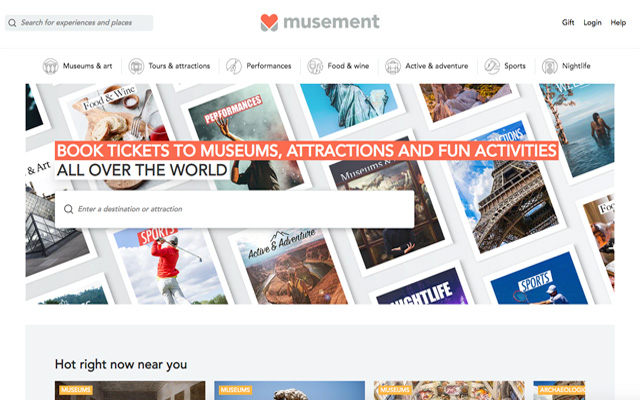
TUI Group has acquired Milan-based tours and activities startup Musement, which will initially be managed as an independent unit within TUI Destination Experiences, the group’s Spanish subsidiary.

With worldwide revenues of 150 billion euros (US$174.9 billion) and annual growth of seven per cent, the experiences market is one of the most attractive tourism segments, TUI said in a statement.

Partnership combines TUI’s customer platform and Musement’s technology

TUI said the tours and activities market of suppliers is still highly fragmented. More than 90 per cent of the around 350,000 companies are small providers generating annual revenues of less than one million euros, almost exclusively depending on one-off customers. Musement’s online platform serves these small companies by providing them with a digital market place – reaching out to 20 million TUI guests and as well as third party customers in future.

Founded five years ago, Musement today offers around 35,000 products in 1,100 cities around the world. Its portfolio ranges from admission tickets for museums, events and attractions via guided tours, to boat and bicycle tours. Musement has 130 employees and one million users.

With the acquisition, TUI expects earnings growth will be delivered through a broader product range and stronger digitalisation of the business. Customers will be able to create their own individual experiences from a range of products.

“We are aiming to provide the most highly personalised experiences possible to our 20 million customers. This will require a stronger digitalisation of our business. For me, digitalisation and personalisation are inextricably linked and constitute the key success factors for the future of tourism. With the acquisition of Musement, we are taking a further crucial step in this direction,” said Fritz Joussen, CEO, TUI Group.

Alongside Hotels & Resorts and Cruises, TUI Destination Experiences is one of TUI Group’s three growth areas. The company had only completed the merger with Hotelbeds Group’s Destination Management in August of this year. TUI Destination Experiences’ global footprint now comprises 49 countries, where the company employs its own staff and is among the leading providers of destination experiences.

CapitaLand’s Ascott gets 70% stake in Indonesia’s Tauzia with US$26m investment

0
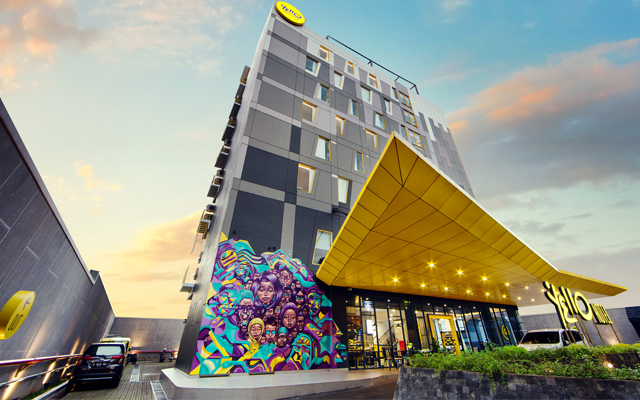
Artist impression of Yello Hotel Manggarai Jakarta

CapitaLand’s wholly owned serviced residence business unit, Ascott, is investing US$26 million for a 70 per cent stake in Green Oak Hotel Management, the holding company for Tauzia Hotel Management (Tauzia).

This is Ascott’s first major move into the lodging segment beyond its core serviced residence business and existing business in apartments for corporate lease.

Artist impression of Yello Hotel Manggarai Jakarta

With its investment in Tauzia, Ascott will get an instant boost of close to 20,000 units spanning 122 hotels across Indonesia, Malaysia and Vietnam, half of which are under development. This puts Ascott’s portfolio at more than 94,000 units globally, surpassing its 2020 target of 80,000 units.

Kevin Goh, Ascott’s CEO, said in a statement: “Tauzia’s fastest growing mid-tier business hotels will enable us to capture the ballooning middle-class segment in Asia, which will be home to two-thirds of the world’s middle-class by 2030.

“Prior to our investment in Tauzia, we have 10 business hotels with about 2,000 keys in our portfolio. On top of the units under Tauzia, we see potential to add another 20,000 keys over the next five years across South-east Asia. This will increase our hotel portfolio to over 41,000 keys, constituting about 25 per cent of our 160,000-unit target by 2023.”

The majority of Tauzia’s portfolio are located in Indonesia, with close to 60 per cent in key cities such as Jakarta, Bali, Bandung, Surabaya and Yogyakarta. About 70 per cent of Tauzia’s hotels cater to business and convention travellers, while 30 per cent are targeted at leisure travellers.

Tauzia has six in-house lifestyle brands, comprising the mid-tier Harris Hotels; Fox Harris Hotels; Yello Hotels; economy POP! Hotels; upscale boutique hotels Tauzia’s Préférence brand; and high-end business Harris Vertu Hotels.

In Indonesia, Ascott has 17 serviced residences and more than 3,000 units across Jakarta, Bali, Bandung, Karawang, Makassar, Surabaya and Yogyakarta.

Ayana Komodo Resort kick-starts Flores’ luxury hotel development

0
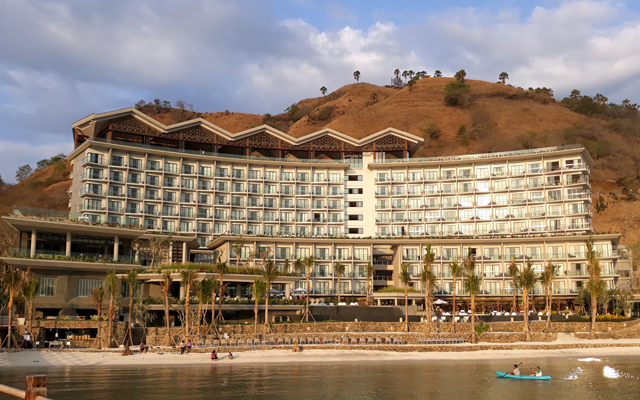
Exterior of Ayana Komodo Resort

Indonesia’s Flores last week welcomed the arrival of its first luxury resort with the opening of the 250-key Ayana Komodo Resort on Waecicu Beach in Labuan Bajo, the gateway to the nearby Komodo Island and Rinca Island.

Speaking at the launch of the new resort, Rudy Suliawan, owner of Ayana Komodo Resort, said: “People have asked me why I have chosen Labuan Bajo in Flores to build the next Ayana after our Jakarta and Bali properties.

Exterior of Ayana Komodo Resort

“By opening the resort here we will be able to bring in high-spending tourists to this destination as the gateway to the World Heritage Site, the Komodo National Park,” said Rudy. “We are here not only to bring hospitality (to Flores) but our main objective is to showcase Labuan Bajo as a world-class destination.”

He further added that Ayana’s debut also introduced a new hospitality concept combing accommodation and activity facilities into Labuan Bajo.

At the resort, guests can avail themselves of facilities including a ballroom and meeting rooms, seven F&B outlets, spa and fitness centre, swimming pools, kid’s club, dive and activity centre.

The resort’s specially built cruise ship, Ayana Lako di’a, will begin sailing on October 1, but the nine-cabin and suite luxury phinisi has already been booked for a wedding group of around 80 guests from China on September 22.

Ayana Komodo Resort also boasts a glass-bottom boat and a speed boat in operation. A second phinisi ship is currently under construction in Bira, South Sulawesi, while plans to build a catamaran and a beach club on a nearby island are in the pipeline.

As well, the property has committed to provide English training for the Komodo National Park rangers, and will donate one US dollar for each roomnight sold to support the national park by improving facilities such as toilets.

In his opening speech, Agustinus Dula, the regent of Manggarai Barat, believed that more facilities will follow in the wake of Ayana’s opening and welcomed investors into the destination to maximise human capital development.

“We will see a much improved destination in five years down the road,” he said. “We have opened a tourism school to prepare for the increasing demand of talents here.”

Welcoming the new opening, Umberto Cadamuro, COO inbound of PACTO, said: “Ayana is the only property with a large room inventory, as well as different room types, and can therefore cater to both the upper-middle and high-end markets. But, above all, we do not often see this kind of investment in off-the-beaten-track areas. I do believe that Ayana has understood the potential of the destination, and we really look forward similar initiatives in Raja Ampat.”

In data age, collaboration is key for smaller travel companies

0
Adara derives travel patterns, trends and behaviour from more than 750 million monthly unique traveller profiles across more than 190 travel brands

Becoming a tech-smart travel company in today’s fast-changing digital landscape is no mean feat, but the goal is becoming increasingly attainable.

Speakers at the Travolution Asia Forum 2018, which took place last week as part of PATA Travel Mart, shared that there is a growing pool of opportunities for small- and medium-sized players to tap on the immense amount of traveller data, which can empower them even in the face of competition from data giants like Google and Airbnb.

Making allies out of former competitors  

For example, Vietnam-based tour booking platform Triip has accrued a network of partners such as Dichungtaxi, TripRadius, Travelog and Keys China, representing a data ecosystem of more than 100 million users.

“All of these small companies decided to work together because if they don’t, they would have to spend a lot on advertising. In fact, they had already wanted to work together, it’s just that they did not know how to make the collaboration easier,” explained Hai Ho, CEO of Triip.

Richard Harris, CEO, Intent Media, echoed the sentiment with insight that travel agencies should not discount working with their competitors in co-ops to share data intelligence. This can even prevent precious data from being lost to bigger players like Facebook and Google.

He explained: “Data is power, so the relationship that you have with your customers is an incredibly important asset. You need to harness your data and make sure that your access to data is not taken away from you. Look at who you can partner with to take advantage of this asset.

“Think about models that involve some manner of cooperation with who you think is your arch-rival. This can hopefully disintermediate or prevent the platforms from taking your customer data,” he added.

Another key consideration is data security, which extends beyond privacy to reward. Ho advised that customers must also gain from sharing their data, and this can come in the form of free user services and an improved shopping experience.

While agents express an eagerness to harness and share data insights, they are still in the dark about how to do so.

Md Zahirul Alam Bhuiyan, CEO & founder of Bangladesh-based Discovery Tours & Logistic, lamented that information about inter-agency collaboration and data privacy and protection is scarce.

He added: “We cannot fight with Facebook and Instagram, but we can adjust to them and try to do something unique that isn’t possible online, such as designing multi-destination products with our customers.”