TTG Asia
Asia/Singapore Sunday, 5th April 2026
Page 1375

Grand ambitions on the plate

0
A traditional shop on the streets of Macau

No longer content with being a gaming haven, the ‘Las Vegas of Asia’ is now working towards transforming itself into a foodie destination after clinching recognition as a UNESCO Creative City of Gastronomy last October.

A traditional shop on the streets of Macau

At the annual marketing meeting held in June 2018, Macao Government Tourism Office (MGTO) revealed that gastronomy and festivals will be a key focus of its marketing plan going forward.

An MGTO spokesperson said: “Following Macau’s designation, the government unfolded a four-year action plan (2018-2021) which includes various initiatives in six categories, and (identified) the 2018 Macao Year of Gastronomy as one of the key highlights of the four-year action plan.

MGTO plans to promote Macau’s “cultural image”, as well as organise or support international events in line with the gastronomy theme.

The tourism body will work towards integrating gastronomy in existing events including the Parade for Celebration of Chinese New Year in February and the Macau Light Festival in December, the spokesperson shared.

In 2019, MGTO will organise the International Gastronomy Forum for the third year, while also pushing for the Asia’s 50 Best Restaurant Awards Ceremony to be hosted in Macau again in 2019.

Moreover, MGTO intends to continue to support local associations and private sector organisations, as well as work with other government departments on gastronomy-related festivals and events. Some recently concluded examples include the Malaysian Food Festival 2018 (August 16-31) and the Southeast Asia Food Carnival (mid-August).

On the ground, MGTO is rolling out different promotional activities through its representatives in various source markets, working with travel agencies to promote the destination’s travel products.

Pamela Chan, associate director – head of marketing, Taipa Village Destination, remarked: “With the territory’s growing recognition (among foodies), Taipa Village continues to receive an increasing number of visitors.”

Taipa Village has been hosting regular tours for media, industry partners and teambuilding clients who are keen to explore the destination’s mix of art, cultural and dining experiences.

“Gastronomy is the main highlight. We once hosted a teambuilding company for a treasure hunt activity in Taipa Village, with eight spots assigned as check points.  The treasure hunt concluded with a Macanese cha gordo (fat tea) at Macanese restaurant La Famiglia,” Chan continued.

While lauding MGTO’s new direction, Manuel Wu, managing director of Macau Explorer Cultural Travel, which runs gourmet/food tours, sees room in developing food tourism offerings in Macau beyond large-scale events.

Wu said: “I haven’t seen any surge of similar tours from other operators in the market; what they offer mostly echo MGTO’s promotions promotions such as those focusing on food festivals.

“This is really due to the limitation of the local infrastructure. Many family-run outlets, for instance, are small and simply can’t manage big groups,” he added.

To develop Macau’s food tourism, Wu wants more to be done to help small food businesses survive. He said: “In the long run, it’d be helpful if the government could lend support to these small outlets because escalating rentals are driving the successors of ageing restaurant owners’ to close business and rent out the premises.”

Another issue Wu pinpointed, is the difficulty of experienced chefs in finding successors to pass on their skills due to a lack of interest among the younger generation.

“It’s vital for the government to incentivise the younger generation to pick up the cooking profession and preserve this traditional local neighbourhood food culture.”

On top of cooking classes, Wu’s company offers tours that visit traditional family-run food outlets, some with over 50 years of history in old districts like the Inner Harbour of Macau Peninsula.

“So far, enquiries are mostly from South-east Asia agents asking if I can organise street food tours for groups to venture into local market areas,” Wu said.

MGTO says it is taking steps to give visibility to food businesses on the ground. It has been collecting information from local associations about eateries and restaurants along its eight recommended walking routes (Step Out, Experience Macao’s Communities – Walking Tour Routes), and plotting these food haunts along the routes.

“Currently, MGTO is compiling additional information including opening hours, type of cuisines and locations by district in order to fully promote the dining scene and attract visitors and residents to different districts,” the MGTO spokesperson shared.

The value of feedback

0

When a hotel gets reviews, it increases the visibility of that hotel and increases the chance of more bookings. For that reason, it is important that hotels encourage their guests to write reviews.

Our research shows that guests are 3.6 times more likely to write a review when a hotel reaches out to seek feedback.

Some of the ways in which you can encourage guests to review are to ask for their feedback on-site, use a customised guest survey, or perhaps offer them a perk to give a review.

To ask for feedback while a guest is on your property, we recommend using a guest messaging tool. Let guests know that you provide a messaging feature for them to come to you if they need to ask questions, get directions, request toiletries or for any other enquiries you may have. At this point, it will be easy for you to check in with the guest to see if they are enjoying their experience at the hotel. If you keep the lines of communication open, feedback will follow.

When your guests check out of the hotel, a friendly reminder of how much you value their feedback and letting them know that it helps you to improve your service, will serve as a handy reminder to them to review the hotel. A post-stay survey, for example, also allows them to express their honest opinion about their stay.

A customisable guest survey is a great way to ask for feedback, because it puts you in the control seat. You can ask the questions that you really want answers to, such as how the guest is responding to a new hotel feature or service. You can also ask open ended questions, offering a scale response, of say 1-10, to determine how they feel about a certain aspect of your service.

A survey is a clear, direct way of asking for feedback and it typically gets a response. Collecting such reviews positively influences hotel rankings and ultimately increases revenue.

If budget permits, offering a perk helps prompt guests to submit a review. A spa pass, a free dinner or cocktail would often spur the guest into action. This is a great way to steer guests into learning more about your services as it adds to an excellent stay and experience.

Another way to choose a perk is to assess past reviews to see what guests appreciate the most about your hotel, and then offer those features or services as perks for future guests to obtain their feedback.

Asking for honest feedback indicates to the guest that you really care about their opinion.

TrustYou is a guest feedback platform used worldwide by suppliers in the tourism and hospitality sector for reputation management purposes.

Dull Golden Week for Thai tourism in shadow of Phuket tragedy

0
Chinese tourists outside the Grand Palace in Bangkok

Thailand will miss its Chinese arrival target during the Golden Week holiday, with travel confidence from the China market still not restored three months on from the Phuket boat tragedy.

The Tourism Authority of Thailand (TAT) revised its projection on the Chinese tourist arrivals in the country downward from 250,000 to 205,000 during the October 1-7 peak period.

Chinese tourists outside the Grand Palace in Bangkok

Based on ForwardKeys data, which excludes LCCs and Chinese airlines, flight bookings during the period dropped 35 per cent.

The Association of Thai Travel Agents (ATTA) expects Chinese arrivals to Thailand via its members to hit rock-bottom in September. For the first 20 days of September, Chinese arrivals plunged 37 per cent year-on-year. The association hopes the confidence of Chinese travellers will start to recover in November.

Both TAT and ATTA forecast that the July 5 boat tragedy in Phuket would also impact their Chinese market projection in 2018, and have lowered the target from 12 million to 10.5 million visitors.

TAT governor Yuthasak Supasorn said arrivals in the Golden Week would be down by only one per cent compared with traffic in the same period last year, but Chinese visitors’ spending is projected to increase by 5.9 per cent to 6.2 billion baht (US$190 million) during China’s seven-day holiday thanks to the NTO’s focus on quality tourism.

Adith Chairattananon, honorary secretary-general of ATTA, said Thailand lost its business opportunities to competitors after 47 Chinese tourists were killed in the boat accident. Many chartered flights that were originally planned to fly from China to Thailand in the second half of this year turned to other countries including Vietnam, he said.

Besides, Chinese tour operators are still awaiting new investment projects in Thailand amid concerns over tourist safety. “The Thai government must have a long-term plan on tourism security and standard, not only for the Chinese market but also others,” urged Adith.

Weaker rupee will affect Indian outbound, but may boost SE Asia’s appeal

0
XXXX

While the Indian outbound sector is likely to see the impacts of a weaker rupee for the upcoming holiday season, agents are expecting demand for destinations like South-east Asia to pick up as Indian travellers seek to make the most of their money.

The Indian rupee has been the worst performing Asian currency in 2018, having tumbled 13 per cent in value this year so far.

Agents think South-east Asia will be a popular holiday destination for India’s outbound travellers as it would allow them to make the most out of their money

“Rupee depreciation is a matter of concern for small- and medium-size agents. We are worried that there may be a decline of about 15 per cent in demand in this financial year,” Teddy Thomas, director, Oasis Xpress Travel & Tours, told TTG Asia on the sidelines of the TAFI Annual Convention 2018 in Abu Dhabi.

The weakening currency has affected bookings that span longer duration, like honeymoon travel, said Vikas Khanduri, CEO, Holiday Merchants.

“Rupee depreciation also means that besides the cost of land arrangements going up, it’s making cost of experiences like dining in a high-end restaurant or shopping dearer. So now honeymooning couples travelling to destinations like Australia and New Zealand, who may have the opportunity to in between stop at no extra cost on airfare at transit points like Singapore and Malaysia, will not take that option.”

With the rupee depreciation, some agents are expecting outbound demand for longhaul destinations like Europe to take the biggest hit.

“As longhaul holiday destinations will become more expensive, they are likely to be more affected. This may result in many Indian travellers opting for South-east Asian destinations. However, we are also seeing Indian tourists who otherwise would have chosen long-duration holidays in South-east Asian destinations, opting for short holidays,” said Pradip Lulla, managing director, Cupid Travel & Tours.

Lulla added that destinations like Turkey, where the currency depreciation against the dollar has been steeper than India, have an opportunity to tap the Indian outbound market.

“Travellers from India will now prefer international destinations where the value of the rupee is at par or not depreciated. Also, we do not expect travellers to reschedule or postpone their travel plans, however, they may look at budget accommodation options and other measures to reduce expenses during their stay,” said Aloke Bajpai, CEO & co-founder, Ixigo.

China now a key driver of tourism investment in Indonesia

0

Chinese tourism investment in Indonesia has surged in recent years, totalling US$333.4 million last year, second only to investment from Singapore.

Speaking at the opening of the Third Coordinating Meeting of the Ministry of Tourism in Jakarta earlier this week, Indonesia tourism minister Arief Yahya said: “The growth of investment from China is quite surprising. Five years ago, we did not even see China on the list of investors. Today it has become the second biggest foreign investor in tourism sector in line with the growth of arrivals from China.”

Foreign tourism investments concentrated in Bali, Jakarta (pictured) and Riau Islands

Total investment in Indonesia’s accommodation and restaurants hit US$1.4 billion last year, with the largest chunk from Singapore (US$462.7 million), followed by China and South Korea (US$69.3 million).

As expected, Bali, Jakarta and Riau Islands – the most visited tourist destinations in the country – received the bulk of these investments.

China has not been a key source of foreign tourism investment until recently. In the last four years, Singapore has been the biggest investor, followed by Hong Kong, the British Virgin Islands, South Korea and Japan, according to Wisnu Soedibjo, deputy chairman of Indonesia’s Investment Coordinating Board.

Over the past four years, investment in tourism has grown at an average of 36 per cent annually, he added.

Still, Arief estimates the destination needs an additional Rp500 trillion (US$34 billion) in investment for 2019-2024. To meet tourism growth targets, the destination would need around 120,000 more hotel rooms, 15,000 restaurants, 100 recreational parks, 100 dive operators, 100 marinas and 100 more Special Economic Zone, he opined.

Outside of the private sector, these investments would come from the government sector – including the Ministry of Transportation, Ministry of Public Works and Housing, Airport Authorities, Ministry Communications and Information and Ministry of Tourism.

“Apart from the banks as the source of fund, this will be the first time in history that investment in tourism will be supported by the capital market,” Arief said.

Best Western unveils two new boutique brands

0

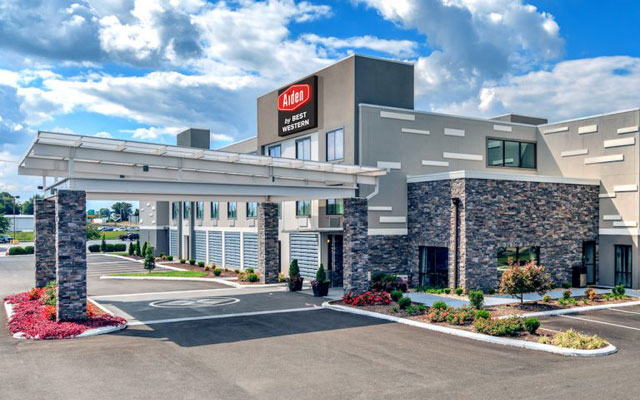
Best Western Hotels & Resorts is introducing a pair of boutique franchise brands, Sadie Hotel and Aiden Hotel, in the upscale and upper midscale segments respectively.

The conversion brands could help reposition existing properties to improve their performance and enhance their asset value, in addition to broadening their customer base, according to Best Western.

Sadie Hotel will be positioned in the upper segment

In particular, the brands will offer hoteliers a design and renovation programme, while allowing them the chance to incorporate the local flair of their respective market.

David Kong, president & CEO at Best Western Hotels & Resorts, said: “Both Sadie Hotel and Aiden Hotel present the opportunity for independent hoteliers or developers with branded hotels to reposition their property in a unique way, taking advantage of our cost-effective, turnkey and customised design and renovation programme.”

“A dedicated onboarding team will ensure these repositioned hotels are quickly integrated with Best Western’s powerful revenue engines intended to drive a fast ramp-up in business.”

Every hotel will be on boarded with “near immediate access” to Best Western’s website, global partnerships and sales team, and revenue management system.

Aiden Hotel will be positioned in the upper middle segment

Hotels will also have access to a revenue manager to maximise revenue and reduce operating costs, as well as the Best Western Rewards programme.

Moreover, a marketing and PR playbook will also be provided to help each hotel to drive social media visibility and buzz.

Each Sadie Hotel and Aiden Hotel will feature a multi-functional public area with either a café or bar; modern seating areas; and mobile check-in.

With the launch of Sadie Hotel and Aiden Hotel, Best Western now features 13 brands in its portfolio.

SIA inks new three-year deal with Tourism Australia

0
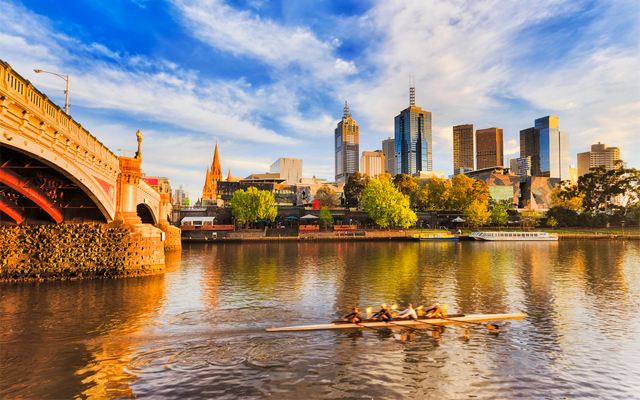
SIA currently services six cities in Australia; Yarra river in Melbourne pictured

Singapore Airlines (SIA) and Tourism Australia have signed a three-year strategic marketing deal worth A$11 million (US$8 million) as both parties reaffirm their commercial ties.

The agreement will see the two parties jointly fund a range of tourism campaigns and promotional activities in eight of Australia’s key inbound markets such as Singapore, Malaysia, Indonesia, China, India, Japan, Germany and the UK.

SIA currently services six cities in Australia; Yarra river in Melbourne pictured

Tourism Australia’s managing director, John O’Sullivan, said in a statement: “The eight markets covered by this agreement represented four million international visitors and A$22 billion in collective spending last year, which is a measure of the importance of our ongoing partnership with SIA. The strength of their network and the quality of their product are significant assets that we know resonate strongly with the type of high-value traveller that we are targeting in both Asia and Europe.”

SIA currently operates more than 130 scheduled flights per week to Australia, serving Adelaide, Brisbane, Canberra, Melbourne, Perth and Sydney. This represents eight per cent of all Australia’s international arrivals. Together with subsidiary airlines SilkAir and Scoot, the SIA Group has close to 170 weekly flights to Australia.

China, US, India top tourism powerhouses: WTTC

0
China tops

China, the US and India took the top three spots in the WTTC’s new Power Ranking, released ahead of World Tourism Day celebrations.

The three countries ranked top in terms of absolute growth in the past seven years, combining tourism’s contribution to GDP, international visitor spend, domestic tourism spend and capital investment.

China tops WTTC’s power ranking; domestic Chinese tourists in Shanghai pictured

WTTC explained that the inclusion of domestic spend and investment in the ranking allows for “a more rounded measure of performance and prioritisation” than the more usual measures of GDP contribution and international spend.

Other countries that saw the greatest absolute increase are, in order, Mexico in fourth place, the UK, Spain, Turkey, Canada, Indonesia, followed by Australia and the UAE tied in tenth place.

On the Performance Ranking, which looks at growth rate as opposed to absolute growth, Myanmar, Iraq and Georgia came out tops.

These are followed by Rwanda, Iceland, Nicaragua, Qatar, Congo, Armenia and Ivory Coast.

WTTC president and CEO Gloria Guevara commented: “Notably, G20 countries dominate the league, representing 12 of the top 20 countries, displaying once again the importance of travel and tourism both to mature markets and the global economy. Then, the emergence of up-and-coming countries highlights the central role that tourism can play within developing economies.

“WTTC advocates that such growth is driven by strong travel facilitation policies, sustainable and proactive planning, and robust infrastructures that can withstand crises. Under such management, travel and tourism can thrive, as in the case of Indonesia where radical visa reform has been matched by a rapid growth in international tourist arrivals in the last seven years.”

Vertical Line’s travel agent licence revoked

0
Vertical Line in Singapore

The Singapore Tourism Board (STB) yesterday revoked the travel agent licence of Vertical Line (travel agent licence number 01656), in accordance with the Travel Agents Act (Chapter 334).

Vertical Line’s travel agent licence was revoked for its failure to conduct the business of a travel agent, according to STB, which noted that the company has been in liquidation as of June 29, 2018.

The latest list of licensed travel agents in Singapore can be found on the Travel Related Users’ System (TRUST) website, https://trust.yoursingapore.com. Travel agents may also email the STB for related licensing queries at stb_ta@stb.gov.sg.

New hotels: Radisson Blu Resort Phu Quoc, Hotel Cozi Oasis and more

0

Radisson Blu Resort Phu Quoc, Vietnam
Standing on Phu Quoc’s north-western coast, the property on Bai Dai beach offers 514 villas, rooms and suites. Rooms start from 45m2 and go up to the villas at 635m2. The villas, along with the executive rooms, executive suites, one bedroom suites and two bedroom suite, offer access to the Alumi executive lounge.

Other F&B establishments on-site include all-day dining restaurant Avenue, a poolside bar and a lobby lounge. Guests will also have direct access to an adjacent complex, where facilities include a 26 treatment-room spa and wellness centre, gym, water park, convention centre, shopping centre, restaurants, theatre and Vietnam’s first casino to permit domestic entry. An amusement park, 18-hole golf course and safari conservation park are also on the resort’s doorstep as it is part of an integrated resort.

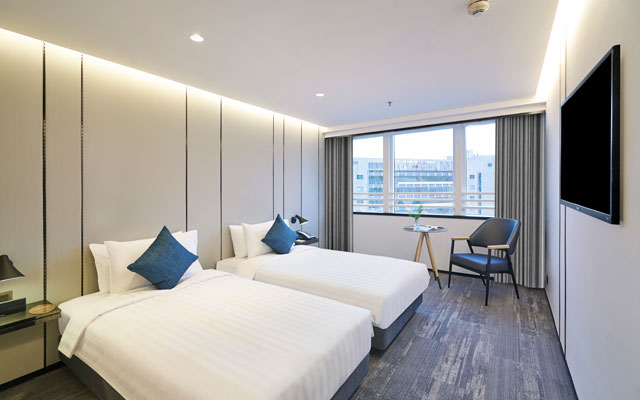
Hotel Cozi Oasis, Hong Kong
Located in the territory’s Kwai Tsing district, Hotel Cozi Oasis offers 583 guestrooms ranging from 16m2 to 38m2. The brand’s third outpost in the city features a restaurant, bar and lounge, meeting and conference facilities, gym, and Lafayette Spa complete with a Jacuzzi, steam room and sauna. In addition, Elite Floors guests will have exclusive access to the Elite Lounge offering daily complimentary snacks and refreshments.

Jumeirah Nanjing, China
Standing on the banks of the city’s Yangtze River in Nanjing’s Hexi New District, the hotel occupies the 39th to 67th floors of the International Youth Cultural Centre’s North Tower. Jumeirah Nanjing offers 212 rooms and 49 suites, a function room on the 67th floor, as well as six restaurants and bars. Recreational facilities include the Talise Spa with saunas, massage rooms, hot tubs, Jacuzzi and steam room; gym; and a Sky Atrium Pool.

Orchard Rendezvous Hotel, Singapore
Rebranded from Orchard Parade Hotel, Orchard Rendezvous Hotel is the second property under the Rendezvous brand in Singapore. As the original hotel was developed on a pepper plantation, elements of the pepper plant have been incorporated into all 388 rooms of the property during the refurbishment. Room sizes start from the 26m2 Superiors and go up to the 76m2 One Bedroom Deluxe Suites. Amenities on-site include a club lounge, outdoor swimming pool and lobby bar.