In its 10th annual Great Outdoors campaign, Hong Kong Tourism Board (HKTB) will highlight 13 of the city’s landscapes, including through collaborative content with recognised photographers and trail experts.
In addition to partnering photographers, the campaign also includes a detailed guidebook, Your Guide to Hiking & Cycling in Hong Kong.
Hong Kong’s highest peak, Tai Mo Shan (pictured), is one of the locations featured in the campaign
This edition of the campaign will encourage visitors to see Hong Kong using through the lens of ‘One Place, Two Perspectives’, presented by a team that includes French photographer Matthieu Paley, who has lived in the city for nine years. For the campaign, he has captured Hong Kong’s UNESCO Global Geopark’s majestic volcanic rock columns on land before diving into the park’s aqua waters.
Hongkonger Tugo Cheng, with a background in architecture, took his camera to historical Sam A Village to explore the indigenous culture, and then onwards to plants and wildlife that thrive in Plover Cove Country Park.
Contrasting city views with mountains; traditional villages with natural flora and fauna, and landscapes with seascapes, the stories aim to present Hong Kong as a “visual dichotomy”, HKTB said in a statement.
These tales of contrasts celebrate a lesser-known fact that about three-quarters of Hong Kong’s landmass is actually countryside, and that the vast network of hiking and cycling trails is easily accessible from any corner of the city.
Commenting on the campaign, Puneet Kumar, senior manager market development (India), HKTB, said: “Discovering the new, unique and something unknown is a key interest of young and affluent Indian travellers, hence, through this campaign we wanted to introduce a hidden side of Hong Kong – the Great Outdoors.
“Travellers will be amazed to find unspoiled nature and busy urban life in such close proximity to each other and we invite them to come discover Hong Kong like a local.”
Hong Kong’s hiking season runs from November to March.
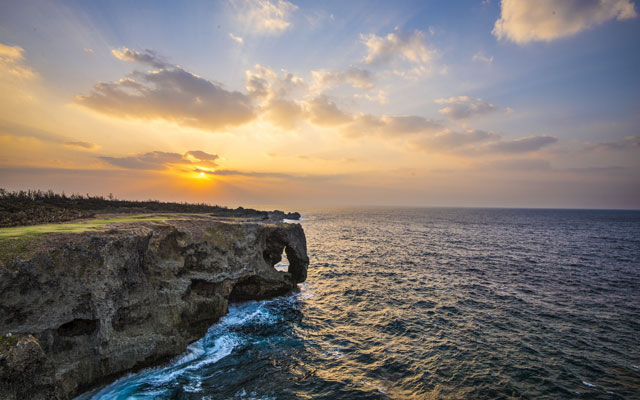
Four Seasons will soon have a hotel in Okinawa (pictured above)
Four Seasons Hotels and Resorts and Berjaya Okinawa Development are once again joining hands to develop its second Four Seasons property in Japan, which will be part of a new US$400 million development set to complete in four years.
This Okinawa resort is a continuation of Four Seasons with Berjaya Okinawa, a wholly-owned subsidiary of Malaysian group Berjaya Land, which in turn is a subsidiary of Berjaya Corporation.
Four Seasons will soon have a hotel in Okinawa (pictured above)
The two partners had earlier collaborated on the Four Seasons Hotel and Residences Kyoto, which opened in December 2016, said Vincent Tan founder and executive chairman of Berjaya Corporation.
Comprising over 40ha of beachfront, the project site is located along the western coast of the island, approximately 50km north-east of Naha International Airport, with easy access by highway from the airport and close to tourist attractions.
Four Seasons Resort and Private Residences Okinawa will comprise 12ha of the project development land area, with 120 hotel rooms, 120 residences and 40 villas.
The resort will be anchored by a resident beach club nestled on the east side, where guests as well as the homeowners will be able to access the natural beach. Additionally, the low-density layout of the resort will also allow guests and homeowners to access every amenity by foot, bicycles or golf carts. The resort facilities will include an all-day dining restaurant, specialty dining and lounge, retail shops and recreation facilities, as well as public grounds and gardens.
The master plan for Four Seasons Resort and Private Residences Okinawa, including planning and landscape architecture, is developed by EDSA Inc. Kengo Kuma, who was recently chosen to design the stadium for the 2020 Olympic Games in Tokyo, and Kuniken, a Japanese firm, will serve as joint architects.
Hotelbeds has released new features on MaxiRoom, the global bedbank’s free hotel extranet launched in 2015 to maximise hotel occupancy through its distribution channels.
The new connectivity features on the MaxiRoom extranet allow the visualisation of fares and availability in real time for any hotel, offering hoteliers greater visibility of their inventory and allowing them to detect opportunities and make adjustments through connectivity. This functionality is said to ease and speed up product communication and optimisation.
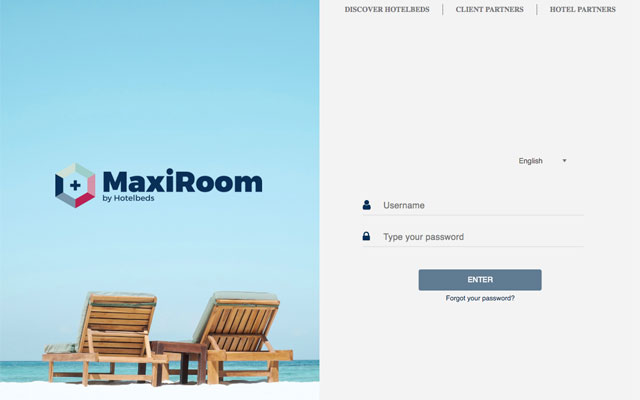
A screenshot from the Maxiroom homepage
The latest enhancements to its hotel extranet were driven by connectivity, which has become a key part of the tourism business, according to Adam Krzciuk Kuna, head of supplier connectivity partnerships.
“We are the first distributer to offer a screen where hoteliers can check the availability and connectivity rates that have with us at every moment. That is a great milestone for hotels that work according to the supplier integration model,” he said.
In addition, MaxiRoom offers information about an individual hotel’s performance in comparison with its local competitors, enabling hotels to improve their offer and contents to optimise productivity. The platform also provides hoteliers with the necessary information to make decisions about their pricing strategy.
Other features of MaxiRoom include a calendar where hoteliers can make rate and room type changes; a content management system to update the quality of information, images and offers; smart alerts to notify hotel partners of incomplete descriptions or lack of images, among others.
Following the addition of Disney·Pixar Toy Story Land last year, Shanghai Disneyland will soon embark on a second major expansion themed after the Disney animation movie Zootopia.
Disney revealed that the development of the Zootopia-themed land at Shanghai Disneyland is a result of the animated hit’s huge success worldwide and the strong resonance of the film’s characters and storyline among Chinese guests.
An artist’s rendering of the upcoming themed land
The new themed land will invite guests to fully immerse themselves in the mammalian metropolis of Zootopia, “where anyone can be anything”, the movie’s tagline. Guests will also be able to go on an adventure with lead characters Judy and Nick. There will be also be a brand-new attraction, alongside entertainment, merchandise and F&B offerings.
When it opens, Zootopia will be the eighth themed land at Shanghai Disneyland and the first-ever Zootopia-themed land at any Disney park worldwide.
Construction of Zootopia is scheduled to begin later this year.
Facial recognition check-in technology on trial at a Marriott property in China
The recent launch of Alibaba’s first automated Flyzoo Hotel in Hangzhou is a clear reflection of the fast state of technology development and strong consumer demand for smart hotels in China, as hospitality players scale up their efforts in smart technologies to provide better customer experiences and meet the expectations of tech-savvy travellers.
In fact, the Chinese hospitality sector abounds with examples of collaboration with the technology world.
The Shangri-La Group has partnered Tencent Holdings to develop smart hotels, leveraging the Chinese tech giant’s cloud and artificial intelligence solutions.
Facial recognition check-in technology on trial at a Marriott property in China
As well, Alibaba Group and Marriott International have entered into a joint venture to trial facial recognition check-in technology at two Marriott hotels in China, Hangzhou Marriott Hotel QianJiang and Sanya Marriott Hotel Dadonghai Bay.
Peggy Fang Roe, chief sales and marketing officer for Asia-Pacific, Marriott International, commented: “For the China market, market research results by consulting firm Ipsos indicated that Chinese travellers have shown a strong interest in new technology in hotels, with over 60 per cent showing preference for facial recognition technology.”
The Alibaba-Marriott joint venture has also enabled wallet-free travel through the deployment of Post Post Pay functionality across over 1,000 Marriott International hotels globally by end-2018, allowing qualified users to travel first and pay after their stay, Fang shared.
Another example is the cross-industry initiative by online entertainment iQIYI to install virtual reality (VR) experience rooms in selected hotels across China. It has already signed agreements with five hotel brands across China and talks for potential cooperation with a further six hotel brands are underway. The number of iQIYI VR Experience hotel rooms is estimated to reach 100,000 by the end of 2019.
Hongkong-based Regal Hotels International, which has 12 hotels in China, is taking a more measured approach to smart technology implementation at its properties.
The group has, however, launched the Riva chatbot in Greater China as a virtual employee to assist customers with room reservations and guest enquiries round the clock, vice president for China, Joseph Yung told TTG Asia.
“We never underestimate the customer acceptability of the smart hotel, but at this stage, people base usage on their curiosity rather than their personal preference, so we prefer to take a gradual approach (to rolling out hospitality technology),” said Yung, adding that the group might consider the implementation of facial recognition technology in the near future.
“After we have implemented the smart solution projects in Regal & iClub Hotel Hong Kong, we will review the effectiveness and apply it to the appropriate China hotels based on the demand, locations, customers profile, etc. As you know, the market segmentation in China will be quite different, so it will require different facilities and services.”
Confident that the Chinese market will continue to show a healthy desire for smart hotel technology, W Shanghai, director of sales and marketing Jordi Pedro, noted: “New smart solutions will bring both hotel and customer new experiences and opportunities that target better service, but also present new challenges to both sides.
“From a hotel point of view, the additional control a hotel gives to customers to book and access any facilities inside the hotel will require new measures and new technology in order to guarantee the legitimacy, safety of the customer and compliance of policies that in China has direct links to public security,” said Pedro.
StayWell Holdings is set to launch Park Regis Menteng at the end of 2020, the second property under the brand in Jakarta and third in Indonesia.
As the first new-build Park Regis in Jakarta, the hotel will serve as a showcase for the new generation Park Regis design and concept, StayWell Holdings said in a statement.
A rendering of the upcoming Park Regis Menteng
When open, the hotel will offer 126 guestrooms, an all-day-dining restaurant, four meeting rooms, rooftop swimming pool, bar and gymnasium.
Park Regis Menteng is located near corporate and government offices, public and private hospitals, industrial estate and major shopping centres – which StayWell says are demand generators for short-term accommodation.
Simon Wan, president and director of StayWell Holdings, commented: “As the third StayWell Holdings property to open in Indonesia under the Park Regis brand, we expect Park Regis Menteng to match the success of Park Regis Arion in Jakarta and Park Regis Kuta in Bali, with Park Regis Seminyak (Bali) to open soon.”
MGallery Hotel De La Coupole, Vietnam
The first international luxury hotel to open in Vietnam’s Sapa, the Bill Bensley-designed property offers 249 modern rooms that overlook the surrounding mountains and valley. Amenities include one restaurant, a bar and a patisserie, a heated pool, fitness centre, spa and kids club. The resort also has several function spaces, including a 435m2 ballroom that can host up to 570 guests theatre-style, and six meeting rooms and four boardrooms for smaller gatherings.
DoubleTree by Hilton Taipei Zhongshan, Taiwan
The first Hilton property in downtown Taipei stands 350m from the Zhongshan MRT train station. This 14-storey hotel boasts 106 guestrooms include 11 suites, all of which come furnished with DoubleTree Sweet Dreams Sleep Experience bedding, a 49-inch HDTV, Nespresso machine, separate bathtub and shower, and high-speed Wi-Fi. Some rooms have outdoor balconies as well. Guests will also have access to a 24-hour rooftop fitness centre, a lobby lounge and the all-day dining restaurant Alley. There is also a 68m2 meeting room which can hold up to 45 pax.
Wyndham Casablanca Jakarta, Indonesia
The rebranded property – formerly known as Park Lane Hotel Jakarta – offers 280 rooms and suites, including one-, two- and three-bedroom apartments, as well as a Presidential Suite. The five-star hotel offers facilities such as a large lagoon-style outdoor swimming pool, Jacuzzi and children’s wading pool, gym, as well as a spa. There are also two F&B options – the Riva Bar & Grill, and all-day restaurant Café One – and 13 flexible function rooms.
Premier Residences Emerald Bay, Vietnam
Managed by AccorHotels, the latest opening on Phu Quoc island features 745 stylish rooms, suites and two-bedroom penthouses. The resort is also home to three restaurant and two bars, while leisure facilities include a fitness centre, the Emerald Spa, yoga studio and outdoor pool that overlooks Khem Beach.
Novotel Haikou Xinbudao, China
The first Novotel in Hainan province is located on Xinbu Island, a newly developed area in the north-east part of Haikou city. The U-shaped building features 141 guestrooms which include 15 Deluxe Rooms that come with balconies. Square, the hotel’s sole restaurant serves local and international buffets, and a-la-carte menu choices. Other leisure amenities include a lobby bar, gym, kids’ club, outdoor swimming pool and tennis court. For events, planners can avail either of the three meeting rooms such as the 800m2 pillarless ballroom for up to 600 pax, or the six VIP private rooms within the Square restaurant.
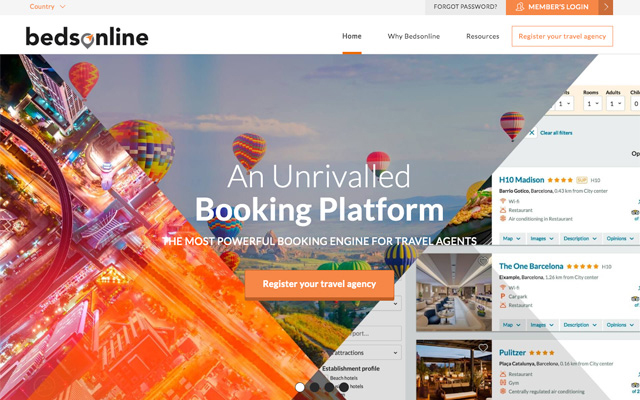
Bedsonline has announced the extension of its +3 per cent commission campaign until end-January amid “unprecedented demand”.
The well-received campaign, according to Bedsonline, was extended with the discontinuation of all its retail platforms (GTA, TravelCube and Travelbound) in nearly all markets just round the corner.
Alistair Rodger, retail travel agents director at Hotelbeds, said: “This promotion has prompted the last remaining travel agents from our legacy brands – TravelBound, TravelCube and GTA – to move over to the Bedsonline platform during the last few weeks.
“In nearly all of our markets we will shut down booking capabilities at the end of January. So ensuring that all agents from TravelBound, TravelCube and GTA have smoothly transitioned onto the new Bedsonline platform is essential for us. Old bookings will be modifiable, of course, but all new bookings have to take place on the new Bedsonline website.”
Rodger said that the transition is “almost complete now”, but urged agents who have not yet made the change to contact their account manager.
The new and enhanced Bedsonline platform – which incorporates the accommodation portfolio and best features of the TravelCube, TravelBound and GTA retail brand offering – has a product portfolio of over 170,000 hotels globally available (with over 90,000 of those directly sourced; 24,000 transfer routes and 18,000 activities; plus 140,000 cars available for hire.
Komodo National Park, currently under assessment due to ecological concerns, may soon be closed, a move that could potentially affect a large part of the local economy including tourism businesses.
The East Nusa Tenggara (NTT) provincial governor is proposing to close Komodo National Park to visitors for a year. Governor Viktor Bungtilu Laiskodat reportedly said the closure was needed to protect against the extinction of the Komodo dragons, which have dwindled in numbers and suffered from the lack of preys within the park.
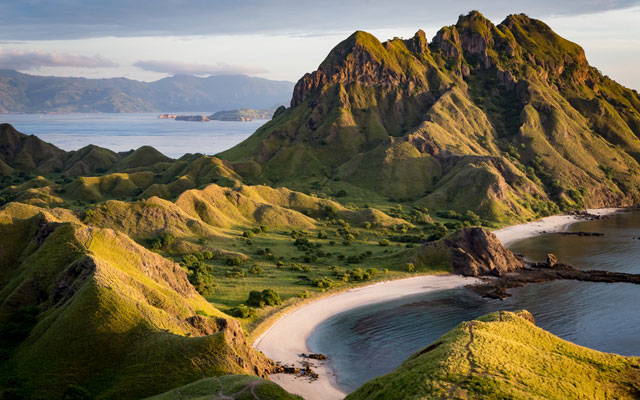
Padar Island in Komodo National Park
Viktor was quoted by local media as saying that the NTT government intends to make the necessary arrangements to set things right at the park so the Komodo population and natural habitat can recover and grow.
According to a statement issued by the Indonesia Ministry of Tourism, there is a conservation fund of 100 billion rupiah (US$6,897) for the park, part of a regional budget allotted to cultivating livestock such as ox, deer, lamb and pigs, which Komodo dragons feed on.
While awaiting decision by the relevant authorities, the travel trade is now put in the spot without concrete information on the park’s closure.
Abed Frans, NTT chapter chairman of the Association of the Indonesian Tours and Travel Agencies (ASITA), told TTG Asia that he is not opposed to closure for conservation purposes, but the travel trade was bemoaning the lack of details on the drastic decision, which will heavily impact travel businesses and the NTT economy.
Abed said: “This announcement is too sudden. There were no discussions with associations, travel trade, or the community. This is a confusing one-sided decision. Surely, we need details – like when the plan will be implemented and what programmes the government will do to reorganise the Park – because 70 per cent of the community livelihood relies on the national park. ”
Abed further confided that he had been receiving queries from ASITA members, clients and and guests, but was unable to provide the answers.
Similarly, Emil Bei, director of Flores Trail Wisata, said he received many questions from business partners seeking clarification and certainty. A cruise operator in Europe, with whom Flores Trail Wisata had a prior agreement to do nine cruise calls until June, had became hesitant about calling at Labuan Bajo following the rumours.
“Questions such as when the Komodo National Park will be closed and for how long are hanging over our heads,” he said. “Stakeholders should be made aware of the details of the plan as they have to manage bookings that will be displaced during the period.”
Meanwhile, Sebastian Ng, managing director of Incito Vacations, believes that the Komodo National Park will not be closed anytime soon. “(The authorities) need to do some studies and research before making such a decision. Moreover, Komodo National Park is one of the priority tourism destinations for the central government.
“It is our job to tell clients and guests that it is just a rumour,” he said, adding that the closure is not official until confirmed by the relevant authorities.
Quoting Siti Nurbaya, Minister of Environment and Forestry, Antara News Agency said there are plans to hold a meeting with the East Nusa Tenggara government this week.
The Ministry of Environment and Forestry will request an explanation from the NTT Government regarding the closure plan.
“We will listen to what the regional government wants, then hear from the Ministry of Tourism, as well as from the Ministry of Forestry itself and continue to see what the transition period looks like and how to (go about doing it). There are ways,” she said.
She further shared that the director general of Natural Resources Conservation and Ecosystems will study the legal aspects.
NTT Regional Tourism Office reposted figures that show visitor arrivals to Komodo National Park in 2018 totalled 176,830, of which 69 per cent were international. The number was up 48 per cent over 2017.
In line with the rapid arrivals growth, the park’s revenue increased from 29 billion rupiah in 2017 to 32 billion rupiah last year.
In 2019, the Philippines’ history will receive greater attention as the Tourism Promotions Board (TPB) lines up a series of heritage-focussed activities, a departure from the more popular sun, sand and sea highlights.
Taking the spotlight is a two-year campaign entitled Philippines500, Celebration of Quincentennial Circumnavigation of the World. It will run till 2021, which will coincide with the 500th anniversary of Ferdinand Magellan’s discovery of the Philippines.
Ferdinand Magellan Shrine, Cebu City, Philippines
TPB’s 2019 work programme obtained indicated that the campaign will target “global mainstream markets” including millennials, foodies and balikbayans (Filipinos residing abroad)”. The goal is to “boost awareness of the Philippines and entice other Spanish-speaking (tourists) to visit” the only Spanish-speaking nation in South-east Asia.
TPB will also showcase the 75th anniversary of American general Douglas MacArthur’s landing in Leyte which saw the Allied forces winning the largest naval battle in history, ending the Japanese occupation of the Philippines during World War II (WWII), in October this year.
This marketing push given to Philippine’s colonial history has been well received in the country’s travel trade.
Rajah Travel’s chairman and president Aileen Clemente said that historical milestones are a big tourist draw, and suggested “(identifying) significant events in the Philippines and (planning for) it several years down the road”.
Rajah Travel is one of a handful of agencies that offer itineraries centred around WWII’s events. Its Salute To Valor: WWII Tales of Courage tour – which started in 2015 – highlights the historical value of Palawan and its role in WWII.
New offerings this year include the Calamian Islands (including Coron whose Bay has 11 Japanese shipwrecks); the former leper colony of Culion; and wildlife sanctuary with African animals, Calauit.
Celebrate TLC’s managing director-operations Simon Ang said: “We need to make people realise that we are more than beaches, sun and sea.” He added that Binondo (Manila’s Chinatown), the oldest and biggest in the world, is another historic area that could highlighted.
One of the first to package tours to Binondo, Ivan Man Dy – founder of Old Manila Walks – will take things a step further by bringing tourists from Hong Kong and China this February on a tour that coincides with the Manila Art Deco Weekend.









 Alistair Rodger, retail travel agents director at Hotelbeds, said: “This promotion has prompted the last remaining travel agents from our legacy brands – TravelBound, TravelCube and GTA – to move over to the Bedsonline platform during the last few weeks.