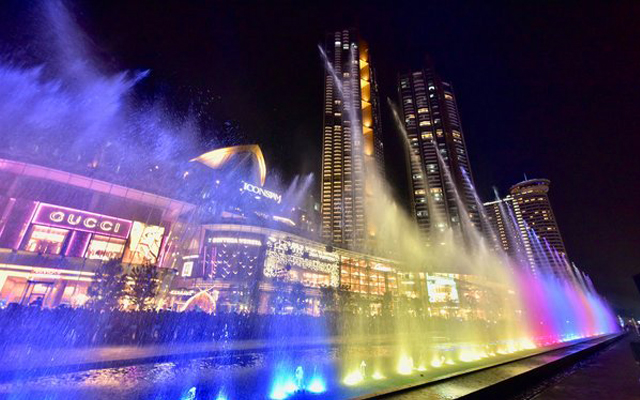
Water jets can shoot up to 35m into the sky, dance to musical accompaniment, and put up a spray curtain acting as a projection screen
Thailand’s first and longest water, light and sound feature has opened on the banks of Bangkok’s Chao Phraya River along a 400m-long river frontage of Iconsiam, the US$1.65 billion, 750,000m2 landmark attraction that opened in November 2018.
Said to the biggest water feature in South-east Asia, the new attraction was the brainchild of fountain design firm GHESA Water & Art. Its dozens of water jets can shoot up to 35m into the sky, dance to the accompaniment of classical music, and put up a spray curtain which can act as a screen on which to project moving images.
Water jets can shoot up to 35m into the sky, dance to musical accompaniment, and put up a spray curtain acting as a projection screen
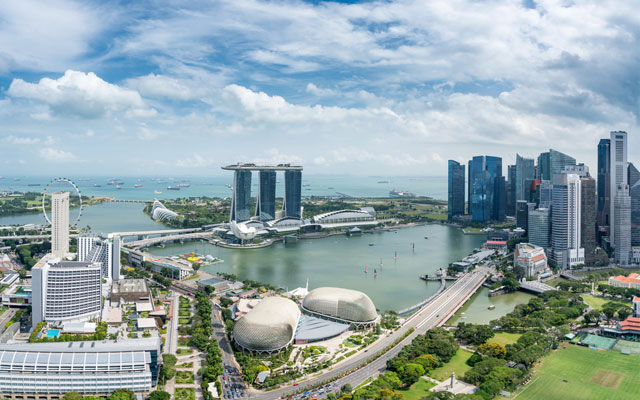
Chadatip Chutrakul, director of Iconsiam, said: “We hope it (the water feature) will do for Bangkok what the London Eye does for London and the Botanic Garden at the Marina Bay Sands does for Singapore, bringing benefits not only at the national level but also to the multitude of riverside communities along this stretch of the river.”
“The opening of Iconsiam last year, and the inauguration of this latest water display attraction, has provided an important boost to the appeal of the river and Bangkok. This and other world-class attractions help to draw interest in Bangkok from around the world, helping travel agents promote the city and the river as the next great global destination,” said Somradee Chitchong, deputy governor for administration of the Tourism Authority of Thailand.
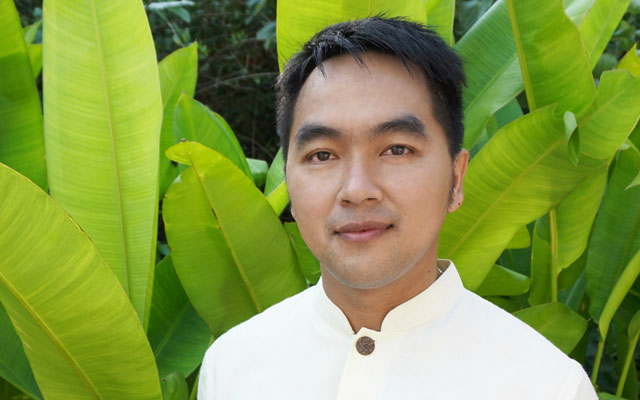
Six Senses Hotels Resorts Spas has appointed Danat Thanoosilp as director of sales, Thailand and Cambodia.
He will oversee Six Senses properties in Samui and Yao Noi, as well as the Six Senses Krabey Island in Cambodia.
Danat joins Six Senses following a five-year tenure as the director of sales and revenue at SLH (Small Luxury Hotels of the World) property Twinpalms Phuket.
Prior to that, he gained hospitality sales experience with stints at Angsana Laguna Phuket, Sheraton Grande Laguna Phuket and The Peninsula Bangkok.
The Visit Indonesia Tourism Office (VITO) – the promotion arm of the Indonesian Ministry of Tourism – in Singapore has been upgraded to a Wonderful Indonesia Tourism Office (WITO) to become the first full tourism promotion office overseas since 1996, when the government closed the Indonesia Tourism Promotion Office in Singapore.
Sulaiman Shehdek, who has been appointed WITO Singapore country manager, has been handed a significant increase in budget to increase footfalls from Singapore. His team now comprises a marketing manager, marketing executive, as well as marketing and administration support.
Full office reflects Singapore’s dual role as source market and as an international hub
Sulaiman shared that Singapore is both a “big market” for Indonesia, as well as an international hub, which is another important arrival source. He shared: “The minister of tourism has deemed it important to have a full office to enable us to maximise Singapore’s potential of both market segments.”
Data from 2018 showed that arrivals from Singapore to Indonesia totalled 1.7 million, and the office’s responsibility is to achieve four million arrivals, where half of it will come from maximising the hub.
For the Singapore market, the plan is to promote Riau Islands (Batam, Bintan, Tanjung Pinang and Tanjung Balai) and 14 destinations in Indonesia – such as Belitung, Pekanbaru and Bandung – that have direct flights from Singapore.
“Riau Islands continue to play an important role (for the Singaporean market). Data from 2017 showed that 72 per cent of Singaporean arrivals to Indonesia was to Riau Islands. We will continue to promote this,” he said.
WITO Singapore will work together with local travel operators to sell Batam and Bintan, as well as hotels to create programmes.
Sulaiman lamented that some Singaporeans may not even know of other destinations in Indonesia beyond Riau Islands, Jakarta and Bali.
“Meanwhile, competition in the region is also high. There are many LCCs (that fly to and from) Singapore, and there are other destinations that offer cheap packages to Singaporeans. Therefore, we will hold more activities and events here this year (to increase awareness of other Indonesian destinations),” he said.
Among WITO Singapore’s plans is bringing consumer sales programmes to the heartlands; working more closely with inbound tour operators as well as airlines to conduct joint marketing campaigns; organising travel fairs at malls; participating in NATAS fairs, and managing tactical campaigns for special airline fares.
Next, programmes to tap the international traveller market arriving in Singapore will include developing partnerships with tour operators to sell twin destination-itineraries.
“The Ministry of Tourism will work with (the trade and airlines) in the origin country of the travellers. Those who have been sending clients to Singapore will be invited to include a destination in Indonesia in their packages, for instance, the Fly and Ferry package to Bintan, where tourists travelling to Singapore can also enjoy a ferry ride to Bintan plus accommodation at a very special price,” Sulaiman said.
Hiverlab – a young virtual reality (VR) startup based in Singapore – in the past two years found a market for its drag-and-drop video production software in the tourism industry, and believes it is laying the groundwork for a better future in travel and beyond.
The company started out about four years ago as a vendor producing 3D, 360-degree videos. In more recent years, it went on to roll out a software that allows users to create their own VR content, which can then be shared privately to the personal devices of their chosen viewers, complete with real-time voice communication, Ender Jiang, founder and chief marketing technologist of the startup, shared with TTG Asia.
Photo credit: Hiverlab
Today, tour operators make up about 25 per cent of the user base (300 and growing), while educational content forms the largest category.
For now, tour operators and tourism suppliers can use the Storyhive platform as a sales tool, for offline public engagement events, or even during actual guided tours.
“A key function of the software is it allows users to link up multiple people (in different locations). (Tour operators) can use it as a sales tool, where viewers can enjoy the virtual tour and be guided from anywhere. (Sales and marketing touch points are) no longer limited to trade show or physical agencies,” Jiang said.
He added: “In this industry, there are two major relationships and the one between attraction owners and agencies is a big one. Attractions can use this to do B2B pitching, using our technology to enhance its communications.”
The lead-in licence is free of charge, but allows content creators to share the content and interact only with two viewers. “We have to invest a lot more by making our solution an open platform. We are earning much less now (than when we produced VR content mainly as a vendor). But we get a lot more customers. We are building trust and giving users the first step in their VR content creation journey. Then more business will come.”
For larger-scale use, i.e. sharing with more than 10 viewers, monthly subscription starts from US$9 per month. The corporate licence for unlimited scale is priced at US$2,999 a year. This is typically used for presentations to bigger groups, such as at events and conferences.
The goal however is to evolve the product from a software to an open library platform, which Jiang expects will happen two to three years from now. This means tour operators can use educational, conservation- or heritage-centric content on the platform to enrich the experience for participants.
Indirectly, some of the content being produced today as a result of the company making VR (and 3D scanning) technology accessible could be contributing to the preservation of tourism assets for the enjoyment of future travellers.
For example, an art history professor in Singapore has captured 3D images of churches in Famagusta, Cyprus, and published it onto the Storyhive platform. Jiang shared: “In one church building, there were paintings on the walls that were removed in the 1970s. They found a way to recover the paintings, but these will (age) and deteriorate (eventually) no matter how you preserve them… 3D scanning allows us to digitise it, and the images can be used in the future.”
In another case of how Hiverlab is helping the sustainability cause, a San Francisco organisation has used the software in its efforts to educate on coral bleaching in the Maldives and send out conservation messages.
“This is one of the largest organisations digitising corals and taking 3D scans of them. The content they created on our platform talks about corals being damaged. The scans are helpful for coral restoration efforts.
“We hope to create meaningful content. Content that helps the conservation of heritage and nature fall under the category… Digital media is something you can copy. But you can’t copy nature or (historical significance),” he remarked.
Despite concerns that the recent Phuket boat accident would affect Chinese arrivals, Thailand saw a record 38.3 million tourists in 2018, according to latest figures from the Ministry of Tourism & Sports.
Chinese tourists are now making a comeback to Thailand following a slowdown in the wake of the tour boat tragedy that triggered concerns about the country’s safety standards.
330,000 Chinese tourists expected to visit Thailand in the seven-day Chinese New Year period alone
According to Tourism Authority of Thailand (TAT) governor, Yuthasak Supasorn, Thailand welcomed 10 million Chinese tourists during 2018 for the first time. China is already the country’s top visitor source market.
Thailand is now gearing up to roll out the welcome mat to Chinese visitors with “its most festive Chinese New Year celebration ever” during the Lunar New Year holiday next week while the two countries will mark the 44th anniversary of diplomatic relations this year.
“TAT expects to welcome over 330,000 Chinese tourists during the seven-day period (February 4 to 10). They represent more than 30 per cent of the overall total of 1.03 million international arrivals that are expected to visit Thailand over the Chinese New Year,” he added.
The latest record arrivals number for Thailand is a continuation of the surging growth that Thailand has seen in its tourism sector in the past decade, despite the authorities saying that they are no longer setting arrivals targets. The travel trade has repeatedly expressed its worries over overtourism and capacity issues in the country’s popular destinations and congested airports.
Based on the current trend, the tourism ministry now projects tourist arrivals to hit 41.1 million in 2019.
“If we actually really reach that level, I’ll have a headache,” tourism minister Weerasak Kowsurat was quoted as saying in a Bangkok Post report.
Backpacker market presents opportunities to diversify Hong Kong's tourism offerings
Targeting the backpacker segment may be an effective means to meet the “urgent need” of diversifying Hong Kong’s tourism market and promoting sustainable tourism, a recent study suggests.
Wantanee Suntikul, Denis Tolkach, Elizabeth Agyeiwaah and Ching-Nok Lung of the School of Hotel and Tourism Management (SHTM) at The Hong Kong Polytechnic University noted that even though Hong Kong has a reputation for “grand infrastructure projects, commercial attractions and shopping”, the backpacker market is interested in supporting small local businesses, shopping in local markets, and visiting cultural and natural attractions.
Backpacker market presents opportunities to diversify Hong Kong’s tourism offerings
Consequently, creating diversity in the tourism market by targeting this group could lead to “a high propensity for cultural exchange and environmental preservation”.
Until very recently, Hong Kong’s tourism market was dominated by continual growth in the number of mainland Chinese tourists, who were “predominantly interested in shopping”. However, this trend has been reversed in the past few years, as the number of mainland visitors dropped from a peak of 47.2 million in 2014 to 40.3 million in 2016. Potential reasons for this change include “local residents’ resentment towards shopping tourism”, especially parallel trading, in which goods are transported from Hong Kong to mainland China for resale, and the general economic downturn.
Whatever the reasons, the researchers stress that there is an “urgent need for Hong Kong to diversify its tourism offerings”, and the backpacker market presents one such opportunity.
Generally, the researchers surmise that because backpackers spend longer in destinations, their overall spending tends to be higher than that of other tourist groups. They also often visit more remote districts and use local services, thus spreading their expenditure throughout the local economy.
More specifically, “unique local food” is one of the main motivations of backpackers surveyed in this study. According to the researchers, the desire to experience local food is not generally associated with backpackers’ travel motivations. This, they say, is an important finding because it differentiates backpackers in Hong Kong from those in other destinations and indicates a means of attracting this group of travellers.
Food as a pull factor not only “serves as a source of employment and income for local food providers and indirectly for local farmers”, but also offers opportunities for cultural exchange between travellers and host communities.
One of the Hong Kong-specific features identified by the study is the preference for local street markets. The researchers highlight this as “indicative of how Hong Kong’s existing attractions could be capitalised on”, because backpackers are more interested in exploring the unique features of a destination, which does not require any additional infrastructure.
Another important element of the contribution backpackers make to Hong Kong is the extent to which they contribute to the development of sustainable tourism. Backpackers generally show high sensitivity toward promoting sustainability and concern for the environment and local culture.
The backpackers interviewed in Hong Kong endorsed these values. For instance, they were much more likely to buy products from local shops than from international brands, thus supporting local employment at the destination. They also contributed to sustainable tourism by supporting local activities, such as participating in cultural workshops and other culture-related activities, and interacting with village residents. As the researchers note, the point of sustainable tourism is to enhance the positive effects on destinations, and this is “exactly what backpackers in Hong Kong are likely to do while enjoying their trip”.
Similar to backpackers elsewhere, the majority of respondents preferred to stay in youth hostels, although they differed in the “elements and qualities” that they expected. “Friendly local staff” was the most important accommodation feature, along with areas for meeting new friends. As the researchers note, these features fit well with backpackers’ desire to learn new things, as friendly local staff “provide an environment for interaction and local knowledge”, and this is complemented by the opportunity to make new friends.
In this study, the researchers surveyed backpackers staying at seven youth hostels in Hong Kong, who made up 90% of the sample, and respondents taking part in outdoor activities such as hiking on the MacLehose Trail and Dragon’s Back Trail, who made up the remaining 10%.
More than 60% of the respondents were independent female travellers in their 20s. Almost 80% came from North America, Australia or Europe, and just over 20% from Asia. Their average length of stay in Hong Kong was a week or less, and they spent around US$46-86 per day.
Seville appears to be finding its place in the sun on the global travel map, as several key events come together to give more prominence to the capital city of southern Spain’s Andalusia region.
Not only will Spain celebrate the 500th anniversary of the first circumnavigation of the globe – the Magellan-Elcano expedition set sail from Seville in 1519 – with a three-year programme of activities beginning in 2019, the WTTC Summit will also take place in Seville this April, making it an opportune time for the city to raise its awareness among Asia outbound travellers, said Antonio Jimenez, managing director of the Seville Tourism Board, speaking to TTG Asia in a recent phone interview.
Plaza Espana, Seville
Jimenez expects the WTTC Summit will help to expand opportunities for the city, attracting attending companies to invest in the local tourism sector, including from Asia.
Asia represents a “very important market” that currently represents 10 per cent of Seville’s inbound figures, translating to 3.9 million visitors each year, shared Jimenez.
A two-pronged strategy has been mapped out to woo more visitors from Asia, which will see the tourism board promoting Seville through PR marketing and working with big tour operators, while it works on attracting direct flights from key hubs like Istanbul and Dubai to improve connectivity with Asia.
There is currently no direct flight linking Asia to Seville, although Jimenez is seeking to change that in the near future. Emirates and Etihad Airways – which are members of WTTC – are looking at launching flights to Seville, he informed.
According to Jimenez, some five million euros (US$5.7 million) has been allocated to the board for global promotion of Seville, of which 20 per cent of the budget is dedicated to the Asian and North American markets.
India and China, the two outbound tourism powerhouses, are obvious targets for Asia for Seville, with different aspects of its tourism offerings – founded on the four main pillars in gastronomy, heritage and culture, flamenco, and lifestyle – emphasised for different markets.
With extensive promotion rolled out in India and Madrid – just an hour’s flight away – having direct connections from Delhi and Kolkata, Indian arrivals have “increased a lot to Seville”. Furthermore, Seville’s flamenco culture appeals especially to the Indian market, Jimenez shared.
In China, the Seville Tourism Board has in last two years organised two roadshows to promote Seville’s heritage across different Chinese cities, in addition to attending ILTM in China and Singapore.
As a member of World Tourism Cities Federation (WTCF), Seville recently hosted the WTCF Europe Tourism Conference from December 10 to 12, with Chinese delegates and companies invited to learn more about its heritage and entice investment in Spain.
Aware of the pitfalls that mass tourism has brought to Spanish cities like Barcelona, Jimenez is keen to pursue “quality tourism” for Seville. He remarked: “Seville is a medium-size city, so we are very conscious of growth as it has to be quality.
“We’re not interested in building more hotels but to increase the quality of visitors as well as to grow the luxury sector. We hope to attract big luxury brands like Four Seasons or InterContinental to build a hotel in Seville,” he told TTG Asia.
Cruise tourism will be another area that Jimenez will push to grow by attracting luxury boats of less than 2,000 pax to call at the Seville port.
JAL and Japanese conglomerate Marubeni establish business jet JV named JAL Business Aviation
Japan Airlines (JAL) and Marubeni have jointly established a new business jet company meet the rising demand of such services in Japan.
Set to begin operations in the spring of 2019, the company will be headquartered in Tokyo.
JAL and Japanese conglomerate Marubeni establish business jet JV named JAL Business Aviation
Its services will include the arrangement of charter flights both overseas and inter-city; management of the privately-owned aircraft which includes maintenance and crew; and provision of operational and concierge services to business jet operators and customers flying to Japan.
JAL Business Aviation will have paid-in capital of 150 million yen (US$1.4 million), with JAL holding a 51 per cent stake and Marubeni owning the remaining 49 per cent.
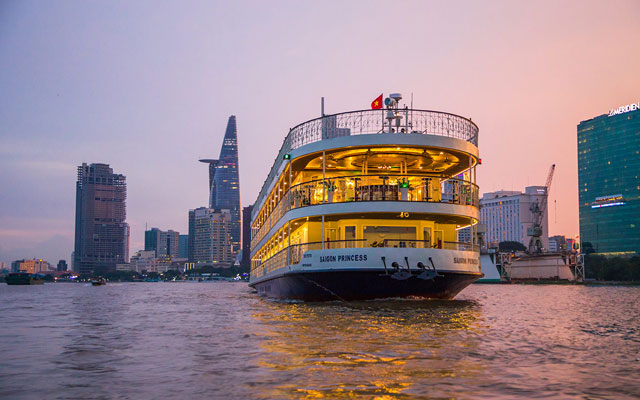
Viet Princess launching fine dining cruises; Saigon Princess pictured
A raft of new products, itineraries and activities, including more luxury options, is leading to greater interest in river cruises in the lower Mekong region.
Huynh Kim Bao, sales and marketing coordinator for Viet Princess Cruises, noted a year-on-year increase in bookings for Mekong River cruises, especially from the longhaul market, with the UK, Australia and the US strongest performing.
Viet Princess launching fine dining cruises; Saigon Princess pictured
Nguyen Son Thuy, general manager of Indochina Unique Tourist, said demand is increasing in line with a shift towards experiential travel. He said: “People are looking for new ways to really experience countries, and cruising is one way.”
Huynh said the longhaul silver market is a key source for Viet Princess, which is gearing up to launch an exclusive fine dining cruise in the next few months. “Most of our cruises are long luxury cruises, and retired people tend to have more time to travel, explore and enjoy life.”
Cruise operators are rolling out new ways to attract clients, with north-to-south Vietnam itineraries in the works for both Viet Princess Cruises and Heritage Cruises.
Said Heritage Cruises CEO and founder, Pham Ha: “(Cruising) demand is there. People are fed up with air travel and are looking for new experiences.”
Guests are invited to bid farewell to the iconic The Excelsior, Hong Kong hotel with a special stay package available during the hotel’s final nights of operation.
The Fond Farewell Room Package – for stays in Deluxe Harbour View Rooms from March 29 to 31 only – includes an invitation to the hotel’s grand farewell reception (March 30), as well as buffet breakfast for two on March 31, the day of the hotel’s closing.
Three package options are available, with a choice of dinner for two at ToTT’s and Roof Terrace, buffet dinner for two at Café, or dinner for two at Dickens Bar. The packages are priced at HK$9,688 (US$1,235), HK$6,288 and HK$6,088 respectively. Prices are subject to 10 per cent service charge.