TTG Asia
Asia/Singapore Friday, 3rd April 2026
Page 12

The airline guy

0

You led AAPA as director general since 2020. How would you describe your journey with the association, and what accomplishments are you proudest of?
2020 was a critical year (due to the Covid-19 pandemic and lockdown of international borders) not only for the airline industry but for the whole world. When I took over the director general position at AAPA in 2020, the airlines were not doing well. Many were downsizing and considering retrenchments.

I think the most important thing then was to help the airlines go through the crisis. As an association, AAPA would face an existential threat if our members did not do well. So, I am very glad that we were able to ride that storm and come out on the other side in good shape and with our membership intact. Our airlines started to thrive within a matter of a year, which was a big achievement.

There is no better indication of this than the expansion of the association. We were 13 airlines then, and now 18. This provides a lot of satisfaction to me and the association.

The second achievement is being able to get our airlines together and commit to an aspirational goal of five per cent SAF (sustainable aviation fuel) usage by 2030. This is a big achievement because there is only one other trade association among airlines that is committed to a similar goal, and that is the Airlines for America. AAPA had to convince all our airline CEOs to move together on sustainability. That sent a demand signal to the fossil fuel majors to start producing SAF. It was also a signal to governments that we need policy and regulatory support to achieve our sustainability goal.

And now you are stepping down from your leadership role at AAPA at another critical juncture – amid the Middle East crisis. How do you hope the travel industry as well as your aviation industry colleagues will pull through? Are there lessons that they can take from the last crisis?
I joined AAPA in March 2020, after retiring from Singapore Airlines in December 2019. Now, I am retiring from AAPA, and there’s another major crisis.

This is not a good development for the industry. And in some ways, I think it is a more troubling crisis (than the pandemic). At the AAPA Assembly of Presidents last year, I identified two challenges that could stymie the ongoing development of the airline industry.

One is supply chain; the other is airspace closures due to conflict.

It is ominous that the second has happened so early in the new year.

This is a major conflict. The affected airspace is very critical for the airline industry because it is needed for overflights to the Western world from Asia-Pacific. At the same time, the Gulf region is a hugely developing region.

Well, you know, this industry has seen many crises and I have a lot of faith in the leaders of this industry, especially the CEOs, to be able to pull through.

The governments in Asia-Pacific realised during the pandemic how important the airline industry is. The governments here are very supportive compared to the west; they ensured very few retrenchments in the aviation industry during the pandemic because they wanted to make sure that when the borders reopen, there will be a healthy airline industry to support the economy.

So, from that point of view, with government support and the ability of airline CEOs and leadership in our region, I am hopeful that the industry will pull through in spite of this major crisis.

You have also been an airline guy through the decades, serving Singapore Airlines and SilkAir. What are the topmost memories – good and bad – you have from your career?
Well, most of them have been good. I’ve been very lucky to be part of this industry. It was always my dream to work for Singapore Airlines, and I did many enjoyable and meaningful things in the company.

The one thing that really stands out is my time at SilkAir. It isn’t around anymore, but during its existence, it was probably the best regional airline in Asia.

Leading SilkAir was a very enjoyable experience. Although we went through SARS (the outbreak lasted from 2002 to 2004), SilkAir was on expansion mode most of the time. It was a relatively small airline, so we were on a first-name basis with everyone. Everybody just chipped in to do what was necessary. Furthermore, I am a big fan of Asia, and my job allowed me to promote travel to the region.

Growing up, I have seen how people regarded an aviation career as a prestigious one, whether it is the job of a pilot or an officer at the airport. Does the industry still draw starry-eyed romantics these day, after having gone through several travel crises? How are such sentiments affecting the workforce and hiring exercises?
This is a good question. When the pandemic happened, the airline industry was most affected by the border closures. We thought that the airline industry would no longer be regarded as well by new entrants. But when the borders reopened, and we were trying to recruit people to build up resources, we had people flocking to the airline interviews.

I think it is still an aspirational job for many new graduates and job-seekers. One reason for this is that the airline industry is really focused on technology. When the Boeing 747 was introduced in 1969, everyone thought, ‘Oh my, this is the biggest deal that we have ever had!’. Then in the 1990s, Airbus came up with the A380, which was an even bigger deal.

So, technology has always been at the forefront of this industry. I always tell my colleagues that we are talking about SAF and things like that, but nothing would be better than if this industry could come up with an aircraft that could cut emissions by 50 per cent. This is actually within our means because this industry has got some of the best people in technology. This technology pursuit is attractive for young people – it shows that technology advancement is not only about AI and big tech.

What advice would you give to anyone looking to establish their career in aviation?
The best advice is to keep your eyes and options open. The airline industry has a few unique features. If you go into the Singapore Airlines canteen, you can easily find several people who have been with the company or the airline industry for more than 10 years. People tend to stay in this industry.

New joiners should tap into this, learn from the experts, but also not be tied down by the old ways. New people bring new perspectives, which will take the industry to the next level.

I think the airline industry needs to be modernised, especially in the area of gender equality. It continues to be male dominated, and it is taking a long time to reverse inequality in the industry. I hope that we can change with the new generation. Just imagine if we had more female pilots – we would not be so resource-constrained as we are now.

What challenges lie ahead for your member airlines and your industry colleagues?
The airline industry’s biggest challenge is that governments take it for granted. In general, the airline industry does not get a lot of help from governments. During the pandemic, governments just closed down the borders and expected airlines to know how to take care of themselves.

Not enough governments pay heed to the airline industry and recognise their contribution to socio-economic development.

Now, with this war and the closure of airspace, people are stranded abroad. Look at who is making arrangements to bring all these stranded people home – it is the airlines.

It is good to see Singapore sending military resources to bring back people stranded in the Middle East. More governments should consider doing the same because airlines and their crew are already very stressed by the situation in the Middle East. Governments should take some of that burden off the airlines. We are a very important industry, and I think it is time that governments pay attention to how their decisions can damage world citizens.

Do you think governments expect airlines to be able to deal with disruptions themselves because of the huge profits major airlines post every year?
Actually, airlines don’t make that much profit anymore. In 2025, profit margins are estimated to be about 3.4 per cent. With how things are going in 2026, we will be lucky to even hit three per cent.

People who really make huge profits are the oil and gas people, and the aviation manufacturers. Yet, the airline industry is the one that faces many of the crises.

I think that governments take this hands-off approach because the airline industry is quite united. We are able to devise solutions to problems, and have demonstrated our ability to go through crisis after crisis.

Look at the United Nations. There is the International Civil Aviation Organization (ICAO) within, and it is responsible for managing the administration and governance of international air navigation. Governments may think that with ICAO, we will be able to find our way through the crisis.

However, there are things that ICAO and airlines are not equipped to do. For example, we cannot keep tabs on intelligence during times of conflict. We need governments to be more understanding.

Last question, are you truly retiring now?
Well, this time, I really am. I will be moving to Australia where my family is. In my 35 years with Singapore Airlines, 21 of those years were spent overseas. I spent a lot of time away from the family. Now, I would like to spend more time with them.

Of course, I will never lose my interest in aviation. It’s always been a life’s passion, but I want to start taking interest in other things and do all that I was unable to do because of my work.

There are still a lot of places that I’ve not been to. There is nothing like travelling for pleasure. My wife is retired and I have three older brothers in Australia who are also waiting for me to retire, so that we can travel together.

I am not a spring chicken anymore. I want to do all these things while I am still fit as a fiddle.

South Asian destinations draw rising interest from Indonesian travellers

0

South Asian destinations are attracting increasing interest from Indonesian outbound travellers as demand shifts towards experience-led journeys and lesser-known locations.

Industry participants at the 43rd TTC Travel Mart in Jakarta said countries such as India, Sri Lanka, Bhutan and Nepal are gaining attention among both leisure travellers and corporate groups.

Bhutan, Nepal and India are seeing growing interest from Indonesian outbound travellers seeking cultural and nature-based experiences; photo by Dhini Oktavianti

Suneet Goenka, managing director of UAE-based Red Apple Travel, told TTG Asia that India continues to draw Indonesian leisure travellers, while Sri Lanka shows stronger potential for high-end MICE groups.

He noted that shopping and film tourism are key attractions for Indonesians visiting India. “India is very strong for textiles, clothing and jewellery shopping, and travellers also like visiting Bollywood shooting locations.”

Sri Lanka’s appeal, he added, centres on Colombo, Kandy and Bentota, which offer a mix of cultural attractions, hill country landscapes and beaches.

San Ni, Indonesian sales representative for MAGADH Travels & Tours, said Indonesian travel demand to South Asia currently leans more towards incentive travel and Buddhist pilgrimage.

“Leisure exists, but we see more incentive movements and temple-based pilgrimage. For incentive programmes to India, activities are still largely centred on sightseeing rather than technical visits,” she noted.

Outbound agents in Indonesia also report growing interest in Bhutan and Nepal. Yento Chen, CEO of Destination Tours Indonesia, said Bhutan currently leads the trend, followed by Nepal, Pakistan and the Maldives.

According to Chen, around 80 per cent of clients travelling to Bhutan choose luxury lodges such as Amankora and combine their stays with trekking and cultural excursions. In Nepal, demand for luxury travel is driven by Himalayan mountain flights and helicopter sightseeing.

The Maldives continues to attract couples travelling independently, while Pakistan sees seasonal leisure interest linked to landscapes in Hunza and Skardu.

Golden Rama Tours & Travel said India, Nepal and Bhutan are gaining attention for their cultural heritage and scenery.

Taj Mahal and Kashmir remain primary drivers for India, while Bhutan’s preserved cliffside monasteries offer a distinct appeal, shared Ricky Hilton, general manager of communication at Golden Rama Tours & Travel.

Industry players noted that limited air connectivity and hotel capacity constraints, particularly in Bhutan during peak periods, remain challenges for further growth. Agencies are responding by increasing market education on safety and travel infrastructure while promoting lesser-known destinations in the region.

Gardens by the Bay plans new five-hectare wetlands precinct with teamLab museum

0

Gardens by the Bay will develop a new space known as Wetlands by the Bay, a five-hectare precinct that will extend the existing Kingfisher Wetlands along the waterfront promenade near Gardens by the Bay MRT station.

The project will include a museum by international art collective teamLab featuring a multi-sensory experience that moves between indoor galleries and the surrounding landscape, allowing visitors to explore freshwater wetland habitats.

An artist’s impression of the upcoming teamLab museum at Wetlands by the Bay; photo by Gardens by the Bay

A cantilevered canopy boardwalk will extend above Kingfisher Wetlands, providing an elevated link between Gardens by the Bay MRT station and Bay South Garden’s main attractions. The pathway will allow visitors to move across the wetland area while offering views over the water and surrounding greenery. A new open space known as Glade Lawn will also host community activities.

Construction of Wetlands by the Bay is scheduled to begin in 1Q2027, with progressive opening expected by the end of 2028.

The project will complement the redevelopment of Bay East Garden, which is scheduled to open in 2027, with the Founders’ Memorial due to open in 2028. A new bridge linking Bay South Garden and Bay East Garden will provide access between the two areas and offer views of the Marina Reservoir and surrounding waterfront. Construction of the bridge is expected to begin in 2Q2026 and be completed in 2028.

Wetlands by the Bay will include more than 600 mangroves and coastal plants, three times the number currently found at the Kingfisher Wetlands precinct. In total, more than 50,000 plants are planned for the area, including species collected from equatorial regions such as Ecuador, Costa Rica, Sri Lanka and Timor-Leste.

The development will also include a 3,500m² Glade Lawn for events and community activities and an open garden of more than 8,000m² designed to support pollinators.

The teamLab museum will occupy a 12,000m² site and include indoor and outdoor installations. Visitors will also be able to travel along a controlled waterway using pedal kayaks as part of the experience.

“Wetlands by the Bay will strengthen Gardens by the Bay’s reputation as a must-visit destination in Singapore where people can enjoy one-of-a-kind nature-based experiences. Together with the upcoming Bay South-Bay East bridge, these new additions to the Marina Bay area contribute to a prime waterfront experience and are another step forward in Singapore’s City in Nature vision,” said Felix Loh, CEO of Gardens by the Bay.

Cathay marks 80th year with Hong Kong art aircraft livery

0

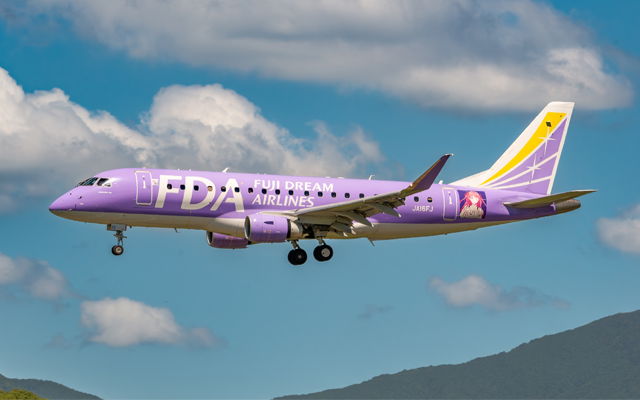
Cathay and the West Kowloon Cultural District Authority (WKCDA) have introduced a new aircraft livery titled Spirit of Hong Kong – 80th Anniversary Edition, marking a collaboration between the airline and the cultural organisation.

The livery, applied to a Cathay Pacific Boeing 777-300ER, features artwork by Hong Kong multimedia artist Victor Wong and forms part of Cathay’s 80th anniversary this year. The design incorporates the airline’s anniversary mark alongside the WestK logo.

Cathay’s Boeing 777-300ER aircraft features the Spirit of Hong Kong – 80th Anniversary Edition livery

An unveiling ceremony was held at Hong Kong International Airport and attended by representatives from both organisations, including WKCDA board chairman Bernard Chan, Cathay Group CEO Ronald Lam, WKCDA CEO Betty Fung and Cathay chief customer and commercial officer Lavinia Lau.

Cathay has served as WestK’s travel partner since 2023, supporting the district’s exhibitions and performing arts programmes through passenger and cargo services.

The aircraft design draws inspiration from Cathay Pacific’s Gallery in the Skies concept used in its business class cabins. Victor Wong’s artwork was created using technology that generates landscape imagery from geographical data.

Following the unveiling ceremony, the aircraft entered commercial service. Passengers on its inaugural flight experienced a cultural programme on board, including a new version of Cathay’s sonic branding, Song of Cathay, performed by Hong Kong pianist and composer Patrick Lui.

The updated composition incorporates elements of modern jazz and was presented as a collaboration between Cathay and WestK. The reworked Song of Cathay will be introduced on selected Cathay Pacific passenger flights from mid-2026.

“The launch of the Spirit of Hong Kong livery highlights our shared vision to support Hong Kong’s outstanding artists and creations and to bring Hong Kong’s arts, culture, and creative prowess onto the global stage,” said Bernard Chan, chairman of the board of WKCDA.

Norwegian Cruise Line takes delivery of Norwegian Luna

0

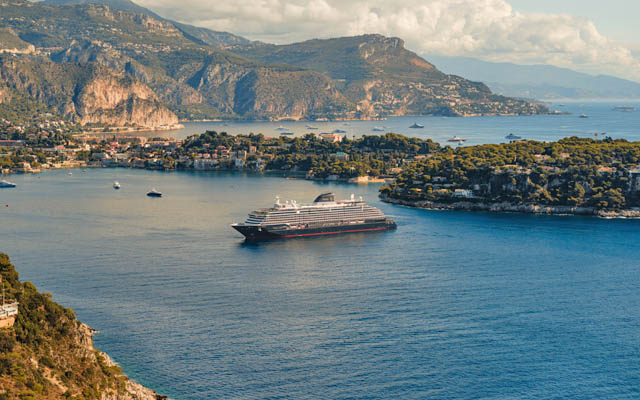
Norwegian Cruise Line (NCL) has received Norwegian Luna, the 21st vessel in its fleet, from Italian shipbuilder Fincantieri at the Marghera shipyard in Italy.

The vessel is the second ship in the Prima Plus class. Norwegian Luna measures 156,000 gross tonnes and accommodates 3,565 passengers across 1,809 staterooms. The ship includes 17 dining venues and 18 bars and lounges.

Norwegian Luna, the 21st vessel in NCL’s fleet, was delivered at the Fincantieri shipyard in Marghera, Italy

Facilities include the Aqua Slidecoaster, described by the company as a hybrid waterslide and rollercoaster attraction. The ship also features Luna Midway, an outdoor games area with carnival-style attractions, and the Moon Climber obstacle course. Indoor facilities include the Luna Game Zone, which offers arcade and virtual reality games.

A sports and entertainment space known as the Glow Court includes an interactive LED floor used for activities during the day and events at night. Wellness facilities include the Mandara Spa and the adults-only Vibe Beach Club.

Entertainment on board includes Elton: A Celebration of Elton John, a production featuring music from the singer-songwriter, and HIKO: Innovation Meets Wonder, a multimedia performance combining acrobatics, dance and visual effects. Syd Norman’s Pour House also returns with A Tribute to Eagles.

Dining venues include main dining rooms with rotating menus, a 24-hour eatery and the Indulge Food Hall, which includes nine food stations serving international dishes. Specialty restaurants include Le Bistro, a French restaurant, and Sukhothai, a Thai dining venue.

Accommodation ranges from inside and balcony cabins to suites. The Haven by Norwegian offers a private section of the ship with dedicated facilities, restaurant and concierge services.

Following a transatlantic voyage from Civitavecchia, Italy, Norwegian Luna is scheduled to arrive in Miami on March 23, 2026. The ship will be christened at PortMiami on March 27, 2026.

The vessel will operate three- and four-day Bahamas cruises and seven-day Caribbean itineraries from Miami during its first year of service. From April 11 to November 7, 2026, itineraries include ports such as Puerto Plata in the Dominican Republic and St Thomas in the US Virgin Islands, as well as Great Stirrup Cay in the Bahamas. From November 2026, Western Caribbean sailings will include Roatán in Honduras, Cozumel in Mexico and Harvest Caye in Belize.

On April 6, 2027, Norwegian Luna is scheduled to begin four- to seven-day Bermuda voyages from New York City.

“We are thrilled to welcome Norwegian Luna to our fleet and to welcome our first guests aboard next week,” said Marc Kazlauskas, president of Norwegian Cruise Line. “As our newest ship, Norwegian Luna is a powerful reflection of NCL’s It’s Different Out Here brand ethos. She delivers freedom, flexibility and thoughtfully curated experiences, allowing guests to enjoy their vacation exactly how they want, with ease.”

“We are proud to deliver Norwegian Luna, a ship that truly reflects our ability to interpret and anticipate the evolution of the global cruise industry. This milestone further strengthens the long-standing collaboration between Fincantieri and NCL, built on a shared commitment to innovation,” added Luigi Matarazzo, general manager of Fincantieri’s Merchant Ships Division.

Fly, sail and explore Antarctica with Polar Latitudes

0

Polar Latitudes Expeditions will introduce its first Fly & Cruise Antarctica programme with departures scheduled in January and February 2028. The programme introduces three itineraries designed for travellers who prefer to minimise or avoid crossing the Drake Passage.

The itineraries provide several travel options. Guests can fly both into and out of the Antarctic Peninsula from Punta Arenas, sail from Ushuaia and fly out from Punta Arenas, or fly from Punta Arenas and sail back to Ushuaia.

The 2028 Fly & Cruise Antarctica itineraries offer options to fly into or out of the Antarctic Peninsula and reduce time crossing the Drake Passage

All departures will operate aboard Ocean Nova, an expedition vessel carrying up to 70 passengers. The vessel is designed for access to smaller landing sites across the Antarctic Peninsula and operates with a high guide-to-passenger ratio. Onboard facilities include the Panorama Lounge and an outdoor viewing deck for observing wildlife and landscapes.

The Fly & Cruise programme forms part of Polar Latitudes Expeditions’ broader expansion. The company has recently introduced voyages to Scotland, Ireland and the North Atlantic Isles, alongside additional itineraries across the Arctic.

Polar Latitudes Expeditions currently operates a fleet of four expedition vessels focused on small-ship travel to remote regions.

For more information, visit Polar Latitudes Expeditions.

Disney Adventure bets on storytelling to stand out in family cruise market

0

Disney Cruise Line (DCL) is presenting its newest ship, Disney Adventure, as a multi-day family holiday at sea, combining immersive storytelling, entertainment and resort-style amenities within a single experience.

With premium family travel options expanding across the region, the cruise line believes its long-standing portfolio of characters and stories gives it a clear point of difference.

Captain Mickey Mouse and friends perform in Let’s Set Sail on board Disney Adventure after the ship sounds the signature horn to the tune of When You Wish Upon A Star; photo by Disney Cruise Line

“I think there’s two things that really distinguish Disney Cruise Line,” said Tracy Wilson, senior vice president and general manager of DCL. “One is what Disney is known for – stories and characters. We have 100 years of stories from Disney, Pixar, Marvel, and we use those stories and characters to make our experiences immersive, interactive. Nobody else has that.”

Entertainment is also central to the ship’s positioning. Guests can expect Broadway-style productions similar to those staged in major theatre markets.

Wilson added that the performances onboard Disney Adventure are of the “same calibre” as shows on Broadway in New York and the West End in London.

Disney Adventure will feature seven shows including Disney Seas the Adventure, Remember, Avengers Assemble!, Duffy and the Friend Ship, Moana: Call of the Sea, Baymax Super Exercise Expo, and The Lion King: Celebration in the Sky.

Wilson told TTG Asia that the ship is designed to function as a self-contained holiday for families over several days.

“You don’t have to leave – you get to stay for three or four days, and there really is so much to do on this ship. There are the shows, immersive areas like San Fransokyo or Marvel Landing; but there are also pools and areas to relax, lots of retail locations and our incredible spa,” she shared.

“If you want to move your body or not move your body, there is a place for you to go.”

Amadeus report outlines six trends shaping travel in 2026

0

Amadeus has unveiled its Travel Trends 2026 report spotlighting six shifts reshaping the global tourism landscape. The forecast identifies The Pawprint Economy for upmarket pet travel, Travel Mixology blending AI with human trip planning, and Point-to-Point Precision utilising new narrowbody jets for longhaul routes.

The technology provider also highlights Pop Culting, driven by entertainment IP; Innovation Tourism, where travellers visit tech-forward destinations; and Pick ‘n’ Stays, featuring extreme hotel room personalisation.

The Amadeus team highlights travel trends from its 2026 report during a panel for its media and community engagement day at its Thailand headquarters on March 5; photo by Amadeus

This shift towards personalisation remains relevant for the regional accommodation sector.

Panawan Khaikaew, director of sales for hospitality in Thailand at Amadeus, advises clients to leverage attribute-based selling to drive revenue rather than relying on standard price cuts.

“We are emphasising that hotels do not have to discount to drive volume. Instead, they should add the specific experiences customers are looking for and allow them to pay for that customised value,” Khaikaew said.

To foster guest loyalty and support attribute-based selling, Amadeus is embedding AI into its Travel Intelligence solutions to streamline data analysis for hoteliers.

“By integrating AI advisory tools, hoteliers can simply input a query and instantly receive actionable results. It saves time, allowing them to focus more on daily operations and long-term marketing strategies,” Khaikaew elaborated.

Amadeus is expanding its headquarters in Thailand to capitalise on these industry shifts.

Bousserind Comson, senior director of sales for hospitality across Thailand, Vietnam and Laos at Amadeus, confirmed this regional development is a strategic priority.

“We want to be more supportive of hotels, and to be more and more hotel-focused, because we already cover the airline sector. With hotels, we still have a lot of ground to cover because there are many hotels around the world that don’t work with us yet,” she told TTG Asia.

“Asia-Pacific is a key region for travel in general, and this is also where you see a lot of new hotels opening. Therefore, Asia-Pacific, and especially Thailand, is a key market to establish our presence as we focus on capturing the hotel sector,” Comson concluded.

Traveller Made expands global trade shows as Takumians network grows

0

Traveller Made – the community behind the invite-only Serandipians network – has accelerated its global reach by transitioning from a single European event to three continental tradeshows starting in 2025, alongside the strategic expansion of its “little sister network”, the Takumians.

The luxury travel consortium reported 6 billion euros (US$6.96 billion) in aggregated revenue for 2025. As of February 2026, the two networks encompass 790 member agencies and 1,310 hotel partners in total.

Traveller Made’s Quentin Desurmont speaks at the Essence of Phuket – Boho Sabai event; photo by Anne Somanas

To support this geographical shift, the organisation expanded its event roster to 1,000 participants across three events in 2025. The 2026 calendar started with the Essence of Phuket – Boho Sabai event, completed on March 2-6, followed by a Panama event on May 18-22. A Sardinia show will conclude the year on October 5-9.

With the Serandipians network, founded over a decade ago in September 2013, now closed to new members outside North America and emerging markets, growth is being channelled into the newly launched Takumians segment, introduced in September 2024. Takumians currently account for 210 agencies and 230 “exceptional luxury” hotels.

Quentin Desurmont, CEO and president of Traveller Made, noted that the networks strictly target “small and beautiful like-minded agencies”.

“One of the key recipes is that we are very focused,” he explained.

The network is also rolling out operational alternatives for its members. Currently, 600 hotel partners offer a net commission payment solution to bypass standard commissionable agreements.

Furthermore, Traveller Made will launch Haute Villegiature for hotels in 2026, following its initial rollout for member agencies. This “exceptional” classification system is defined by 10 specific criteria resulting from Traveller Made-commissioned academic research completed in 2018.

Asked what is next for the community, Desurmont told TTG Asia: “We’re not into fast growth. We’re into slow growth, and we have made some big changes, launching Takumians to prepare for the future.

He added that the network is shifting from a Europe-centric model to a more international approach with three shows. He said the focus now is on establishing the concept globally, maintaining quality, fine-tuning operations and pursuing steady growth of five to 10 per cent a year.

The next Boho Sabai regional Asia event connecting global buyers and local sellers will be held in Phuket from March 1-5, 2027.

Philippines seeks to retain South Korea as leading overseas visitor market

0

The Philippines is working to retain its position as the top overseas destination for travellers from South Korea, with the Department of Tourism (DoT) expanding marketing efforts in the market this year.

The DoT’s South Korea office is strengthening promotional campaigns through joint initiatives with airlines and travel agencies, as well as outdoor and digital advertising. These efforts aim to maintain travel demand and highlight destinations including Manila, Cebu, Bohol, Boracay and Clark.

Bohol remains a popular destination for South Korean visitors, with tourism authorities promoting island-hopping and diving activities

The agency has partnered with major airlines and 15 South Korean travel agencies to promote discounted air fares and travel packages focused on these destinations. Promotional activities also include participation in travel exhibitions such as the Seoul International Travel Fair and the Korea International Boat Show, along with underwater sports exhibitions that feature the Philippines’ marine, diving and golf tourism offerings.

The tourism department is also expanding experiential travel and multi-destination itineraries as part of its tourism development strategy. Bohol remains a popular resort destination among South Korean visitors, known for island hopping and snorkelling activities. Interest is also growing in itineraries that combine Bohol with Cebu or Manila, reflecting demand for more varied travel experiences.

Golf tourism is another focus area. Clark is being promoted as a destination for golfers, while programmes offering English as a Second Language courses and long-stay options are intended to broaden the Philippines’ appeal beyond leisure travel.

South Korea remained the Philippines’ largest source market last year, with 1,346,301 visitors accounting for 20.76 per cent of total international arrivals. The US, Japan, Australia and Canada followed as other major markets.

Visitor arrivals from South Korea have recovered to 62.9 per cent of 2019 levels, according to tourism data, indicating continued demand from the market.

“It is also my pleasure to note the growing appreciation of Koreans for the Philippines, our world-renowned mangoes, the beauty of our tourist destinations, and most importantly, the exceptional talent and hospitality of Filipinos,” Philippine President Ferdinand R. Marcos Jr. said during the bilateral meeting of the two leaders in Malacañang on March 3, 2026.

Tourism secretary Christina Garcia Frasco said in a statement: “South Korea remains one of the Philippines’ most vital and valued tourism markets. The enduring friendship between our two nations is reflected not only in our shared history and cultural exchanges but also in the millions of South Korean travellers who choose the Philippines as their preferred destination year after year.

“Their deep appreciation for our pristine beaches, world-class dive sites, vibrant festivals, and the warmth and hospitality of the Filipino people has significantly contributed to the growth and resilience of our tourism industry.”