TTG Asia
Asia/Singapore Thursday, 12th March 2026
Page 2010

More work, no pay?

0

Airlines are coveting more ancillary revenue. Agencies are not. Find out why and if they are doing so at their own peril

17july-anciliarry-addons

Asia is the biggest and fastest growing region for travel where demand is expected to further accelerate over the next two decades due to a growing middle class and urbanisation.

In 2033, approximately 48 per cent of global traffic will be to, from or within the region. At the same time, low-cost carrier market share is expected to grow from 15 per cent currently to 24 per cent in 2033.

In a competitive Asian landscape where price wars are a norm, low-cost carriers are ancillary revenue champs. According to Ideaworks, ancillary revenue formed 20 per cent of total revenue of Asian low-cost carriers in 2014. In comparison, it formed less than 11 per cent of Asian full-service carriers.

Ancillary revenue for AirAsia Malaysia made up RM47 (US$12.54) per passenger in 1Q15, of which 56 per cent were from bags, 11 per cent from cargo, 10 per cent from assigned seats, five per cent from connecting fees, nine per cent from AirAsia insurance and a further nine per cent from F&B, according to CAPA-Centre for Aviation.

In 2014, the compound annual growth rate (CAGR) of ancillary revenue of Jeju Air, the largest low-cost carrier in South Korea, stood at 104 per cent. In comparison, CAGR of revenue overall was 34 per cent and passenger numbers 26 per cent over the period, explained Ken Choi, CEO, Jeju Air. The airline practices unbundling of air fare, baggage seat, seat allocation and priority boarding to maximise ancillary revenue.

The idea of increasing revenue opportunities by widening ancillary sale distribution channels is part of the strategy of some full-fledged airlines going forward, TTG Asia learnt on the sidelines of Travelport Live conference in June.

Malaysia Airlines is understood to start distributing seat selection and extra baggage through the GDS once its system provider, SITA, enables this as an add-on function.

China Airlines will start loading its Family Couch seats on economy class on the Boeing B777-300ER aircraft through the GDS after it migrates its system to Altéa, Amadeus’ airline passenger service system, next year. Family Couch seats, where a set of three seats can be turned into a sofa bed on longhaul flights, can currently be purchased through the airline’s reservation system and is set to become the airline’s first ancillary product.

Thailand’s Jet Asia Airways is also looking at earning ancillary sales revenue through distribution of extra baggage allowance, enhanced meals and preferred seating on the GDS in the near future.

But senior analyst of CAPA-Centre for Aviation, Will Horton, warned: “Airlines selling ancillary revenue should ensure it is relevant to consumers to be effective.”

“Most of the Asia-Pacific full service airline ancillaries are in either the neutral or friendly categories.”

The neutral category includes items such as travel insurance, hotel and car hire. The passenger makes a decision to purchase these items because he needs it. Friendly categories includes items such as enhanced meals, seat upgrades and special allocations. The choice to purchase these items stem from passengers getting something sweet in return.

However, Horton believed the real  money is in the ugly – where passengers perceive they are getting the same after paying more. Ancillary revenue from cancellation and rebooking fees fall into this segment.

While airlines earn money from selling ancillaries through their various distribution channels which include the GDS, many fail to incentivise travel agency staff with a commission, thus the lack of motivation for consultants to put in the extra effort.

An exception is Air New Zealand which gives a commission to travel professionals to sell ancillaries. “That’s an incentive for us. Being our national carrier, we sell the airline a lot,” said Adrian Turner, general manager of Harvey World Travel in Auckland.

Agencies by and large agreed that it is easier to sell bundled ancillaries on different fare classes as passengers and agency staff know exactly what they are getting for the price they pay. This is the normal practice of full-service carriers.

Elizabeth Rooney, manager-corporate, Executive Business Travel based in Victoria, Australia, said: “If a client wants extra baggage allowance and meal on a low-cost carrier, we will add them in although we don’t earn any money from the airline. However, we focus more on selling hotels and car rentals as the commissions are better. The majority of our clients fly full-service with all-inclusive fares and we look at the bigger picture of cross-selling hotels in the right location and with the right facilities. This will make or break a holiday.”

Russell Brown, managing director of Travel Associates, Australia, said: “We only sell ancillaries when we need to. We don’t actively push unbundled ancillaries because you need the customer to be in front of you to ask him what he wants.”

From travel commerce provider Travelport’s perspective, Damian Hickey, the company’s head of airline travel commerce said:  “We don’t want to get into the discussion of commissions between agencies and airlines as we cannot solve it. Customers will just go elsewhere if agencies choose not to sell ancillaries to them. We have developed Travelport Merchandising Platform to make it as easy as possible for agencies to integrate ancillaries into the workflow, thus saving them time.”

This article was first published in TTG Asia, July 17, 2015 issue, on page 4. To read more, please view our digital edition or click here to subscribe.
Greg Kocsis joins Six Senses Zighy Bay as resort manager

0

SIX Senses Zighy Bay, located on the northern Musandam Peninsula in Oman, has appointed Greg Kocsis as resort manager. In his new role, he will oversee the resort’s daily operations and development.

Prior to his appointment, Kocsis, a Hungarian, held the position of executive assistant manager of Taj Exotica Resort and Spa. He started his career as restaurant manager at the Four Seasons hotel in Newport Beach, California.

He has over 15 years of experience in the hospitality industry having worked with Four Seasons in Los Angeles, Budapest, Damascus and Beirut.

PATA to hold sustainable tourism course in Bangkok

0

PATA is hosting a Global Sustainable Tourism Council (GSTC) training programme at the PATA Engagement Hub in Bangkok from September 15 to 17.

Tourism and environmental professionals seeking awareness of global best practice in practical and achievable sustainable tourism are invited to participate in the three-day intensive course.

“As the GSTC has developed a global criteria for sustainable tourism destinations, tours and hotels, PATA is working with them in an outreach programme to raise industry awareness,” said PATA’s CEO, Mario Hardy.

Randy Durband, CEO of GSTC, added: “Our lead trainer, Guy Chester has global sustainability experience and can also bring realistic Asia-Pacific experience to the training.”

“He has developed tourism master plans in China and Fiji, undertaken training in Indonesia and India, and developed and run tourism enterprises in Papua New Guinea.”

AdventureSmith Explorations expands New Zealand cruise offerings

0

dn140715-affinity-adventuresmith
Credit: AdventureSmith Explorations

US-BASED small-ship cruise expert AdventureSmith Explorations is introducing three new vessels and cruise itineraries in New Zealand.

Each of the three recently added vessels – the Affinity, Island Passage and Milford Wanderer – have been purpose-built for cruising New Zealand waters, and offers varied budget and cruise style options.

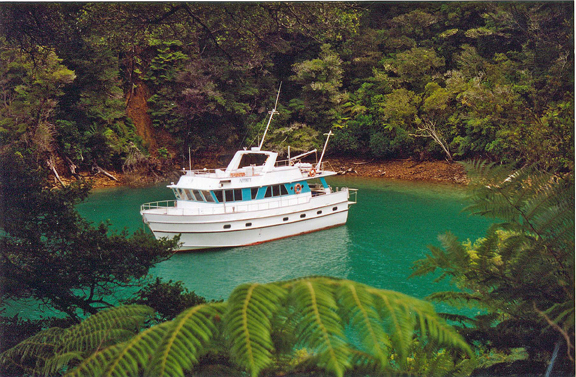
The ‘Affinity Fiordland Cruise’, aboard the 16-guest Affinity, offers seven-day explorations of the Fiordland region south of Milford Sound.

Guests will visit Doubtful Sound, a fjord accessible only by small ship, and will have the chance to fish for grouper and blue cod. Trips run from June through August with rates starting at US$2,040 per person.

dn140715-islandpassage-adventuresmith
Credit: AdventureSmith Explorations

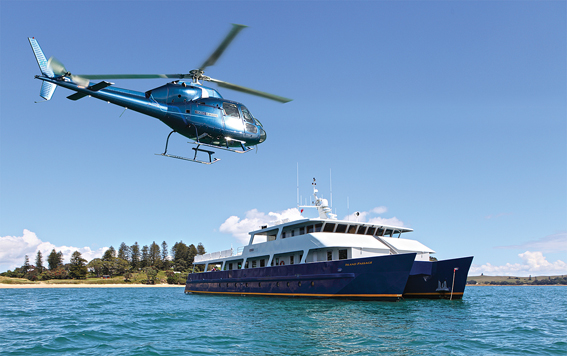
The 24-guest Island Passage conducts eight-day adventures dubbed the ‘Fiordland National Park Cruise’, combining touring by coach, helicopter, airplane and ship.

The ship will cruise through Milford Sound and other remote fjords, with a six-seat helicopter positioned on the top deck to ferry guests to locales accessible only be air. Also included onboard are a landing craft, sea kayaks, fishing gear and snorkelling equipment. The cruise departs from end-February through mid-April, with rates from US$4,555 per person.

The seven-day ‘Preservation Inlet Discovery’ aboard the 32-guest Milford Wanderer travels deep into southern New Zealand’s Fiordland region.

The 30m vessel offers twin-bed accommodation and modern shared bathrooms, and sets off in the months of April, May, August and September. Rates start from US$1,800 per person.

ANA likely to make a comeback on Australian routes: trade sources

0

ALL Nippon Airways (ANA) is likely to resume services to Australia after a 16-year hiatus, according to trade sources, with the Japanese carrier expected to start flying from Tokyo to Sydney as early as this winter.

A formal announcement is expected in the coming weeks, reveal sources.

ANA is expected to put a 215-seat Boeing 787-9 on the route, operating daily flights between the two cities.

However, the airline has declined to confirm this development.

“I cannot confirm any of the reports, but I can say that ANA has always been watching Australia and we see it as a strong candidate for our next new route,” Maho Ito, a spokeswoman for the airline said.

Should ANA resume flights on this route, further pressure will be placed on existing operators. Qantas is transferring its Sydney flights to Haneda International Airport, which benefits from being closer to central Tokyo, while also operating a daily A330 flight from Brisbane to the Japanese capital.

Japan Airlines has daily services from Sydney to Narita International Airport, which is less attractive as a departure or arrivals point for travellers than Haneda.

The number of Australians travelling to Japan has surged in recent times, thanks to a weaker yen and the popularity of winter sports destinations such as Hokkaido.

Shopping spend overtakes accommodation in Malaysia’s 1Q tourist receipts

0

TOURIST expenditure on shopping came up tops in 1Q2015, according to first quarter receipts released by Tourism Malaysia today.

Tourist expenditure on shopping took the top spot from accommodation during this period, increasing 10.8 per cent to RM4.9 billion (US$1.29 billion) against the same period last year. While shopping comprised 28.1 per cent of total tourist receipts, accommodation garnered a 26.3 per cent share.

Growth in shopping expenditure was dominated by regional and mediumhaul countries such as Brunei, Singapore, Japan and Thailand.

Based on a survey by Tourism Malaysia, clothing/apparel constituted 49.6 per cent of items purchased by tourists, followed by handicraft/souvenirs at 45.5 per cent and shoes at 21.7 per cent.

The average per capita expenditure of foreign tourists also grew, rising 3.5 per cent year-on-year to RM2,700.

Tourists from Saudi Arabia were the biggest spenders with an average per capita expenditure of RM9,637, followed by travellers from New Zealand and Australia trailing far behind at RM4,213 and RM4,133 respectively.

In addition, four markets – Japan, Thailand, Singapore and Canada – showed an increase of over 20 per cent in average per capita expenditure.

Meanwhile, the average length of stay (ALOS) of foreign tourists rose from five nights to 6.7 nights as compared to the same period last year. Visitors from the Netherlands charted the highest ALOS at 11.7 nights, followed by the UK at 11 nights and Saudi Arabia at 10.5 nights.

Factors that contributed to these positive results include the favourable exchange rate, which encouraged tourists to spend more. Moreover, the drop in tourist arrivals in 1Q2015 had compelled hoteliers to offer cheaper rates, leading to tourists staying longer and spending more on shopping than on accommodation.

LuxuryVilla.com introduces villa rental services in Phuket

0

LUXURY vacation rental service LuxuryVilla.com is now offering villa rentals in Phuket, its first South-east Asian destination.

Each villa rental in Phuket features lush tropical gardens, stunning architecture, original art and designer furniture, as well as views of the beach.

Guests can experience the five-star amenities of staying in a hotel, but with the added privacy and comfort that comes with a luxury home rental.

“We help our clients find the best villa, tailored to their specific needs, whether it be incredible views and a private pool, or spacious interiors and state-of-the-art kitchens,” said Samuel Cohen, CEO of LuxuryVilla.com.

“Our rentals are the perfect fit for families who want to enjoy the best that Phuket has to offer with easy access to activities and local attractions,” he added.

Indonesia’s visa-free initiative faces teething issues at checkpoints

0

THE Indonesian government’s intention to open up the destination by giving 30 additional countries visa-free access have received international applause, but the trade finds grey areas in the implementation that may cause a backlash to its tourism sector.

Although the presidential regulation stated the facilities were eligible for government services, educational activities, social cultural affairs, tourism, business, family visits, journalistic duties or participate in a transit stay en route to a third country, the implementation guideline issued by the Directorate General of Immigration to its offices and checkpoints is not quite the same.

The guideline states that visa-free facilities were eligible for “tourism purpose only”, which was interpreted as “leisure travel only” by frontline officials.

Alan Chong, sales & marketing manager at Orex Travel & Tours in Kuala Lumpur, pointed out that his Japanese business clients in Malaysia still needed to apply for visas on arrival when travelling for business to Indonesia.

“An officer at the airport will ask tourists their reasons for entering the country and then guide them to the right queue,” said Chong.

“Business travellers are told to get a visa-on-arrival first before they go through immigration. If they were travelling for leisure, they can go straight to the Immigration counter and get their passports stamped.”

However, TTG Asia e-Daily have been told that a Caucasian business traveller was able to sail through immigration without a visa.

The guideline also stipulated that travellers were “allowed in and out” from five international airports and four seaports, namely the airports of Jakarta, Bali, Medan, Surabaya, Batam, and seaports of Sekupang and Batam Centre, Batam, Sri Bintan and Tanjung Uban Riau.

I Ketut Ardana, chairman of the Association of the Indonesian Tours and Travel Agencies (ASITA) Bali Chapter, said: “The problem our inbound tour operator members face is that travellers, especially those longhaul ones, have held their tickets long before the new regulation implemented.”

“It is common for travellers to arrive in Bali and leave from Yogyakarta or Lombok, which are not visa-free entry and exit points. In such cases, travellers still need to pay for visa on arrival, although they are here for leisure,” he adds.

Ricky Setiawanto, director of business development, Panorama Destination, said: “We have travellers who were stopped from leaving Indonesia from Lombok airport because it was not a visa-free gateway.”

“Some immigration officers do not check tickets and they let travellers in without a visa. If they had checked, they would have noticed planned departures from non-visa-free exit points and would be able to advise travellers to apply for a visa-on-arrival, which is cheaper (US$35) and less (troublesome) than having to reroute their tickets back to Bali.”

Ardana said ASITA Bali had sent a letter to the Immigration office and the tourism minister, requesting for the guidelines to be simplified.

Arief Yahya, Indonesia’s minister of tourism, acknowledged that tourism “includes MICE, business travellers who are here for meetings, visiting projects etc; they are different from expatriates who live here to work”.

He agrees that the visa-free facility should be made available to “these people” and shared that his office is now in talks with the immigration office for solutions.

Additional reporting by S.Puvaneswary and Greg Lowe

Portofino Ocean’s Edge Resort set for launch in Boracay

0

PLATENO Hotels Group is planning to launch a new luxury resort, the Portofino Ocean’s Edge Resort, in Boracay, in June 2016.

Located on Isla de Carabao, sister beach to Boracay, the resort will be accessible from both Caticlan and Kalibo International Airports via the resort’s own ferry services. Alternatively, a helicopter service is available from Caticlan.

The resort will feature 44 grass-thatched roof villas with spacious private terraces and plunge pools overlooking the horizon. The villas will be ornately furnished with hand-crafted coral stones, dark Philippine mahogany for its wood accents and locally woven fabrics for upholstery.

Amenities will include a clubhouse with reception; restaurant, lounge and bar overlooking the pool; private beach cove with beach bar and jetty, spa and watersports activities including a dive shop.

Isla of Carabao boasts long, secluded beaches with some only accessible by boat, as well as pristine dive sites with crystal-clear water.

More ammo post-IPO

0
Gordon Wilson

You’ve been on a buying spree – the latest was German tour operator distribution company, travel-IT, last January. This followed Hotelzon and Locomote in June and August 2014 respectively, and increased investment in eNett. What’s the strategy behind these buys?
First of all, we’re clear and focused about what we are. We are a travel commerce platform. We take content, put it onto our platform, then distribute it out to the market. We are not an IT solutions company for airlines or hotels – our competitors do that, they are good at it, let them do it. We’re in the forward, front-facing distribution part of the business but on a much more holistic and broader basis than our competitors.

Gordon Wilson

So we’re buying to extend our platform.  For example, travel-IT gives us that extra tour operator content in a state-of-the-art level technology. Hotelzon fills the gap of negotiated rates of independent hotels which we didn’t have.

Any regret then that you sold GTA to Kuoni – surely that’s a lot of content?
Not really. You have to bear in mind that what I’m about is distributing the content, not amassing it, which GTA does. It has a huge group business for a start and all these people contracting the hotels and putting in the rates into the system. That’s good business but I’m more interested in distributing and to do that I would need more content than GTA had on its own. I distribute GTA today and the other wholesalers, but I don’t need to own them to do that. So I don’t regret selling it at all; it’s not core to what I am.

How does eNett fit in?
It’s what Bain Consulting, which helped us with our strategy, called ‘adjacencies’ , ie, businesses that are not completely alien to us and are a natural extension. We do all these transactions but not the payment piece (of the puzzle). That’s when we started looking at eNett, at the time an electronic funds transfer company, but which we have transformed into a Virtual Account Number company.

We decided to increase our stake in eNett to 76 per cent because it’s such a fantastic growth engine for our business – growing 50 per cent year over year and we still feel we’re just scratching the surface of what that business can do. And as a result of the deal, we have rights to use the eNett platform above and beyond travel.

Will you?
Not in the near term, because we have a huge target of US$810 billion of B2B travel payments which eNett is seeking to service. But at some point in the future, we may decide to go into B2B payments outside of travel.

Will you continue to buy?
Yes, being public(-listed) and having less debt means we have more money to do other acquisitions.
In 2014, I paid about US$300 million in interest payments but this year, I should pay around US$140 million to US$150 million in interest payments. That’s cash I now have to pay dividends to my shareholders and do more investments internally and externally.

Now that isn’t saying that the sole strategy is to acquire, but having a core strategy on how we build up the travel commerce platform through organic growth or inorganic investment, where we see may be somebody has technology or some content which makes sense for us to put into our platform. And I want to stress it’s not all inorganic; we also continue to invest US$170 million a year in our own activities which have been successful for us.

What might be the unmet needs now?
Areas such as expense management, mobile, other services to corporations, automation of meetings and incentive travel, and marine and mining travel.

Are there opportunities in Asia?
There are Asian companies which are doing good things in mobile, expense management and obviously, something unique to Asia – for instance, a lot of corporate travel is uniquely booked through secretaries clubs in Asia. We’re not restricted in our horizons, that whatever we buy must be American or European or whatever. We take the best we can find.

It’s interesting how travel companies are growing through ‘adjacencies’, you  with eNett, Kuoni with VFS Global (visa facilitation), etc. A CEO needs to think more broadly today.
Yes. My job is to set the strategy for the company with my board and also go out and realise it. A strategy is a living thing though, especially when you are in the travel and technology business, which is so dynamic and so fast-changing that you have to think sideways and forward and seize the opportunities.

Were there challenges in integrating the companies you’ve bought?
Yes, especially when you bring in the smaller companies, as they have different culture and dynamics. Sometimes you can’t swarm small companies with too much big company love, or with too much big company practices. But equally, when you are a public-traded company as we are, you’ve got to make sure things are done appropriately – compliance, etc. So we have to find the right balance.

Over the years, even during my Cendant days as you know, we have bought a lot of companies. I like to think we’ve learnt a lot and sometimes the hard way (laughs). We lost some of the enterpreneurship and dynamism of the companies – the very thing we were buying – because we got it wrong.

But that’s in the past. Look at eNett for example. Effectively we control it, but we run it as a separate company. It has its own CEO, management team and a board of directors, and obviously the joint venture partners are in there as well. We consolidate its numbers into ours of course and we work closely together all the time, but it’s got its own identity, independence and is self-financing. That’s a good model going forward.

We look at other people who have been successful (in integrating), such as the Priceline Group with Agoda, bookings.com, etc, and they’ve kind of done that too, ie, not overly integrate the companies’ independence into the management of the bigger group.

Beyond Air:Air revenue ratio is about 21:79 per cent for you now. What will the ratio be in the future?
Beyond Air grew 14 per cent last year. The acquisitions we’ve made have been in the non-air (sector) and we’ve said publicly that we earned US$424 million Beyond Air revenue last year and I’d be disappointed if in next three years it would not be US$1 billion, because of growth in eNett, hotel bookings, travel-IT and we may well do some other things in that space going forward.

Air will continue to be big but less as a percentage to the total. Beyond Air will also grow at a faster rate.

This article was first published in TTG Asia, July 17, 2015 issue, on page 9. To read more, please view our digital edition or click here to subscribe.